


More news on this day
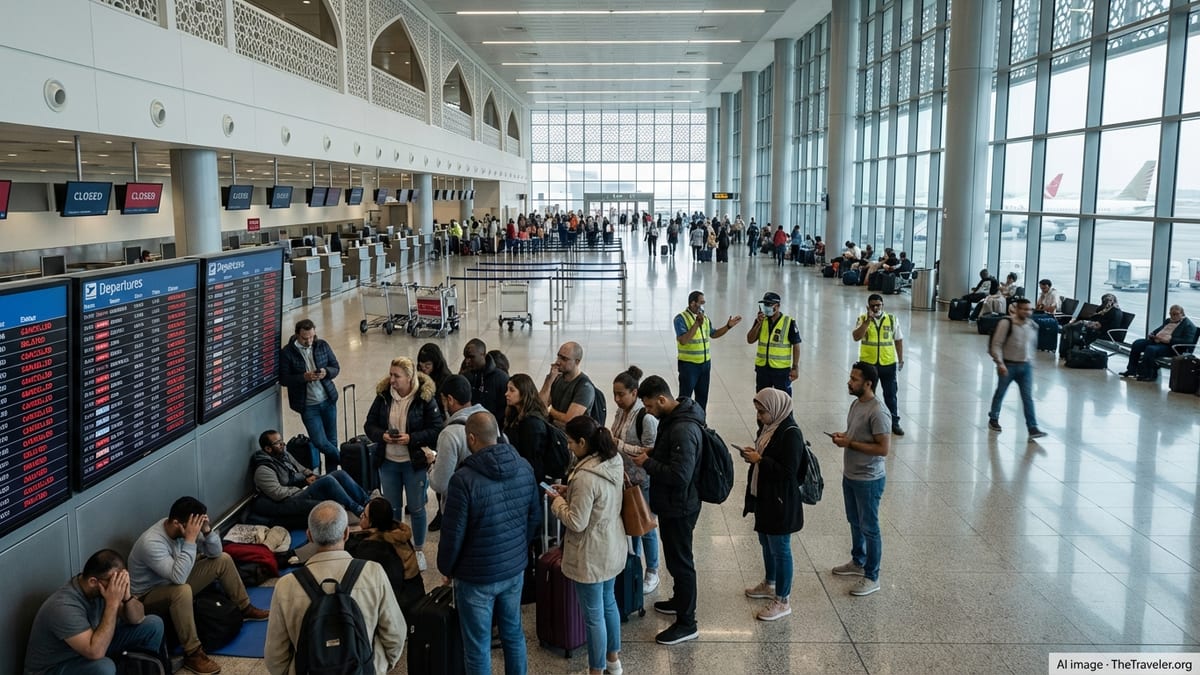
Fresh disruption at Doha’s Hamad International Airport has left hundreds of passengers stranded after new cancellations by Qatar Airways and Air Arabia disrupted travel on key routes linking Doha with Berlin and Sharjah.
Get the latest news straight to your inbox!
New Cancellations Add To Ongoing Regional Aviation Turmoil
Publicly available flight-tracking data and regional aviation coverage indicate that Qatar Airways and Air Arabia have implemented a new round of schedule changes at Doha, including the cancellation of at least two key services to Berlin and Sharjah. Although the number of affected flights is far smaller than during the initial Middle East airspace closure earlier this year, the latest disruption has been enough to strand or delay hundreds of travelers using Hamad International Airport as a transfer hub.
The cancellations come against the backdrop of a fragile recovery in Gulf air traffic following missile strikes and subsequent airspace restrictions around Qatar in late February and early March 2026. According to published reports, regular commercial operations through Doha have been returning only gradually, with airlines still operating reduced schedules and ad hoc repatriation flights on some international routes.
For passengers, that means continued uncertainty. Even as Hamad International resumes more connections across Europe, the Middle East and Asia, reports from travelers show that last-minute changes, rolling delays and short-notice cancellations remain a risk, particularly on routes where frequencies are still limited.
The newly cancelled flights to Berlin and Sharjah highlight how even isolated schedule adjustments can ripple through the network when many journeys depend on tight connections through a single hub. Transit passengers connecting between long haul and regional sectors in Doha have been among the most exposed to disruption.
Impact On Berlin And Sharjah Routes Through Doha
Berlin has been one of the European cities closely tied into Qatar Airways’ strategy for repatriation and recovery flights since the initial wave of cancellations in late February. Previous schedules showed Berlin among the destinations prioritized for limited special services designed to move stranded passengers out of Doha and other hubs. The removal of a Doha–Berlin rotation from the latest timetable has therefore had a visible impact on travelers hoping to reach or leave the German capital.
Reports from passenger forums suggest that some Berlin-bound travelers transiting in Doha were informed at short notice that their onward flight would not depart as planned, leaving them to queue at rebooking desks or await updated itineraries via email and airline apps. With many alternative flights already heavily booked, some travelers have reportedly been offered routings through other European hubs or later departures, extending total journey times by many hours.
On the regional side, Air Arabia’s Sharjah service is a crucial link between Qatar and the wider United Arab Emirates, feeding both point-to-point traffic and onward low cost connections across South Asia and North Africa. The latest cancellation on the Doha–Sharjah corridor has disrupted plans for passengers relying on same-day transfers at Sharjah International Airport, where Air Arabia operates a dense network of regional routes.
Travel commentary indicates that the loss of a Sharjah sector can force some passengers into costly last-minute adjustments, including rebooking on other Gulf carriers or purchasing separate tickets via alternative hubs such as Dubai, Abu Dhabi or Muscat. Those options may require additional visas, longer ground transfers between airports, or overnight stays if connections do not align.
Hamad International Airport Under Strain As Travelers Seek Answers
Hamad International Airport, usually marketed as a seamless global hub, continues to operate under strain as airlines adjust to the evolving constraints on regional airspace. Observations shared by recent travelers describe crowded transfer halls, long lines at service counters and ad hoc sleeping arrangements in seating areas as passengers await news on new departure times or alternative routings.
Public information from Qatar Airways indicates that the carrier is running a reduced but gradually expanding network, with a mixture of scheduled flights and targeted services aimed at clearing backlogs on popular routes. At the same time, guidance on the airline’s travel-alert pages emphasizes that only passengers with confirmed bookings for operating flights should proceed to the airport, a signal that capacity remains tight compared with normal levels.
For those caught up in the latest cancellations, accommodation and meal arrangements have varied depending on ticket conditions, point of origin and local consumer protection rules. Passenger accounts suggest that some travelers have received hotel stays and meal vouchers in Doha, while others have relied on their own funds and sought reimbursement later through airline claims channels or travel insurance providers.
As operations remain fluid, aviation analysts note that Hamad International’s role as a transfer-heavy hub can turn relatively small schedule changes into significant passenger disruption. When a single long haul flight to Europe or a high-demand regional sector to the UAE is cancelled, hundreds of connecting itineraries can unravel, affecting travelers across multiple continents.
What Stranded Passengers Are Being Advised To Do
Travel advisories and consumer guidance published in recent weeks consistently stress the importance of monitoring bookings closely and avoiding unnecessary trips to the airport. Airlines serving Doha, including Qatar Airways and Air Arabia, are directing passengers to verify the status of their flights through official apps, booking portals or travel agents on the day of departure, given that schedules may change at short notice.
Consumer advocates quoted in recent coverage of the wider Middle East aviation disruption also highlight passenger rights. Depending on where a journey originates and which legal framework applies, travelers whose flights are cancelled may be entitled to re-routing, refunds or compensation. In practice, however, ongoing regional airspace issues and security considerations can complicate how such rules are applied.
Travel insurance specialists suggest that stranded passengers keep comprehensive documentation, including boarding passes, written confirmation of cancellations, and receipts for hotels, meals and alternative transport. Such records can be crucial when submitting claims later, whether through an airline, insurance provider or credit card company that offers trip-interruption coverage.
For those still planning upcoming trips through Doha, industry observers recommend allowing extra connection time, considering flexible tickets where possible, and reviewing options to reroute via alternative hubs if schedules deteriorate again. While operations through Qatar are showing signs of gradual normalization, the latest cancellations affecting Berlin and Sharjah illustrate that the recovery remains fragile and subject to sudden setbacks.