


More news on this day
Drivers and visitors are being urged to check routes carefully as a series of city road closures for resurfacing and improvement works are scheduled to begin in early September, with disruption expected on some of the busiest corridors used by commuters and tourists.
Get the latest news straight to your inbox!
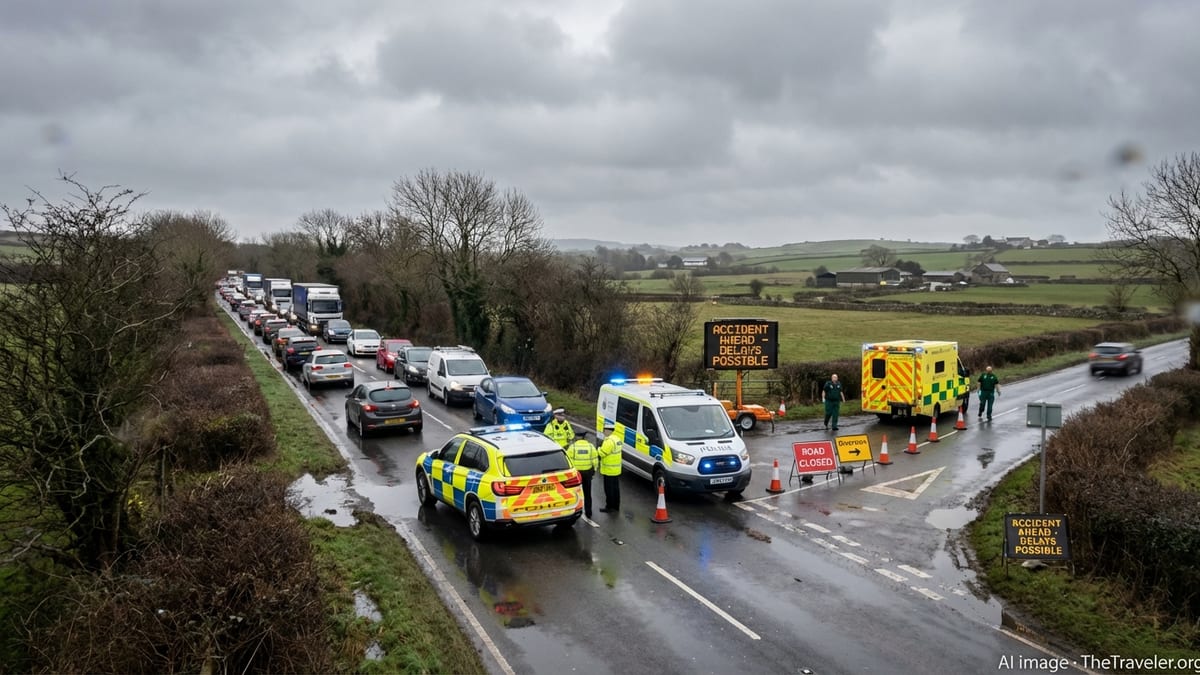
Major city corridors facing night-time and one-way closures
Several UK city routes that serve local residents, regional commuters and visitors are due to be restricted in September as resurfacing and junction improvement schemes move into their most disruptive phases. Publicly available information highlights a concentration of activity around early and mid‑September, when road space will be reduced or fully closed at key pinch points.
In Blackpool, updated guidance shows that overnight resurfacing on Central Drive is expected to begin in the week commencing 7 September and last for around seven days, dependent on weather. To carry out the work safely, a one‑way road closure is scheduled southbound between Waterloo Road and Pedders Lane for approximately six weeks, affecting access to seafront districts used heavily by leisure visitors and coach traffic.
Similar patterns are emerging in other urban areas. In Doncaster, a rolling programme of temporary orders lists closures on streets including North Street, Sutton Road and West Street, some of which involve remodelling carriageways to add raised pedestrian crossings and active‑travel links through the city centre. These works are timetabled to run through September and into later autumn, with traffic orders indicating daytime working hours on many sections.
Alongside complete closures, many schemes introduce lane reductions, temporary traffic signals and turning bans rather than full bans on traffic. However, the cumulative effect is expected to slow journeys for through‑traffic and local deliveries, with diversion routes often pushed onto already busy ring‑roads or residential streets.
Resurfacing works target access routes around historic centres
Travel updates indicate that several projects are focused on corridors that ring or feed directly into historic town and city centres, where narrow streets and protected buildings limit alternative options for re‑routing vehicles. In Bradford on Avon, Wiltshire Council has scheduled resurfacing on parts of Junction Road and St Margaret’s Street, two roads that connect residential areas with the riverside and town centre. Published information shows staged closures and traffic management planned through September as sections are treated.
In Chester, local coverage of roadworks notes that while some previous closures such as A51 Hoole Lane are due to ease, attention is shifting to riverside routes very close to key visitor attractions. The Groves, the popular road running below the city walls along the River Dee, is listed to close for daytime resurfacing between Monday 7 September and Wednesday 9 September, alongside nearby Souter’s Lane. These restrictions fall at the tail end of the main tourist season, when day‑trippers and coach parties still contribute significantly to traffic volumes.
In York, the latest summary of temporary road closures shows prolonged restrictions on Back Swinegate in the city centre for highway resurfacing, stretching from early September to late October. The list also includes A1079 Hull Road and Beckfield Lane for resurfacing and carriageway works at various dates in September, affecting both local neighbourhood access and approaches used by visitors to reach park‑and‑ride facilities or city‑centre car parks.
Such works aim to renew worn road surfaces and improve safety but create short‑term disruption in tightly constrained urban networks. Narrow one‑way streets, pedestrianised zones and limited river crossings mean that modest changes in one location can quickly be felt across a wider grid of streets used by residents, tourists and service vehicles.
National routes and ring roads also affected by project timelines
Road‑user information from national and regional operators shows that impacts are not confined to local high streets. Major junctions and trunk roads that act as gateways to cities are also scheduled for resurfacing, often through overnight closures and phase‑by‑phase lane reductions.
In Wales, Traffic Wales has published details of resurfacing at M4 Junction 32 Coryton, a busy interchange serving Cardiff and surrounding communities. The project is due to begin on 7 September and continue for around 25 nights, extending into October. Documentation sets out multiple phases of overnight closures on slip roads and sections of the roundabout, with convoy working and temporary signals expected to regulate traffic when lanes are shut.
In Scotland, Transport Scotland’s travel updates confirm overnight resurfacing on the A68 north of Pathhead for seven nights starting Wednesday 2 September. The A68 forms a significant regional route linking Edinburgh with the Borders and northern England, and the works programme includes full overnight closures with signed diversion routes.
Further north, overnight resurfacing on the A82 by Loch Lomond is already underway. An August update indicated that poor weather has extended completion to mid‑September, with ongoing night closures on a road that provides a key approach to the Highlands and serves tourism hotspots along the loch.
Impact on visitors, public transport and active travel
For travellers, these closures and lane restrictions are expected to influence not only private car journeys but also public transport and active travel. Council notices often reference temporary bus stop closures where resurfacing or junction works are taking place, requiring passengers to use alternative stops or accept extended walking distances.
In Salford, for example, information on the A6 Manchester Road East improvement scheme notes temporary closure periods for individual bus stops as resurfacing and junction changes progress. Similar patterns are visible in city‑centre closures elsewhere, where temporary traffic orders and project updates flag changes to bus routing and stop locations while works are underway.
Pedestrian and cycle access is generally maintained wherever possible, with schemes in Cambridge and other cities explicitly referring to the need to keep active‑travel paths open during nearby carriageway resurfacing. However, narrow footways, hoardings and plant access can mean diversions onto alternative crossings, as seen in parts of Doncaster’s West Street project, which combines new pedestrian tables with changes to the carriageway alignment.
Visitors using unfamiliar streets are particularly exposed to short‑notice bus diversions and temporary one‑way systems around tourist districts, where signage must compete with existing wayfinding and commercial displays. This is especially relevant in historic centres like York, Chester and Bradford on Avon, where road geometry limits the scope for clear, long‑distance advance signing.
Advice for drivers and visitors planning September trips
Given the spread of schemes across city centres, key junctions and regional routes, travel planners recommend checking local authority and trunk‑road operator websites before setting off, particularly for journeys scheduled in the first half of September. Many of the most disruptive works are either concentrated into overnight or short daytime windows or are phased so that different approaches close on different dates.
Drivers heading to seaside destinations such as Blackpool, or to historic city cores in York or Chester, may wish to allow additional time for diversion routes or to consider park‑and‑ride or rail options where available. For those relying on motorway junctions like M4 Junction 32 Coryton or trunk roads such as the A68 and A82, overnight travel could be affected by full closures or convoy systems, adding delay or requiring longer detours.
Publicly available information indicates that most schemes allow local access for residents and maintain emergency vehicle routes, but turning movements and direct access to particular streets may be limited at times. Checking the latest traffic orders, mapping apps and local travel bulletins shortly before departure is likely to provide the most accurate picture of which sections are currently closed and which have reopened.
With much of the work focused on resurfacing and junction upgrades, the disruptions are framed by operators as short‑term pain for longer‑term gain. For now, though, travellers in early September can expect reduced road capacity in several cities, more complex approaches to central attractions, and a greater need to verify routes before they travel.
Sources: Blackpool Council road closures; City of York Council temporary road closures; Traffic Wales M4 Junction 32 works; Traffic Scotland A68 Pathhead resurfacing; Bradford on Avon September road closures