


More news on this day
With the Tishrei holidays approaching and Yom Kippur falling on September 21, 2026, travelers bound for Israel and nearby destinations are being urged to anticipate tighter border controls, heavier congestion and additional data checks at key air and land crossings.
Get the latest news straight to your inbox!
Holiday surge meets heightened security environment
Published information from Israeli and international sources indicates that the combination of the Yom Tov travel rush and a still-sensitive regional security climate is prompting authorities to apply stricter scrutiny at border points serving Israel. The U.S. Department of State currently maintains a Level 3 advisory for Israel, urging travelers to reconsider non-essential visits and to exercise increased caution around borders and conflict-adjacent areas, including Gaza and northern frontiers.
In parallel, the European Union’s aviation security bodies continue to classify Israeli airspace as requiring special risk assessment. The European Union Aviation Safety Agency lists all altitudes in the Tel Aviv Flight Information Region as an area where civil operators are advised to carefully evaluate routing and security exposure, even as some risk categorizations have been eased in recent months. This framework encourages airlines to review security measures, which can translate into more detailed document checks and additional questioning at departure and transit points.
This backdrop coincides with a significant surge in religious holiday travel. Local coverage in Israel highlights expectations of several million passengers passing through Ben Gurion Airport and land crossings over the high holiday period, concentrating traffic into a relatively short window around Rosh Hashanah, Yom Kippur and Sukkot. Travelers are likely to encounter longer waiting times not only at security screening but also at passport control and customs, especially at peak hours.
The result is a seasonal pattern where faith-based travel demand intersects with ongoing security protocols, creating conditions for more intensive document verification, additional screening of luggage and closer questioning about itineraries compared with quieter times of the year.
Land borders to Jordan face temporary restrictions
New notices from the Israel Airports Authority covering land border crossings specify concrete restrictions around Yom Kippur. According to the latest Hebrew-language bulletin on land crossings, from September 15 through September 20, 2026 inclusive, travelers will not be able to exit Israel for Jordan with a private vehicle via the Jordan River and Yitzhak Rabin crossings. The notice explicitly links the limitations to expected congestion ahead of the Yom Kippur holiday.
These dates fall in the week leading up to and immediately following Yom Kippur, which is observed on Monday, September 21, 2026, according to published holiday calendars used by Israeli diplomatic missions. The timing means that travelers planning multi-country itineraries that include Jordan, whether to Petra, Wadi Rum or Amman, will need to adjust plans or rely on alternative transport arrangements such as organized buses, taxis or flights.
The same land-border bulletin underscores that peak loads are anticipated both before and after the fast day, when many residents take advantage of the holiday break to leave the country or return from trips abroad. As a result, more intensive checks of passports, visas and vehicle documentation are expected, contributing to slower processing at the remaining open crossings and potential crowding in terminal halls.
Those already holding hotel reservations or tours in Jordan during that period are encouraged by travel advisories and public updates to verify, before departure, whether their chosen crossing is operating for their type of transport and to arrive with ample time for inspections.
Air travelers face layered checks and new data systems
At Israel’s main gateway, Ben Gurion Airport, the Israel Airports Authority reiterates that all departing passengers are required to undergo security screening by dedicated security staff before check in. Public guidance from the airport notes that passengers en route to Europe, North America and other destinations should expect personal interviews, luggage screening and in some cases the use of advanced imaging technologies as part of a multi-layered approach that pre-dates the current holiday season but can become more time consuming when terminals are busy.
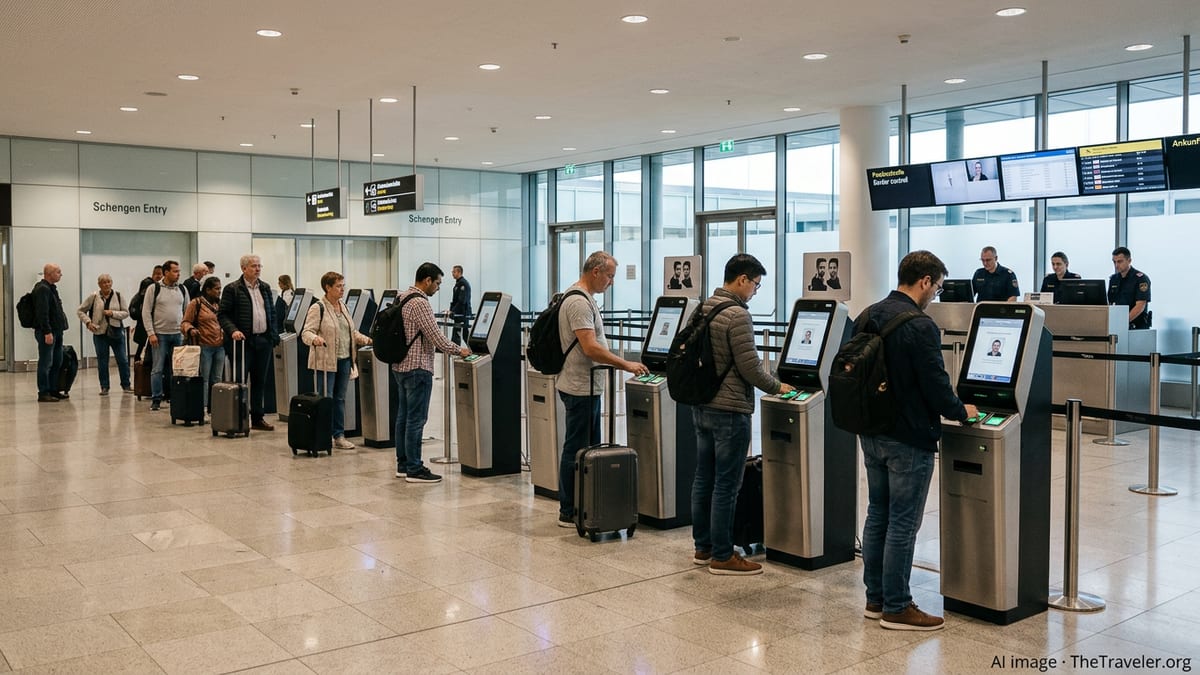
Outside Israel, border checks are also evolving. In the Schengen Area, passport controls remain in place for travelers entering or leaving the bloc, even though there are no routine internal border checks between most member states. Since April 10, 2026, the new Entry/Exit System has been operational at external Schengen checkpoints, replacing manual passport stamps with a biometric and alphanumeric database that records each traveler’s entries and exits. This system, operated by the EU’s eu-LISA agency, is designed to improve the detection of overstays and identity fraud, but it can also slow queues as officers capture fingerprints and facial images during busy periods.
The European Commission has also updated rules on advance passenger information, requiring airlines and carriers on certain routes to transmit passenger data ahead of arrival to support “enhancing and facilitating external border checks.” In practice, this means passengers traveling between Israel and EU destinations may find that their details are pre-screened before boarding, with additional questions asked at the gate or at connecting points if something in the booking history or routing triggers closer examination.
Major European hubs, including Amsterdam Schiphol, are already warning passengers that the combination of the new European border systems and overlapping holiday travel peaks can create longer waits at passport control. Schiphol’s recent guidance highlights that many flights arrive at the same time during peak moments and notes that travelers should prepare for possible crowds and follow posted instructions to keep flows manageable.
What travelers should expect at checks before Yom Tov
Publicly available travel advisories point to a set of recurring themes for passengers heading to Israel or crossing its borders in the weeks around Yom Tov. The first is additional time. With millions of passengers forecast across air and land routes during the holiday period, authorities and operators are signaling that travelers should build in generous buffers both for airport formalities and for intercity transfers to or from border points.
The second theme is documentation. Land-border notices and foreign ministry guidance stress the importance of having valid passports, any necessary visas and vehicle permissions ready for inspection. This is especially relevant to those planning to drive into Jordan, since selected crossings will not process private vehicles during set dates, and alternative crossings may experience higher traffic as a result.
Third, travelers should be prepared for more detailed questioning and selective secondary screening. While many passengers may still pass through controls relatively quickly, security frameworks in place for Israel and adjacent airspace encourage carriers and border agencies to take a risk-based approach, focusing more attention on specific routes, profiles or baggage patterns. Around major holidays, when traffic spikes, these measures can become more visible to the traveling public.
Finally, there is a growing emphasis on data-driven pre-screening. The EU’s implementation of the Entry/Exit System and updated rules on advance passenger information, together with Israel’s existing practice of pre-departure vetting on many routes, make it increasingly likely that travel histories and reservation data will be evaluated before a passenger reaches the counter. For most tourists, this may simply mean an extra few minutes at the gate or kiosk, but during Yom Tov it contributes to the broader advice to plan ahead and stay informed about the latest border conditions.
Key official resources for pre-trip planning
For those finalizing travel around the upcoming holidays, the most detailed operational updates continue to appear on official channels. The Israel Airports Authority provides real-time advisories on both Ben Gurion Airport procedures and land border operating hours, including specific Yom Kippur related restrictions on crossings to Jordan. These notices are frequently updated in Hebrew, with selected information available in English.
On the international side, the U.S. Department of State’s country page for Israel, the West Bank and Gaza consolidates its Level 3 advisory with practical security and entry guidance for American travelers. The advisory highlights the volatility of areas near Gaza and certain northern border regions and recommends that visitors monitor local media, stay alert to changing conditions and enroll in traveler alert services.
Within Europe, the European Commission’s Migration and Home Affairs and transport-related portals describe the operation of the Entry/Exit System, passenger name record rules and the use of advance passenger information for law-enforcement and border-check purposes. These resources offer insight into why boarding and border procedures may feel stricter or slower this season, particularly on routes linking the Schengen Area with external destinations such as Israel.
Together, these sources underline a consistent message: the 2026 Yom Tov period combines unusually heavy traffic with tightened, data-rich border checks. Travelers who factor these realities into their itineraries, arrive early for crossings and keep abreast of formal advisories will be better positioned to navigate the season’s constraints.
Israel Airports Authority land border updates
U.S. Department of State Israel, West Bank and Gaza advisory