


More news on this day
As the United States and Iran navigate a fragile pause in weeks of confrontation around the Strait of Hormuz, UAE residents are watching regional skies closely while planning summer travel, weighing shifting security assessments, airline decisions and government advisories that continue to evolve by the day.
Get the latest news straight to your inbox!
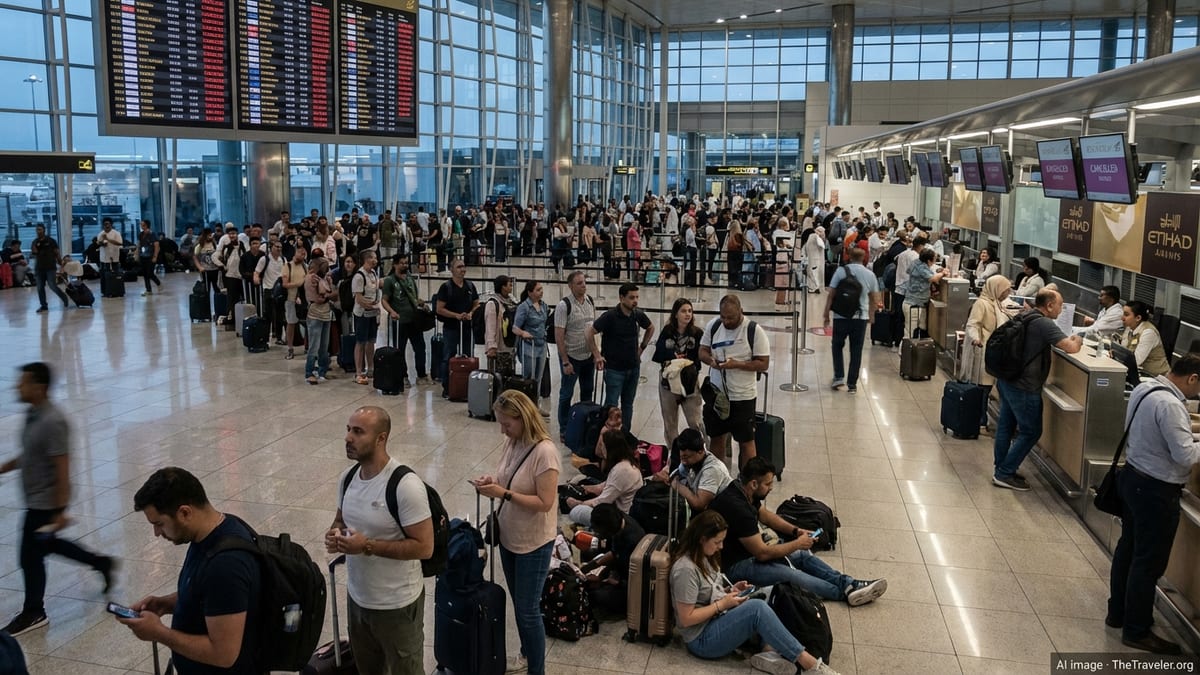
Regional tensions remain high around the Strait of Hormuz
Recent coverage of the Iran war indicates that, after days of missile and drone exchanges and strikes on energy and military infrastructure across the Gulf, Washington and Tehran have stepped back from active strikes but left key issues unresolved. Reports describe a partial pause in attacks since July 26, 2026, framed as an opportunity for negotiations rather than a formal ceasefire. Analysts note that control of the Strait of Hormuz, where a significant share of global oil normally transits, remains a central point of contention.
Iran’s earlier decision to restrict or effectively close parts of the strait to commercial shipping, coupled with a United States naval blockade aimed at limiting Iranian exports, has kept risk levels elevated for maritime and overwater traffic. Publicly available analysis highlights that both sides retain substantial military capacity in the area, suggesting that any breakdown in talks could quickly translate into renewed strikes on regional infrastructure and transit corridors.
For residents in the United Arab Emirates, the key takeaway is that the current situation is described as a lull in a broader conflict rather than a return to normality. Commentaries from policy institutes and media outlets consistently emphasize that the environment in the wider Gulf remains highly sensitive to miscalculation, with potential implications for energy markets, maritime logistics and, by extension, air routes that skirt contested zones.
What the latest aviation guidance says about Gulf airspace
International aviation regulators have continued to flag the wider Middle East and Persian Gulf region as an area requiring heightened caution. Background documents from the United States Federal Aviation Administration and more recent circulars cited in European safety notices highlight persistent risks from military activity, including potential misidentification of civil aircraft, the presence of long range surface to air systems, and possible communication and navigation disruptions.
While some of these advisories were first issued years before the current conflict, updates since February 2026 have repeatedly referenced the renewed threat from missile and drone operations linked to the US Iran confrontation. One summary of global travel advisories compiled this week notes that the United States continues to restrict its own civil aviation from operating in or near specified portions of Persian Gulf and Gulf of Oman airspace, particularly within defined radii of Iranian territory and active conflict zones.
For flights serving the UAE, this does not translate into a blanket closure of airspace. Instead, it has led to a more complex web of altitude restrictions, preferred routings and exclusions over certain sectors closer to Iranian shores or active military areas. Aviation safety briefings point out that modern flight planning systems allow carriers to reroute around the most sensitive zones while maintaining commercially viable operations, but they also stress that pilots and dispatchers are expected to monitor notices to air missions and updated risk assessments on a daily basis.
How Emirates, Etihad and other carriers are adjusting routes
Publicly available information from airline schedules, booking engines and aviation tracking platforms suggests that services into and out of Dubai, Abu Dhabi and other UAE airports are largely operating, albeit in some cases with modified routings and slightly extended flight times on certain long haul sectors. Industry reports explain that carriers have been using more southerly corridors over Saudi Arabia and the Arabian Sea for flights to Europe and North America that would previously have passed closer to the Strait of Hormuz or Iranian airspace.
Global network airlines based outside the region have introduced a range of flexibility policies since the outbreak of hostilities in late February 2026. Documentation collated by traveller communities shows that several major carriers, including at least one large US airline, continue to offer “Middle East unrest” travel waivers allowing date or routing changes for itineraries touching the broader Gulf region, though specific eligibility windows and covered airports vary by airline and are being periodically revised.
Aviation analysts note that for UAE based travellers this patchwork of approaches can be confusing, particularly on itineraries involving multiple codeshare partners. The practical advice emerging from recent coverage is that passengers should check their booking status frequently, monitor departure and arrival airports for schedule changes, and review each operating airline’s waiver rules if they are concerned about transiting near conflict affected areas. At present, there are no widely reported mass cancellations of flights to and from the UAE, but isolated disruptions can still occur when military activity spikes or when airlines reassess routing risks.
Key travel advisories affecting UAE residents
The United States, several European governments and other countries have maintained or updated travel advisories for destinations across the Middle East since the conflict intensified. Summaries of these notices published in recent days point to continued calls for citizens to reconsider travel to parts of Iraq, Iran and certain border regions, and to exercise increased caution in Gulf states that lie within range of long distance missile and drone systems.
These advisories generally stop short of discouraging travel to the UAE itself, instead highlighting the importance of staying informed about regional developments, avoiding sensitive areas such as military installations, and preparing for potential transport disruptions if tensions escalate again. For UAE residents who are foreign nationals, the most relevant guidance typically comes from their home governments, which may impose different alert levels for the same country or route.
Travel medicine and risk consultancies that track government alerts recommend that travellers register with their embassy’s notification systems where available and review insurance policies for clauses related to war, terrorism and civil unrest. Recent analyses note that some policies exclude cover for events directly linked to declared conflicts, while others provide limited benefits for trip interruption or evacuation. Given the fluidity of the US Iran situation, understanding these details before departure is increasingly important for those planning multi country itineraries through vulnerable corridors.
Practical steps for travellers flying from the UAE today
For residents flying out of Dubai, Abu Dhabi or Sharjah in the coming days, recent reporting points to a few practical measures that can help manage uncertainty. First, travellers are advised to pay close attention to departure times and terminal information, as last minute schedule adjustments and aircraft swaps can ripple through busy hub operations even when the underlying security picture remains stable.
Second, experts in aviation risk management quoted across industry analyses stress the value of redundancy in travel planning. That can mean allowing longer connection windows when transiting through other regional hubs, ensuring essential medications and documents are kept in carry on luggage in case of delays, and keeping accommodation plans flexible at the destination should onward segments be disrupted by renewed military activity.
Finally, while the overall level of disruption for UAE outbound travel is currently limited compared with the early weeks of the conflict, analysts consistently describe the environment as susceptible to rapid change. Residents are therefore encouraged to monitor reputable international news outlets, official notices from their chosen airlines and the latest travel advisories issued by their home countries. For now, commercial aviation in and out of the Emirates continues to function, but it is doing so against the backdrop of a conflict whose trajectory remains uncertain.