


More news on this day
An urgent alert from the Trump administration is warning Americans to avoid or rapidly depart large parts of the Middle East, as hostilities with Iran escalate and security conditions deteriorate across multiple countries popular with U.S. travelers and expatriates.
Get the latest news straight to your inbox!
Heightened Conflict Triggers Regionwide Warning
Recent hostilities involving the United States and Iran have reshaped the security picture across the Middle East, prompting a broad warning from the Trump administration for U.S. citizens in the region to reassess their travel plans. Publicly available advisories describe an unpredictable environment in which missile and drone attacks, civil unrest and disruptions to commercial aviation have become more frequent.
According to updated notices from the U.S. Department of State, tensions surged after late-February military action involving Iran, followed by retaliatory threats and strikes that have affected airspace, port operations and critical infrastructure in several countries. In response, Washington has raised or reaffirmed high-level alerts across the region, urging Americans to depart where possible and avoid nonessential travel to conflict-affected destinations.
Middle East travel advisories now emphasize that the security situation can shift with little warning. Travelers are being advised to monitor local developments, stay in close touch with family and travel providers, and be prepared to adjust itineraries on short notice if conditions worsen.
Wide Swath of Countries Affected by New Guidance
The latest alerts reach far beyond traditional conflict zones, encompassing Gulf hubs and transit points that typically serve as gateways for international visitors. Updated guidance for Kuwait and Qatar cites the threat of armed conflict and the ongoing risk of missile and drone activity linked to the confrontation with Iran, while also noting the potential for rapid changes to commercial flight operations.
Similar language appears in recent advisories for the United Arab Emirates and Saudi Arabia, where the risk profile now includes possible targeting of American interests and critical infrastructure, along with concerns about terrorism and spillover from nearby battlefields. Travelers are told to reconsider nonessential trips, avoid sensitive border areas and remain aware that restrictions on movement can be imposed on short notice.
Other regional destinations, including Iraq, Syria, Yemen, parts of Israel and the Palestinian territories, have long carried the strongest warnings due to entrenched conflict and limited consular access. The current wave of alerts, however, underscores that even countries historically viewed as relatively stable intermediaries are now facing elevated risks tied directly to the broader confrontation.
Flight Disruptions, Evacuations and Stranded Travelers
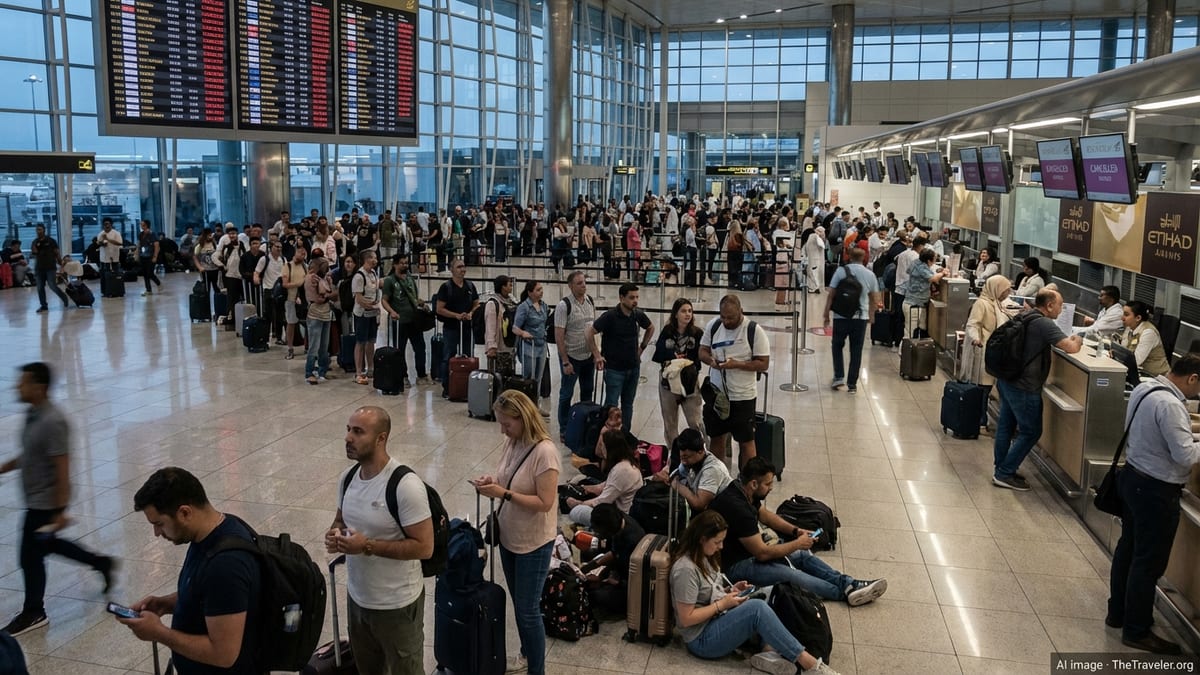
The escalation has already produced significant disruption to air travel and led to emergency movements of U.S. citizens out of the region. Coverage from national and regional outlets describes a sharp reduction in commercial capacity on some routes, rerouting of flights around contested airspace and intermittent closures or restrictions affecting key airports.
Reports indicate that the State Department has worked with carriers and foreign governments to organize charter and special commercial flights, moving tens of thousands of Americans away from affected areas in recent months. At the same time, some travelers have described difficulty securing seats on departing flights or obtaining timely information about routing changes, underlining the uneven nature of the response and the challenges of leaving during periods of intense demand.
Travel analysts note that, in addition to direct security threats, travelers are confronting higher fares, complex connections and gaps in travel insurance coverage related to war and civil unrest. Industry observers suggest that the combination of heightened risk and logistical uncertainty is likely to depress leisure demand for the region well beyond the immediate crisis period.
What the Alert Means for Americans Planning Trips
For Americans considering travel to the Middle East, the new alert from the Trump administration serves as a strong signal to scrutinize itineraries and assess whether plans can be postponed or rerouted. Official advisories classify many destinations in the region at the “Reconsider Travel” or “Do Not Travel” levels, which typically correspond to elevated threats of armed conflict, terrorism, civil unrest or serious limitations on emergency assistance.
Travelers are being urged, through published government guidance, to review their destinations’ current alert levels, understand local laws and conditions, and confirm that airlines and tour operators remain operational. Many advisories stress the importance of maintaining a low profile, steering clear of demonstrations and locations associated with Western interests, and preparing contingency plans in case commercial transport is disrupted.
Insurance specialists cited in recent coverage recommend carefully examining policy language related to war, terrorism and government advisories, as standard trip protection often excludes disruptions tied to armed conflict. Those who decide to proceed with travel are advised to maintain flexible, refundable bookings wherever possible and to register their presence with appropriate government alert systems so that they can receive updates if conditions change.
Outlook for Regional Tourism and Long-Term Travel
The sudden escalation and the Trump administration’s sweeping alert are expected to cast a long shadow over the Middle East’s tourism sector. Prior to the latest crisis, destinations such as the Gulf states, Jordan and parts of Israel had been working to attract more international visitors, investing heavily in cultural projects, resorts and transport infrastructure. Analysts now anticipate that recovery timelines will depend largely on how quickly the current confrontation can be de-escalated and whether future security guarantees can reassure cautious travelers.
Academic and industry commentary suggests that the war-related turbulence may also affect business travel and long-haul connectivity, as global carriers weigh the safety, insurance and cost implications of using Middle Eastern hubs. Some observers predict that alternative routes through Europe, Africa and South Asia could see increased traffic if conflict-related airspace restrictions persist.
For now, publicly available information portrays a region in flux, with security alerts, flight schedules and risk assessments evolving by the week. Travelers and expatriates are being advised to remain attentive to official advisories, independent news coverage and communications from airlines, and to treat the Trump administration’s warning as a signal that conditions, while variable from country to country, are likely to remain fragile for some time.