


More news on this day
A warning from the Trump administration that some U.S. airports could be shut down if a protracted Department of Homeland Security funding standoff continues is rippling through the global travel industry, intensifying concern among airlines, foreign governments and passengers already unnerved by weeks of security delays and visible immigration enforcement at major hubs.
Get the latest news straight to your inbox!
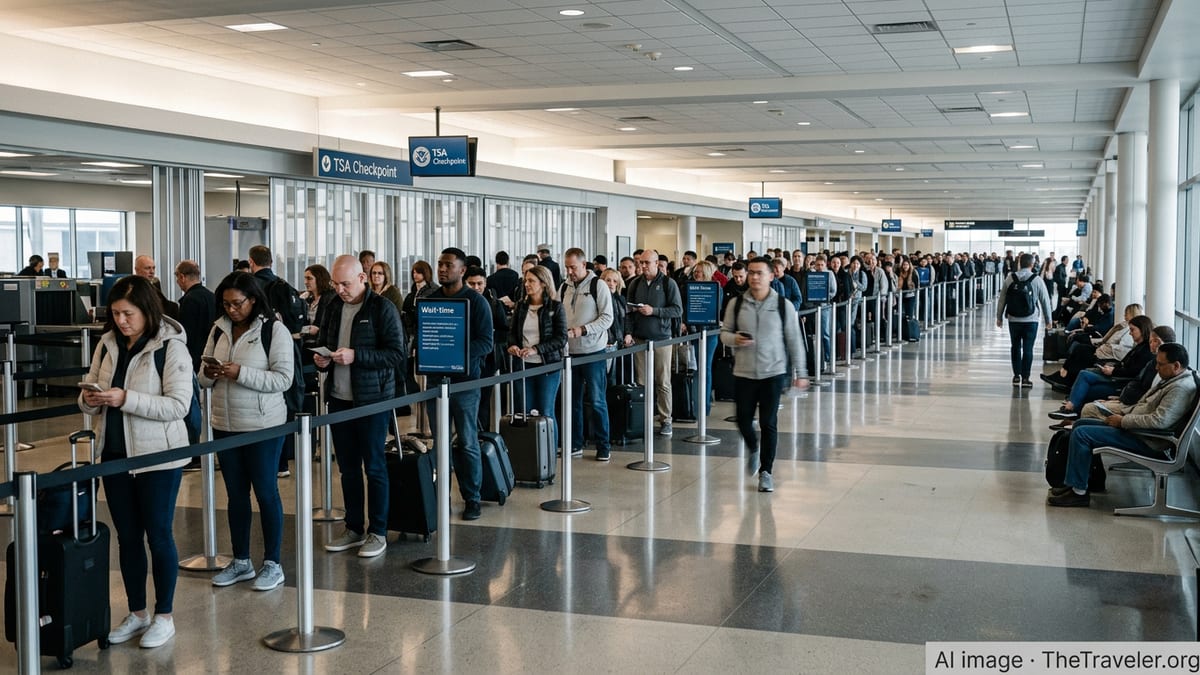
Shutdown Politics Collide With Peak Travel Season
The latest turbulence for travelers stems from a partial shutdown of Department of Homeland Security operations that began in mid-February, freezing pay for tens of thousands of Transportation Security Administration staff and Customs and Border Protection officers while leaving front-line airport functions technically “essential.” Publicly available information shows that the funding lapse quickly translated into mounting staffing strains at security checkpoints just as spring travel demand began to climb.
Reports from outlets including national broadcasters and regional stations describe hourslong lines at several major airports, with some passengers missing flights and airlines scrambling to rebook. Aviation analysts note that while U.S. airspace and air traffic control remain fully operational, the weakest link is proving to be the human-intensive security and immigration screening layers that depend on DHS personnel now working without timely pay.
Initially, the administration sought to contain the disruption by scaling back trusted-traveler programs such as TSA PreCheck and Global Entry, moves that were briefly reported as suspensions before officials clarified that enrollment and some fast-track lanes would continue in limited form. Even these partial pauses, however, slowed processing for frequent international travelers and added pressure to already congested general screening queues.
As the shutdown dragged on past the one-month mark, administration officials increasingly framed the growing airport chaos as leverage in a broader confrontation with congressional Democrats over immigration and election policy, prompting warnings from travel groups that the country’s transport system was becoming collateral damage.
Airport Shutdown Threat Raises Stakes for Airlines
Concern escalated sharply when senior administration figures began floating the possibility of shutting down operations at a list of smaller commercial airports in order to redeploy unpaid TSA screeners to the nation’s largest hubs. Trade publications and aviation forums report that internal planning scenarios envision pulling federal security staff from lightly trafficked regional facilities and consolidating resources at the top 25 to 30 airports that handle the majority of passenger volume.
While no final list has been publicly confirmed, online discussions among airport staff and pilots reference warnings circulated by federal officials that certain small and mid-sized hubs could lose security coverage with just days’ notice. In practical terms, such a move would halt scheduled commercial departures from those airports, forcing airlines to reroute passengers through alternative gateways or cancel flights outright.
Airline planners caution that even a targeted shutdown of smaller fields could reverberate across global networks. Many regional U.S. airports function as feeders into long-haul hubs such as Chicago, Atlanta, Dallas and Los Angeles. Removing those spoke airports from schedules would break connecting itineraries for travelers originating in smaller cities, reducing load factors on international flights and complicating crew rotations already strained by recent irregular operations.
Industry analysts also stress that aircraft repositioning is not as simple as reassigning flights to nearby airports. Slot constraints, gate availability and local staffing limits at alternative hubs would all curb the ability of carriers to absorb displaced traffic. Any rapid, politically driven reshaping of the airport map, they argue, risks cascading delays and a prolonged schedule reset even after funding is eventually restored.
ICE Deployment at Terminals Deepens Passenger Anxiety
Compounding operational worries is the administration’s decision to deploy Immigration and Customs Enforcement officers in tactical gear to assist at airport checkpoints where TSA staffing has thinned. According to published coverage, ICE personnel have been directed to handle document checks and crowd control roles at several of the country’s busiest airports, while TSA officers focus on baggage and body screening.
Images broadcast by national and local media of armed immigration officers patrolling terminal concourses have triggered unease among many travelers, particularly foreign nationals and dual citizens wary of the administration’s hard-line record on deportations and expanded travel restrictions. Travel forums are now filled with accounts from passengers who describe a visibly heavier enforcement presence and more frequent secondary inspections at some ports of entry.
Legal experts interviewed by news outlets emphasize that ICE assistance at airports does not formally change the rights of travelers under existing immigration and customs law. Nonetheless, they acknowledge that the optics of a militarized security posture, combined with the uncertainty of a partial government shutdown, can create a climate of intimidation that discourages discretionary visits and business trips to the United States.
Some airport executives, speaking in public briefings and quoted statements, have welcomed any additional personnel that can help move lines, while tourism advocates warn that blending traditional security functions with immigration crackdowns risks accelerating a reputational shift that portrays U.S. gateways as hostile or unpredictable.
Global Tourism and Airline Alliances Brace for Disruption
The United States remains one of the world’s most important aviation markets, both as a destination and as a transit corridor between regions. International carriers in Europe, Asia and Latin America rely on U.S. hubs to funnel passengers onward to third countries. For these airlines, the prospect of even partial U.S. airport shutdowns raises difficult contingency planning questions that could affect global connectivity.
According to reporting in travel industry publications, several foreign airlines have already begun modeling scenarios in which feeder traffic from smaller U.S. cities disappears for weeks or months, leaving widebody flights from major gateways more dependent on origin-and-destination demand. Some carriers are reviewing whether to reduce frequencies or temporarily consolidate routes if the DHS stalemate persists deep into the summer high season.
Tourism boards outside the United States are also monitoring developments closely. Destinations that attract large numbers of visitors routed through American hubs, including Caribbean islands and parts of Central and South America, fear knock-on effects if connecting itineraries become less reliable. Early indications from online booking platforms suggest that some travelers are already seeking itineraries that avoid U.S. layovers, opting instead for alternative hubs in Canada, Europe or the Gulf.
For global airline alliances, the situation presents a test of the resilience of joint ventures and codeshares that rely on finely balanced schedules. Any U.S.-driven airport shutdowns or prolonged security bottlenecks could force partners to negotiate revised capacity plans and revenue-sharing formulas on compressed timelines, adding financial complexity to what is already a politically charged travel environment.
Travelers Scramble for Alternatives Amid Uncertain Outlook
For individual passengers, the immediate impact of the unfolding crisis is being felt in longer security queues, increased flight delays and mounting uncertainty about near-term travel plans. Advice circulating from travel agents and consumer advocates, based on current conditions, urges passengers to arrive at airports significantly earlier than usual, monitor airline notifications closely and consider flexible or fully refundable tickets where possible.
Domestic travelers affected by potential closures at smaller airports are being encouraged to map out overland options such as intercity rail and long-distance buses, or to drive to larger hubs that are likely to retain TSA coverage even under a consolidation scenario. Some frequent flyers are also weighing whether to shift premium bookings to foreign carriers operating from non-U.S. transit points to minimize exposure to additional checks and potential schedule shocks.
Consumer groups are pressing for greater transparency from both the government and airlines about which airports could face shutdowns and how long any closures might last. They argue that clear timelines and criteria would allow passengers and businesses to make informed decisions rather than reacting to last-minute cancellations.
As negotiations in Washington continue without a clear resolution, travel professionals broadly agree on one point: the combination of a DHS funding shutdown, the visible deployment of immigration officers at checkpoints and an active threat to close some airports has injected a new level of political risk into flying to, from or through the United States, with consequences that could reverberate across the global aviation system well beyond the current crisis.