


More news on this day
American Airlines is preparing to unwind a familiar boarding gate ritual after President Donald Trump signed a directive targeting certain pre-boarding practices, setting up a clash between federal policy priorities and long-standing airline customer-service traditions.
Get the latest news straight to your inbox!
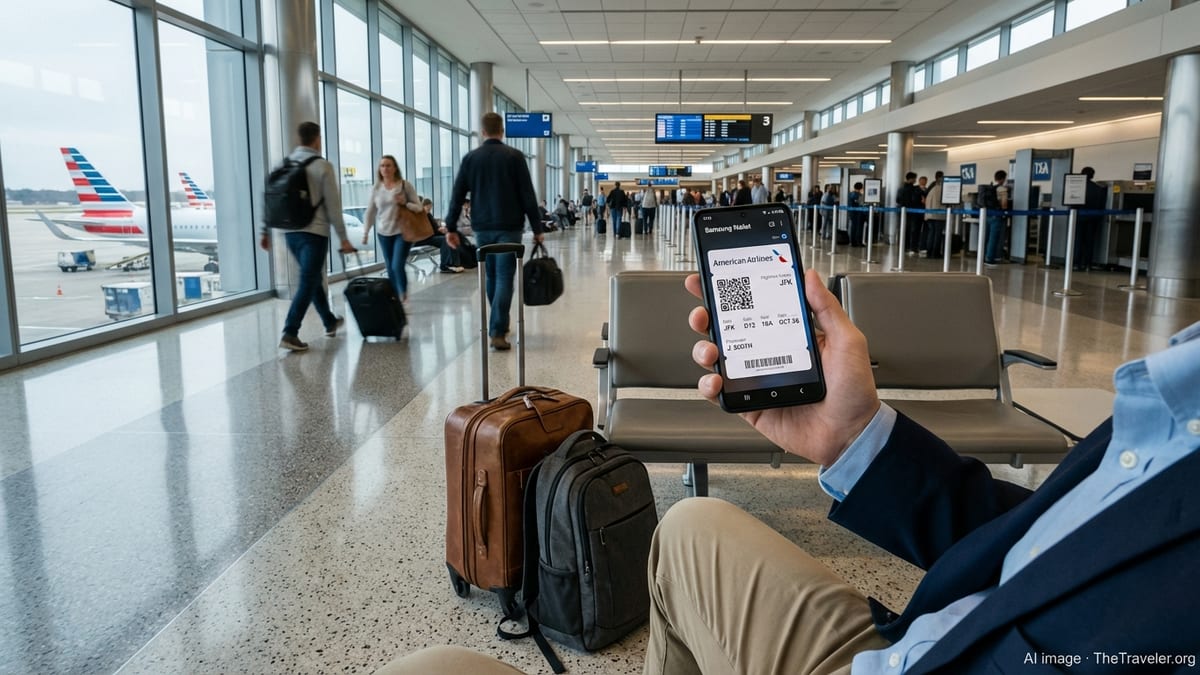
A Presidential Directive Reaches the Jet Bridge
According to publicly available government records and media coverage, the new directive signed by President Donald Trump focuses on standardizing boarding procedures in ways that federal officials say are meant to enhance terminal security and crowd management. While the order does not name specific airlines, its language on uniform pre-boarding categories and limits on informal gate practices is expected to have an immediate impact on carriers with elaborate boarding traditions, including American Airlines.
Reports indicate that the measure urges carriers to reduce discretionary pre-boarding announcements and ad hoc categories that are not tied to clearly defined assistance needs, cabin classes or frequent-flyer status. For American, which has spent years fine-tuning a multi-group boarding system that often begins with a set of scripted, ritualized calls at the gate, the directive effectively curtails the more ceremonial elements of that routine.
Industry analysts cited in recent coverage suggest that the federal move is partly a response to chronic congestion at boarding gates across large U.S. hubs, and to the perception that loosely enforced pre-boarding rules contribute to crowding and confusion. American’s highly segmented boarding ladder, with distinct groups and a history of early boarding courtesies, has frequently been at the center of that debate.
End of a Familiar Gate Tradition
American’s boarding ritual has long been a visible part of the U.S. air travel experience, especially at the airline’s major hubs in Dallas Fort Worth, Charlotte and Miami. For many passengers, the cadence of pre-boarding announcements, a parade of elite-status tiers and special categories, and a tightly choreographed line at the scanner became as recognizable as the in-flight safety briefing.
Publicly available information on American’s boarding process shows that the airline relies on a series of numbered groups layered on top of pre-boarding for premium cabins, loyalty members and travelers needing extra time. In recent years, that system has been reinforced by proprietary gate software designed to catch anyone attempting to board outside their assigned group, a response to the spread of so-called “gate lice,” the term often used for passengers crowding the podium before their turn.
The new presidential directive does not abolish boarding groups outright, but its emphasis on simplifying the sequence and limiting soft, discretionary categories is expected to chip away at the more ceremonial aspects of American’s gate choreography. Industry observers say that, in practice, this amounts to ending a tradition in which American’s agents used a familiar rhythm of announcements and informal exceptions to manage crowds and reward certain travelers.
For customers, the change is likely to be most noticeable at large hubs, where long lines and overlapping boarding calls have been common. Instead of the elaborate, often personalized routine at the podium, passengers may see more standardized, tightly scripted announcements closely aligned with the categories listed in the directive.
Tech-Driven Boarding Meets Federal Standardization
The timing of the directive intersects with American’s broader pivot toward automated boarding technology. The carrier has been piloting and rolling out boarding software that rejects boarding passes scanned too early, training audible alerts on customers attempting to jump ahead of their group. More recently, American announced the deployment of electronic boarding gates at Dallas Fort Worth International Airport, with plans to extend similar systems across its network.
These systems, designed to reduce human discretion and impose a consistent boarding rhythm, may actually ease American’s transition into the new regulatory environment. By encoding boarding rules into scanners and e-gates, the airline is already limiting on-the-spot exceptions and informal courtesies that once formed part of its boarding ritual.
Analysts note that the directive’s focus on uniform categories and predictable flows meshes with American’s investments in automation, including machine-learning tools that help hubs manage traffic more efficiently. As the airline scales up e-gates and more sophisticated boarding algorithms, its compliance with the new federal standards is likely to be enforced by software at least as much as by human judgment at the podium.
However, the move toward automation also raises questions about the customer experience. Travelers accustomed to negotiating with a gate agent for a slightly earlier boarding slot, or relying on unadvertised exceptions for families and informal groups, may find the process far less flexible once both federal rules and electronic gates restrict those ad hoc adjustments.
Implications for Passengers and Competitors
For passengers, the immediate impact of the Trump directive and American’s response will be felt in how early they can line up, which categories qualify for pre-boarding and how strictly boarding groups are enforced. Publicly available airline guidance already emphasizes arriving at the gate well before boarding, but travelers may now see clearer signage, firmer crowd controls and less tolerance for milling around the scanner before their group is called.
Travel reports suggest that airlines across the U.S. have experimented with different ways to tackle gate congestion, from biometric trials to new group structures and extended boarding times. American has been particularly active in tweaking its process, refining boarding groups and adding a few extra minutes to the schedule in an effort to reduce stress at the gate and cut down on last-minute baggage checks.
Competitors are watching how American adapts its high-profile boarding ritual to the new federal framework. Some carriers already rely on simpler sequences or more automated systems, which may require fewer visible adjustments. Others with similarly layered gate traditions could ultimately follow American’s lead if the directive encourages a broader industry shift toward streamlined, less discretionary boarding.
In the near term, frequent flyers may face a period of adjustment as scripts change and some familiar phrases disappear from the loudspeakers at American’s gates. Over time, the combination of federal standardization and technology-driven boarding could redefine what the end of the jet-bridge journey looks like, trading a long-standing ritual for a more regulated, software-managed routine.
A Test Case for Balancing Order and Hospitality
Beyond the operational details, the directive and American’s pivot away from its traditional gate routine highlight a wider tension in modern air travel between efficiency, security and perceived hospitality. Airlines are under pressure to keep flights on time, manage larger aircraft and comply with evolving federal expectations, all while persuading customers that they are being treated fairly and personally.
Boarding is one of the few moments in the travel day where passengers interact in real time with airline staff, and where status recognition, special assistance and discretionary gestures are highly visible. By narrowing the room for improvisation and paring back the ceremonial aspect of the process, the new rules test how far carriers like American can lean into automation and standardization without eroding the sense of individual attention many customers still expect.
Observers note that American has increasingly framed its boarding changes as part of a “seamless journey,” in which technology and standardized procedures guide travelers from check-in to takeoff. The Trump directive accelerates that trajectory by tying elements of boarding behavior directly to federal guidance, giving airlines an additional incentive to make future changes through system design rather than on-the-spot human discretion.
As American retools its gate playbook to comply, travelers may find that the most visible change is not a single policy shift but a gradual fading of a once-familiar ritual. What replaces it is likely to be a quieter, more tightly controlled process, shaped as much by presidential signatures and software code as by the voices on the public address system.