

More news on this day
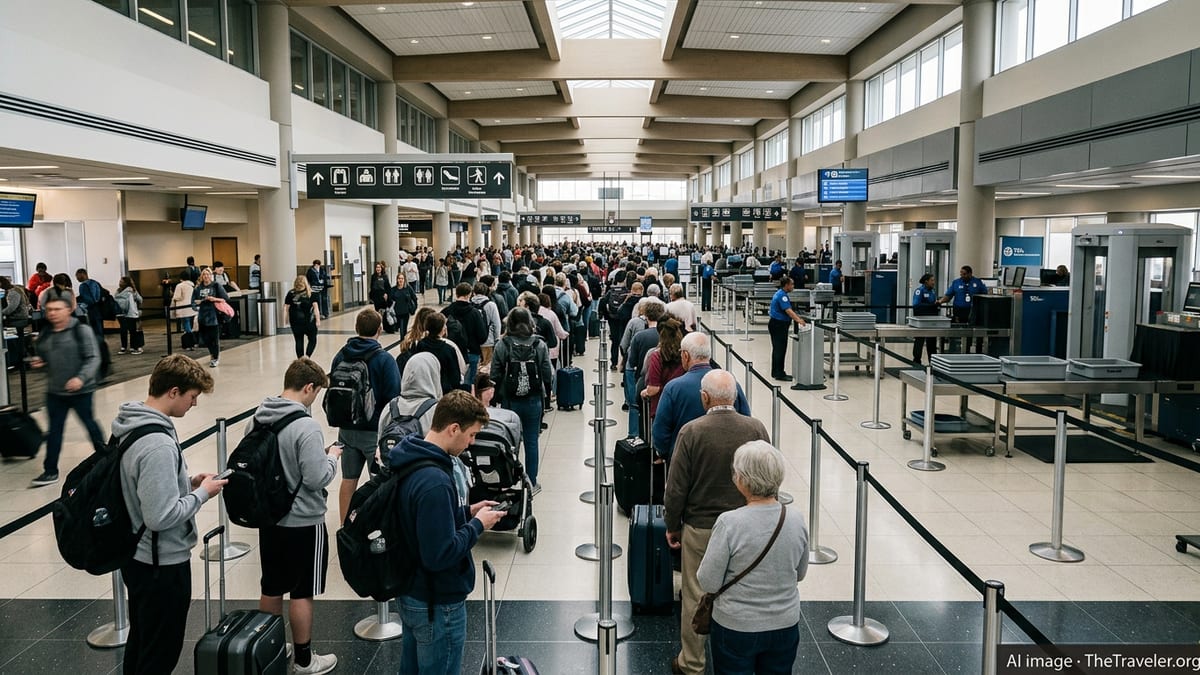
Staffing shortages at Transportation Security Administration checkpoints, colliding with record spring break crowds and a partial federal government shutdown, are triggering hours long security lines at major U.S. airports and forcing travelers to radically rethink how they plan their trips for March 2026.
Get the latest news straight to your inbox!
Shutdown, Staffing Strains and Surging Demand Collide
Published coverage across national and local outlets indicates that spring break 2026 is arriving just as a partial Department of Homeland Security shutdown tightens resources at airport security checkpoints. TSA officers are continuing to work without full pay, and reports show that some are calling in sick or seeking temporary work elsewhere, thinning the ranks at busy hubs.
The timing is especially challenging because passenger volumes are cresting to new highs. Airports from Denver to Houston and Dallas have issued forecasts showing millions of travelers moving through their terminals between early and late March, a surge that would strain security capacity even in normal times. With fewer agents available to staff lanes, even small disruptions are rippling into checkpoint backlogs.
Travel industry analysis notes that the combination of unpaid federal staff, high demand and inflexible checkpoint operating hours is creating a fragile system. Once lines build during the early morning rush, they are proving difficult to clear before the next wave of departures. For travelers, that is translating into missed flights, rushed connections and a much more stressful start to vacations.
Major Hubs See Multi Hour Waits as Smaller Airports Vary
Recent reporting points to some of the nation’s largest airports as the hardest hit by TSA staffing shortages. Coverage of conditions in Atlanta, Houston, New Orleans and Orlando describes wait times stretching from two to nearly three hours at peak periods, particularly in early morning and late afternoon departure banks that are popular with spring break travelers.
In Orlando, which is entering its busiest stretch of the year as theme park visitors and cruise passengers converge, airport projections for mid March show single day passenger counts climbing well above last year’s spring break peaks. Local travel advisories are urging travelers to arrive far earlier than usual, warning that TSA lines could slow even typically efficient checkpoints when crowds crest.
Houston’s Hobby Airport has been highlighted in local coverage for lines that recently reached two hours as vacation traffic spiked, while nearby George Bush Intercontinental has so far reported shorter waits but is preparing for more than 2 million passengers over the main spring break period. Similar patterns are noted at Denver International and Dallas Fort Worth, where security lines have swelled as passenger volumes climb.
By contrast, some mid sized and smaller airports are experiencing only modest slowdowns. Reports from Richmond, Memphis, Palm Springs and regional airports in the Midwest and Pacific Northwest describe busier than usual checkpoints but not the severe bottlenecks seen at the largest hubs. Even so, these airports are cautioning that travelers should still build in extra time, as a reduced number of open lanes can quickly create backups if a flight bank departs close together.
How Travelers Can Navigate Long TSA Lines This Spring
Travel experts and airport advisories are converging on a central recommendation for spring break 2026: arrive significantly earlier than in previous years. Many airports are publicly urging domestic travelers to be at the terminal at least three hours before departure and international travelers up to four hours ahead, especially for flights leaving between 5 a.m. and 9 a.m. or during late afternoon peaks.
Published guidance from multiple airport authorities also stresses the value of checking security wait time tools before leaving for the airport. The TSA’s own app, airport specific trackers and crowdsourced updates on social channels can offer a snapshot of current conditions, although some airports acknowledge that official wait time feeds have occasionally lagged real world lines during the shutdown.
Travel advisers note that enrolling in expedited programs such as TSA PreCheck or Clear remains helpful where available, but the current staffing crunch means even priority lanes can be slower than usual. Travelers are being encouraged to treat these programs as ways to reduce, but not eliminate, the need for a generous time buffer. Experts also emphasize basic preparation: organizing carry on liquids and electronics in advance, wearing easy to remove shoes and avoiding prohibited items that can trigger bag searches and further slow lines.
Families traveling with children are being advised to factor in extra time for strollers, car seats and snacks at the checkpoint. Some travel planners recommend shifting to midday or late evening departures when possible, noting that these time slots are often less congested and may offer more predictable security experiences during this unusually strained season.
Airport Strategies to Keep Crowds Moving
Publicly available information from airport press rooms shows that many facilities are adjusting operations in real time to cope with TSA shortages. Some are reallocating staff from less busy checkpoints to peak time lanes, opening additional screening lines earlier in the morning and deploying more wayfinding staff to direct passengers toward shorter queues.
Several airports have issued detailed spring break travel bulletins outlining recommended arrival times, parking expectations and checkpoint locations. Denver International, Houston Airports and regional facilities such as Appleton International and San Antonio International have all circulated guidance encouraging travelers to use all available checkpoints, not just the ones closest to parking or rideshare drop offs, in order to spread crowds more evenly.
At the same time, airport communications are reminding travelers that TSA officers themselves are operating under significant strain, working extended shifts during a federal funding dispute. Consumer advocates are urging passengers to plan ahead and keep interactions at the checkpoint calm and efficient, noting that confrontations or confusion at the front of the line often slow processing for everyone behind.
Industry observers say spring break 2026 is likely to serve as a stress test for how airports and federal agencies manage staffing and funding volatility during peak seasons. Lessons from this period could shape how future contingency plans are designed, including whether more airports seek additional flexibility to support screening operations during political or budget standoffs.
What to Watch as Spring Break Season Peaks
Looking ahead to the remaining March travel window, analysts expect TSA lines to remain unpredictable, with conditions varying sharply by airport, time of day and local staffing levels. Sundays and Saturdays are forecast to be the most challenging, as vacation turnovers stack departing and arriving passengers into the same crowded terminals.
Travel experts recommend that passengers closely monitor messages from their departure airport in the 24 hours before flying. Many facilities are using social media, email alerts and homepage banners to provide same day updates on security conditions, parking capacity and construction or lane closures that might affect access to checkpoints.
For those with flexibility, shifting itineraries by even a few hours can help avoid the worst backups. Choosing early afternoon flights instead of predawn departures, connecting through less congested hubs and flying on Tuesdays or Wednesdays rather than weekends are among the strategies being highlighted in consumer travel coverage.
While the current turbulence around TSA staffing and federal funding may ease later in the year, travel advisers say spring break 2026 offers a clear message for anyone heading to the airport in the near term: in a season of record crowds and strained checkpoints, extra time, preparation and patience are no longer optional, but essential parts of a successful trip.