


More news on this day
Tui has been ranked among the worst airlines in Britain for flight delays in fresh analysis of official aviation data, underscoring the continuing struggle of UK carriers to restore punctuality to pre-pandemic levels.
Get the latest news straight to your inbox!
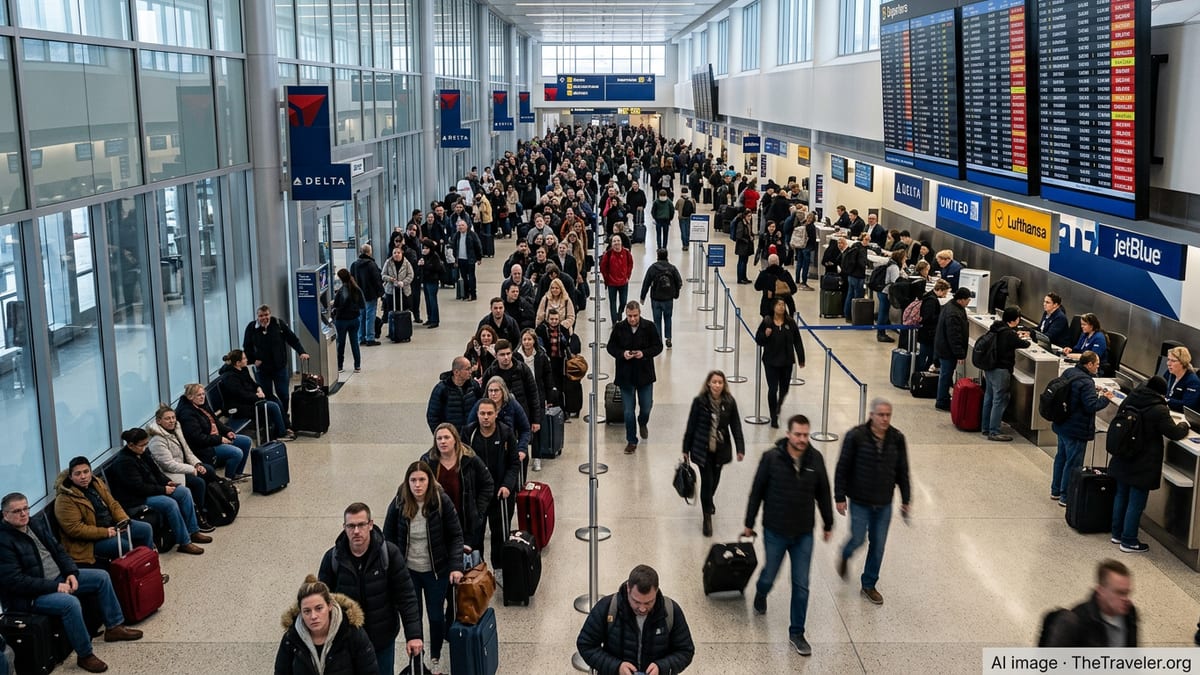
CAA figures highlight growing punctuality gap
Recent analysis of Civil Aviation Authority data indicates that Tui is among the poorest performers for on-time departures from UK airports, with average delays significantly above the national mean. Across all major airlines serving the UK, flights left an average of around 18 minutes late in 2024, according to published summaries of CAA punctuality statistics, but Tui’s typical delay has been reported as materially higher.
Consumer-focused reviews of CAA departure data suggest that Tui lags many of its mainstream rivals, including easyJet, Jet2 and Ryanair, when measured by average delay per flight. While exact rankings vary slightly between different analyses, Tui consistently appears in the lower tier of major UK carriers for punctuality.
The pattern is not restricted to a single season. Data aggregated over a full 12-month period shows that Tui’s delays have persisted across peak summer holiday months and quieter shoulder seasons alike, pointing to systemic pressures rather than isolated operational shocks.
Holiday carriers hit hardest as demand rebounds
The figures place Tui within a broader trend in which leisure-focused airlines have found it harder to restore punctual schedules in the wake of the pandemic. Reports drawing on CAA data show that many carriers have operated fuller schedules since 2022, but capacity, staffing and airspace constraints have not always kept pace with demand.
Industry analysis indicates that package-holiday specialists such as Tui tend to concentrate operations on a limited number of bases and peak travel days, which can magnify the impact of any disruption. A single late-arriving aircraft or ground-handling delay can cascade through a tightly timed rotation, prolonging knock-on delays for passengers throughout the day.
Travel analysts note that sustained demand for Mediterranean and long-haul sun destinations has left little slack in Tui’s flying programme at popular airports. When schedules are heavily banked around school holidays and weekend departures, even modest operational issues can quickly push average delay figures upward.
Airports and airspace add to timetable pressures
Tui’s poor ranking also reflects wider congestion in the UK aviation system. CAA and government statistics show that some of Britain’s busiest hubs have recorded some of the longest average delays, with key leisure gateways regularly appearing near the bottom of airport punctuality tables. Such airports are important bases for Tui’s UK operation, increasing its exposure to bottlenecks beyond the airline’s direct control.
Across Europe, air traffic control capacity and staffing remain recurring concerns. Industry reports highlight that periods of industrial action, sector-wide staffing shortages and weather-related restrictions have all contributed to extended delays for flights bound to and from UK airports. Airlines with dense schedules into constrained Mediterranean airspace, a category that includes Tui, are particularly vulnerable to such external shocks.
Nevertheless, consumer groups point out that other carriers operating similar route networks have managed to achieve shorter average delays. This comparison has fuelled criticism that some airlines, including Tui, have been too slow to build resilience into their schedules or invest in additional aircraft and crew to absorb irregular operations.
Passenger impact and compensation rights
The knock-on effect for travellers has been substantial. Recent disruption studies of the UK market suggest that more than a third of passengers have faced some form of delay or cancellation in a typical year, with leisure travellers disproportionately represented because of the concentration of traffic on peak holiday routes.
Under the UK’s retained version of EU Regulation 261, passengers whose flights arrive more than three hours late may be entitled to fixed-sum compensation, depending on journey length and the cause of disruption. Travel advice published by consumer organisations stresses that eligibility often hinges on whether the delay was within the airline’s control. Technical faults and crew shortages are typically treated as the carrier’s responsibility, while extreme weather or widespread air traffic control failures may be considered extraordinary circumstances.
For Tui customers, this framework has become increasingly relevant as average delays have remained elevated. Passenger advocacy groups encourage travellers to keep detailed records of boarding passes, delay notifications and any written explanations offered by the airline, as these can be crucial when pursuing claims for reimbursement or statutory compensation.
Airline response and prospects for improvement
Tui acknowledges in public statements that punctuality remains a challenge across the sector and has pointed to factors such as air traffic restrictions, airport congestion and external operational issues as key drivers of disruption. The airline maintains that it prioritises completing journeys, even when delays are unavoidable, arguing that operating a late departure can be preferable to canceling and rebooking large numbers of holidaymakers.
However, recent consumer research suggests that satisfaction with airlines’ handling of delays is closely tied to the clarity and timeliness of communications. Surveys referenced by the CAA show that passengers value prompt updates via text, email and airline apps, as well as visible support at airport gates when schedules unravel. Analysts argue that Tui and its peers can improve perceptions even before punctuality statistics return to pre-pandemic levels by focusing on how disruption is managed in real time.
Looking ahead, published CAA material indicates that regulators intend to expand transparency around airline punctuality by releasing more regular and detailed statistics. Industry observers expect that such data will keep pressure on carriers that consistently underperform, including Tui, to address operational weaknesses and redesign schedules so that average delays begin to fall over the coming seasons.