


More news on this day
Tui Airways has been ranked among the worst airlines for flight delays from UK airports, as fresh analysis of Civil Aviation Authority data highlights how average wait times for departing passengers remain stubbornly above pre-pandemic levels.
Get the latest news straight to your inbox!
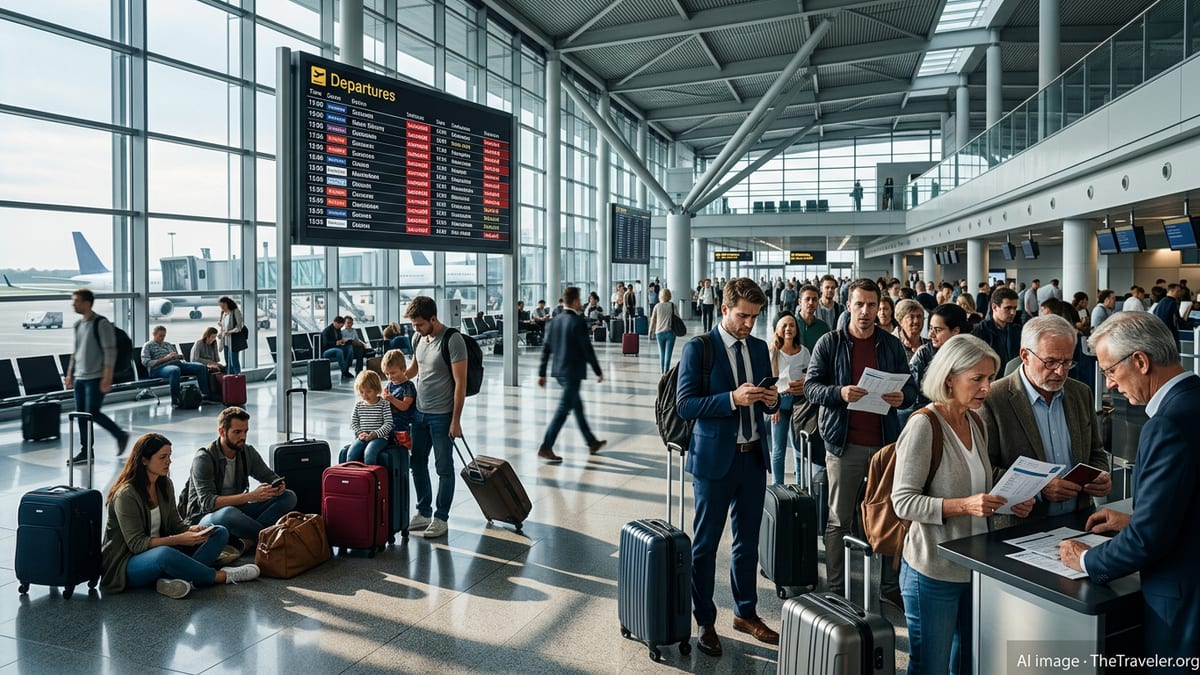
New figures put leisure carriers under scrutiny
Analysis of 2023 Civil Aviation Authority data by UK media shows Tui among the poorest performers for punctuality on routes departing UK airports, grouped with low-cost and long-haul rivals that also recorded extended delays. Reports indicate that Tui flights left on average close to 28 to 40 minutes behind schedule, depending on route mix and methodology, placing the leisure-focused operator close to the bottom of rankings for major airlines serving British passengers.
The same datasets highlight that Wizz Air, which has a strong presence at London Luton and other regional airports, again featured as the single worst major carrier for average delay times. In some analyses of CAA records, its typical departure lag exceeded 30 minutes, underscoring an ongoing pattern of disruption for travellers using ultra-low-cost operators.
By contrast, Jet2.com and Emerald Airlines were identified in separate coverage as among the more punctual carriers, with average delays materially below the overall UK market figure of just over 20 minutes. This widening gap between the best and worst performers is reinforcing the perception that carrier choice can have a significant impact on the reliability of departure times.
Across the board, the CAA data indicates that around two-thirds of UK flights in 2023 departed within 15 minutes of schedule, a level of punctuality that remains weaker than in the years before the Covid-19 pandemic, even as demand has largely recovered.
Average delays still higher than before the pandemic
Publicly available information from aviation regulators and industry analysts shows that the typical UK departure in 2023 left roughly 20 to 21 minutes late, an improvement on the disruption seen immediately after international travel resumed, but still worse than 2019. The gap illustrates how airlines and airports are still working through structural strains ranging from staffing to airspace congestion.
For passengers, the headline figures on average delay can understate the real impact. While a 20-minute lag may be manageable for many, the distribution of disruption is uneven, with leisure carriers such as Tui more likely to operate long-haul or complex multi-sector flights where even a modest initial delay can cascade into hours of waiting later in the day.
Industry observers note that some carriers have sought to pad schedules to improve reported on-time performance, building additional buffer time into timetables. This can mean that an aircraft leaving the gate late still arrives within the 15-minute window formally counted as “on time,” potentially masking the experience of passengers who face queues at security and boarding before departure.
Despite intense public scrutiny after the chaotic summer seasons of 2022 and 2023, there is little evidence so far that average wait times have fully returned to earlier norms, and new CAA releases for early 2024 continue to show variability between airlines and airports.
Tui’s leisure model and pressure on peak holiday routes
Tui’s position among the worst airlines for delays has drawn particular attention because of its focus on package holidays, where a single delayed flight can disrupt not only outbound travel but also hotel check-in times, transfers and onward excursions. Many of its aircraft operate tightly scheduled rotations linking UK regional bases with Mediterranean and long-haul sun destinations, leaving limited slack to recover from earlier disruptions.
Analyses of punctuality data suggest that Tui’s delays are often most pronounced at peak holiday times, such as school breaks and the main summer season, when airports and air traffic control systems are also under the greatest strain. Late-arriving aircraft and crew availability issues are frequently cited in industry-wide reports as major contributors to extended waits.
Travel trade publications note that the airline has invested in newer aircraft types on key routes and has adjusted some schedules to improve reliability, but the most recent annual figures still leave it trailing many competitors. For now, its brand remains closely associated with the broader challenges facing leisure-focused carriers that depend on seasonal demand spikes.
Consumer advocates argue that the combination of higher fares and persistent delays is especially frustrating for families who may have limited flexibility around travel dates and budgets, and who often select package holidays in search of a more seamless experience.
Airports and airspace add to delays
The performance of airlines such as Tui is closely intertwined with conditions at the airports they use most heavily. Separate analysis of CAA figures for 2023 placed several major UK hubs among the worst for departure delays, with London Gatwick identified as having some of the highest average late-departure times, at close to half an hour behind schedule.
Secondary airports that serve as bases for low-cost and holiday carriers, including Luton and a number of regional gateways, also recorded elevated average delays. Congested departure banks, limited stand capacity and knock-on effects from air traffic restrictions over busy European corridors all contribute to extended waits at the gate and on taxiways.
Industry-focused studies point to Europe-wide airspace complexity, frequent weather disruptions and staffing shortages at air traffic control centres as further sources of delay. When combined with carrier-specific operational issues, these factors can create compounding problems that are particularly visible on dense leisure networks.
Analysts caution that while individual airlines can improve punctuality through better scheduling, maintenance planning and crew management, broader systemic issues at airports and in the skies will continue to influence average wait times for the foreseeable future.
What the data means for travellers this summer
With the main 2026 summer season approaching, the recent rankings put passengers on notice that selecting certain airlines and departure airports may carry a higher risk of delays. Tui’s inclusion among the worst performers for recent years is likely to inform consumer decisions, especially where travellers have a choice between multiple carriers on similar leisure routes.
Travel experts recommend that passengers pay close attention to scheduled departure times, connection windows and the historical punctuality of airlines on specific routes when planning trips. Early-morning departures are often less exposed to knock-on disruption from earlier flights, while flying from airports with stronger punctuality records can reduce the chances of extended gate or tarmac waits.
Consumer information services also stress the importance of understanding compensation and care rights under UK and European rules for significant delays and cancellations. Although these regulations do not eliminate disruption, they can provide recourse when long waits occur for reasons within an airline’s control.
For Tui and its peers, the latest data reinforces the competitive imperative to improve on-time performance. As passengers grow more aware of comparative rankings and average wait times, airlines with persistent delay problems may find it harder to command premium prices or win repeat business, particularly in a market where alternative carriers are working to highlight stronger punctuality records.