


More news on this day
A Turkish Airlines widebody jet arriving from Istanbul triggered an emergency response at Kathmandu’s Tribhuvan International Airport on May 11 after a tyre on the landing gear caught fire, leading to a rapid evacuation of hundreds of passengers but no reported serious injuries.
Get the latest news straight to your inbox!
Minor Fire, Major Disruption at Tribhuvan International Airport
Publicly available reports indicate that the Airbus A330 from Istanbul landed in Kathmandu on Monday morning with smoke and flames visible from the right rear landing gear. Coverage from multiple outlets describes a tyre fire that started shortly after touchdown, prompting crews at Tribhuvan International Airport to activate emergency procedures on the single-runway hub.
According to published accounts, all 277 passengers and 11 crew members on board were evacuated using emergency exits and slides. News reports differ slightly on whether a small number of passengers sustained minor injuries during the slide evacuation, but there have been no indications of serious harm or hospitalizations.
The incident led to a temporary closure of Tribhuvan International Airport, Nepal’s main international gateway. Flights bound for Kathmandu were placed in holding patterns or diverted while teams inspected the runway, cooled the landing gear area and towed the aircraft to a safe position away from active operations.
Airport operations gradually resumed after about an hour, according to regional media, once fire crews confirmed the blaze was fully extinguished and the runway was clear of debris. The disruption nonetheless rippled through the morning schedule at an airport that already faces capacity constraints and challenging weather conditions.
Airline Response and Passenger Reaccommodation
Public statements from Nepal’s civil aviation officials, as reported in international media, indicate that the aircraft remained on the ground in Kathmandu for inspection after the fire. The affected Turkish Airlines flight did not continue to Istanbul as scheduled, prompting the airline to arrange onward travel for stranded passengers.
According to coverage citing airline representatives, an additional aircraft was planned to operate to and from Kathmandu to carry passengers whose journey was interrupted. Ground staff assisted travelers with rebooking and accommodation, while safety teams conducted checks on the damaged landing gear and surrounding structures.
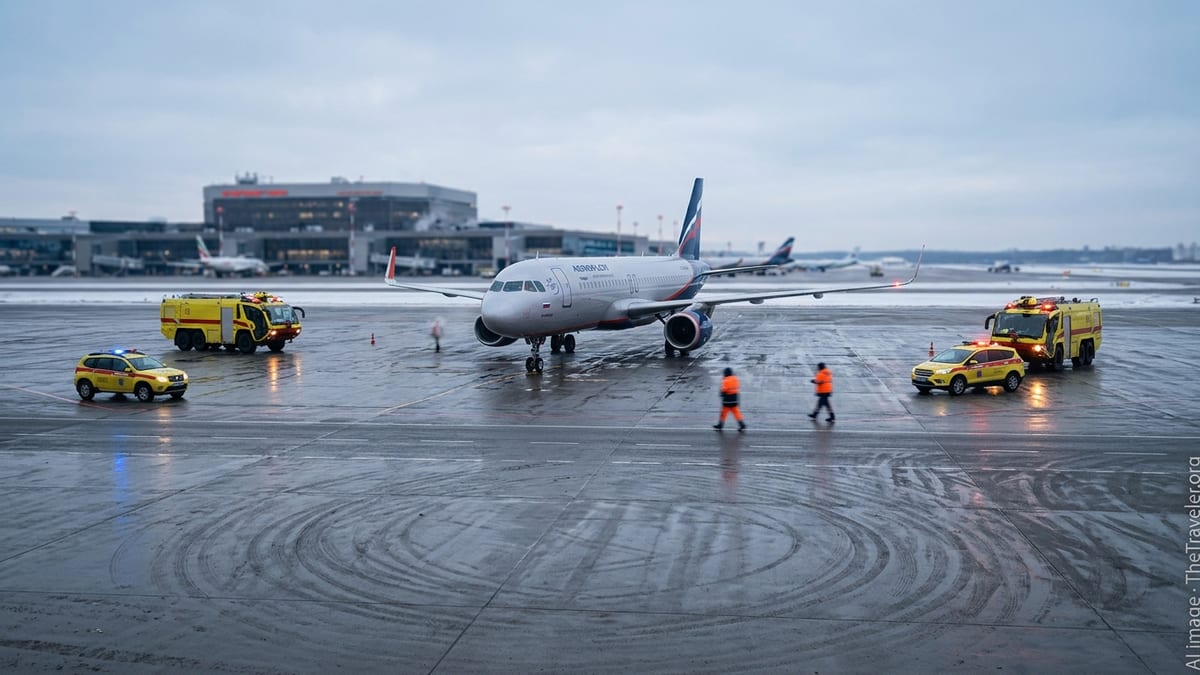
Images carried by regional news outlets show the aircraft parked on the apron with fire trucks and foam on the tarmac around the landing gear area. The visible damage appears to be concentrated around the wheel assembly, consistent with a contained tyre or brake-related fire rather than a fuselage or engine blaze.
Initial reporting has not pointed to any broader technical issue across the fleet, and the event is currently being treated as an isolated occurrence. Formal findings will depend on the outcome of technical inspections and any investigation that may follow.
Nepal’s Challenging Operating Environment Back in the Spotlight
The Kathmandu incident has again drawn attention to the operating challenges at Tribhuvan International Airport, which sits in a bowl of mountainous terrain and is subject to rapidly changing weather. Aviation analysts frequently highlight the combination of altitude, surrounding hills and single-runway configuration as factors that require careful operational planning.
Recent coverage has noted that Nepal has experienced a series of aviation events in past years, including runway excursions and crashes involving domestic carriers in difficult terrain. International airlines, including Turkish Airlines, generally maintain strong safety records, but any event at Kathmandu inevitably renews discussion about airport infrastructure, navigational aids and emergency preparedness.
Observers point out that Monday’s fire occurred after the aircraft had already landed, meaning approach and terrain considerations were not central to the event. Even so, having only one runway available magnified the impact of the temporary closure, underscoring how any incident on the pavement can quickly disrupt traffic for airlines and passengers throughout the region.
The incident also comes in the context of ongoing global scrutiny of airport rescue and firefighting capabilities, particularly at high-altitude or terrain-constrained facilities. Visual evidence and time-stamped reporting from Kathmandu indicate that local emergency crews responded quickly and were able to keep the fire localized to the landing gear.
Recent Turkish Airlines Incidents Highlight the Role of Emergency Procedures
The Kathmandu tyre fire follows another widely reported Turkish Airlines emergency earlier this year involving a flight that departed the same airport. In February, an Istanbul-bound Airbus A330 operating from Kathmandu diverted to Kolkata after the crew reported an engine fire, with all passengers landing safely after an emergency approach.
Beyond Nepal, Turkish Airlines has experienced several high-profile incidents over the past two decades, including accidents in Amsterdam and domestic flights within Turkey that prompted detailed safety investigations. Analysts note that, while such events are rare in comparison with the airline’s overall traffic volumes, they have driven refinements in crew training, maintenance oversight and emergency coordination.
Experts quoted in recent aviation safety discussions stress that rapid detection of smoke or fire, decisive communication from the cockpit and adherence to evacuation protocols are essential in limiting casualties. In both the Kolkata diversion earlier this year and the Kathmandu landing gear fire on May 11, publicly available information indicates that checklists and emergency procedures were followed, contributing to the absence of serious injuries.
These events also illustrate how large international carriers must coordinate with multiple national aviation authorities and airport operators when dealing with emergencies, especially at airports that pose environmental or infrastructure challenges.
Global Focus on Fire Risks and Cabin Evacuation Practices
The Kathmandu incident adds to a growing list of recent aviation events worldwide involving fire, smoke or suspected overheating components on commercial jets. From engine and landing gear malfunctions to battery-related fires in cabins, such cases have placed renewed emphasis on both technical safeguards and passenger behavior during evacuations.
Aviation safety briefings increasingly highlight the dangers of attempting to retrieve carry-on bags in an emergency, which can slow exits and block slides. While early coverage from Kathmandu suggests that the evacuation proceeded swiftly, recent emergencies elsewhere have shown how hesitation and noncompliance with crew instructions can increase risk.
Regulators and safety organizations continue to analyze real-world evacuation footage and incident reports to update guidance on factors such as seat configuration, slide design and crew resource management. The Kathmandu tyre fire, with its rapid response and largely injury-free outcome, will likely be reviewed alongside other recent evacuations to identify additional lessons.
As investigations and technical assessments progress, the Turkish Airlines event in Nepal is expected to remain a reference point in ongoing discussions about how airlines, airports and passengers can best minimize the consequences of rare but high-stakes fire incidents in commercial aviation.