


More news on this day
Turkish Airlines is preparing a substantial expansion in the Asia-Pacific region, with plans to raise flight frequencies by up to 20 percent over the coming years as it pivots capacity away from conflict-affected Middle East corridors and looks to cement Istanbul as a key bridge between Asia, Australia and Europe.
Get the latest news straight to your inbox!
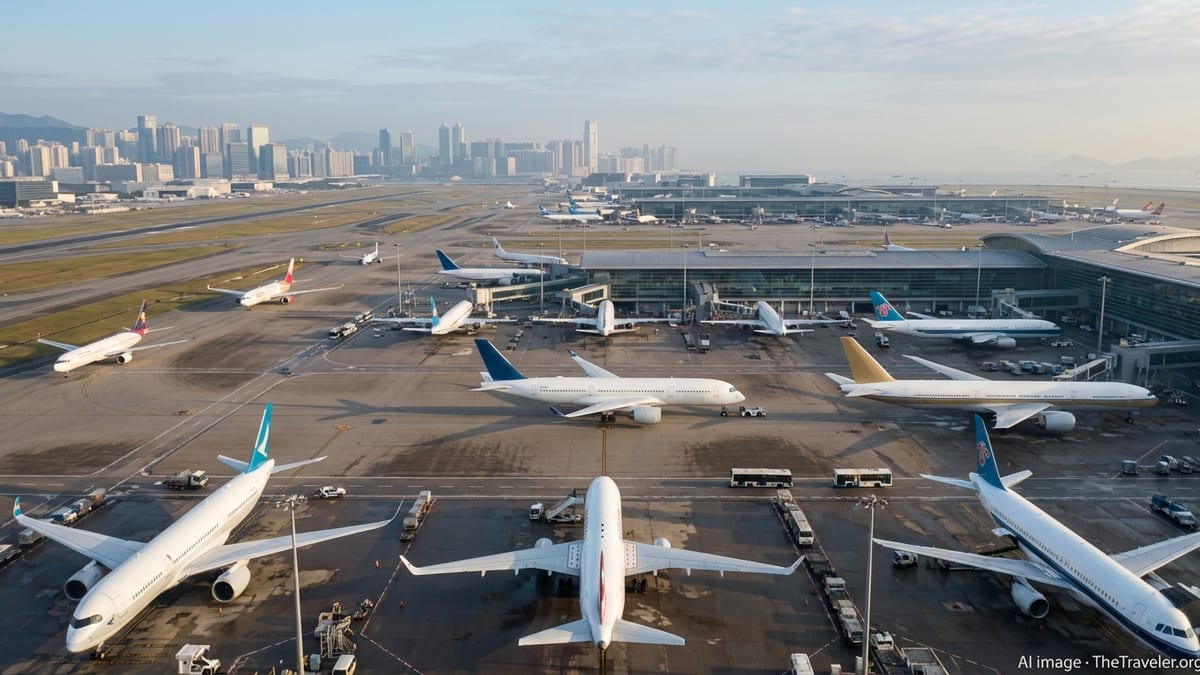
Asia-Pacific moves to center stage in growth strategy
Publicly available information indicates that Turkish Airlines is prioritizing East Asia, Southeast Asia and Oceania as core pillars of its next growth phase. Reports based on an interview with the airline’s chair Murat Seker in Nikkei Asia describe a target to lift flight frequencies in the broader Asia-Pacific region by around 15 to 20 percent, aligning with the carrier’s longer-term 2033 strategy.
The planned increase is expected to come largely from adding second and third daily services on existing routes to major cities rather than relying solely on new destinations. Coverage from Anadolu Agency and other outlets notes that Turkish Airlines already operates one of the world’s most extensive international networks, serving more than 130 countries and over 350 destinations, with Asia now accounting for a growing share of traffic and revenue.
Analysts following the airline point out that Asia-Pacific demand has been recovering strongly since the pandemic, but remains underpenetrated for many European and Middle Eastern carriers. By scaling up capacity at this stage, Turkish Airlines aims to secure a larger slice of long-haul connecting traffic flowing between Asia, Europe and, increasingly, Africa and the Americas.
Industry commentary suggests that this regional pivot is also a response to intensifying competition on transatlantic and intra-European routes, where capacity has rebounded quickly and yields have come under pressure. Asia-Pacific services, particularly wide-body long-haul flights, are seen as a higher value segment where Istanbul’s geographic position provides a competitive advantage.
China, Japan and Southeast Asia at heart of the expansion
Within Asia, China sits at the center of the carrier’s planned growth. Coverage in Turkish and international business media highlights that Turkish Airlines has recently restored and expanded services to major mainland Chinese gateways, including Beijing, Shanghai and Guangzhou, and is preparing to add Chengdu and Urumqi to its network in the months ahead.
Reports indicate that weekly flights to China have already climbed this year, with additional frequencies permitted under existing traffic rights still to be deployed. The airline is also expected to reinforce its presence in Japan, where demand has surged on both business and leisure routes. Recent schedule adjustments have included extra frequencies to Tokyo, as well as marketing efforts targeting Japanese travelers using Istanbul as a hub to Europe and the Middle East.
Southeast Asia is another focus. Information drawn from regional coverage shows that Turkish Airlines is directing more wide-body aircraft to high-demand destinations such as Bangkok, Singapore and Ho Chi Minh City, and is exploring further capacity increases in Vietnam and other fast-growing markets. The carrier’s leadership has previously highlighted the role of stopover and transit traffic from South and Southeast Asia feeding into its European and African networks.
As more of the airline’s new wide-body aircraft join the fleet over the next several years, industry observers expect additional capacity to flow into these Asian markets, consolidating Istanbul’s position as a transfer point for travelers who might otherwise connect via Gulf hubs or major European airports.
Ultra-long-haul ambitions and a new corridor to Australia
The planned Asia-Pacific build-up is closely tied to Turkish Airlines’ ultra-long-haul ambitions. According to recent coverage of the carrier’s fleet plans, the airline has placed significant orders for long-range Airbus and Boeing aircraft, including Airbus A350-1000 jets configured for flights of up to around 17 hours.
Reports by Anadolu Agency on the sidelines of recent aviation industry events indicate that these aircraft will underpin non-stop services from Istanbul to Australia and selected South American destinations from the late 2020s. Within this framework, Australian media and regional business outlets have highlighted plans to inaugurate direct flights to Sydney and Melbourne, targeted for around 2028, as part of a broader strategy to create a new corridor linking Asia, Australia and Europe over Istanbul.
Industry analysis notes that these ultra-long-haul flights are expected to feature a Premium Economy cabin, which the airline views as an important revenue driver on lengthy routes where yield management is critical. Observers suggest that revenue from this cabin, combined with strong connecting traffic from Asia, could help support the economics of such distant city pairs.
A successful Australian push would place Turkish Airlines in more direct competition with established long-haul operators from the Gulf region and Asia-Pacific, while also giving it a differentiated product for travelers seeking alternatives to existing one-stop itineraries between Australia and Europe.
Middle East tensions accelerate capacity redeployment
Turkish Airlines’ Asia-Pacific tilt is unfolding against the backdrop of heightened tensions and airspace constraints in parts of the Middle East. Aviation industry briefings and news reports over recent months have detailed how carriers across Europe and Asia have had to reroute or curtail certain connections due to regional instability and changing risk assessments.
Information compiled by financial and sector analysts shows that Turkish Airlines has responded by redirecting a portion of its wide-body fleet from affected corridors to markets where demand remains robust and airspace access is more predictable. Asia-Pacific destinations, together with select routes to Africa and the Americas, have been primary beneficiaries of this redeployment.
According to published coverage of the airline’s latest financial results, this shift has coincided with a substantial year-on-year increase in revenue, including a strong rebound in cargo earnings. Asian routes, in particular, have grown their share of overall revenue and passenger traffic, in some cases surpassing European routes as key contributors to the carrier’s top line.
Sector observers caution that any prolonged instability in the Middle East could continue to reshape traffic flows between Europe and Asia. For Turkish Airlines, the move to diversify more aggressively into Asia-Pacific is seen as both a defensive response to regional turbulence and an offensive play to capture market share while rivals adjust their own networks.
Financial momentum and competitive landscape
Recent earnings updates cited by Turkish and international business media show that Turkish Airlines has been reporting double-digit year-on-year growth in both quarterly and first-half revenues, supported by strong passenger demand and a notable surge in cargo performance. The airline’s Asia-focused strategy has been identified as an important contributor to this momentum, particularly as capacity on some traditional routes remains constrained.
Reports summarizing the airline’s results highlight that Asia’s share of total revenue has climbed to roughly one-third, with passenger volumes between Asia and other regions, such as Africa and Eastern Europe, rising sharply. Transit flows through Istanbul have benefited from shorter routings compared with some alternative hubs, especially on itineraries that continue to use Russian airspace.
At the same time, Turkish Airlines faces a challenging competitive landscape. Independent analyses frequently cite carriers such as Emirates, Qatar Airways, Etihad Airways and a growing roster of Asian and Indian airlines as key rivals on Europe–Asia and Asia–Africa corridors. New entrants, including state-backed initiatives in the Gulf and South Asia, are also investing heavily in capacity and premium cabins.
Market commentators note that the planned 15 to 20 percent lift in Asia-Pacific flights will test the airline’s ability to sustain yields while scaling rapidly. Fleet delivery schedules, fuel costs and geopolitical developments will all influence how quickly and profitably the carrier can execute its Asia-Pacific ambitions. For now, publicly available data and sector commentary suggest that Turkish Airlines is betting that deeper exposure to Asia’s long-term growth will outweigh the near-term risks.