


More news on this day
Two southbound passenger trains collided near Bedford, north of London, on Friday afternoon, killing at least one person, injuring many others and severely disrupting one of the main rail corridors into central London.
Get the latest news straight to your inbox!
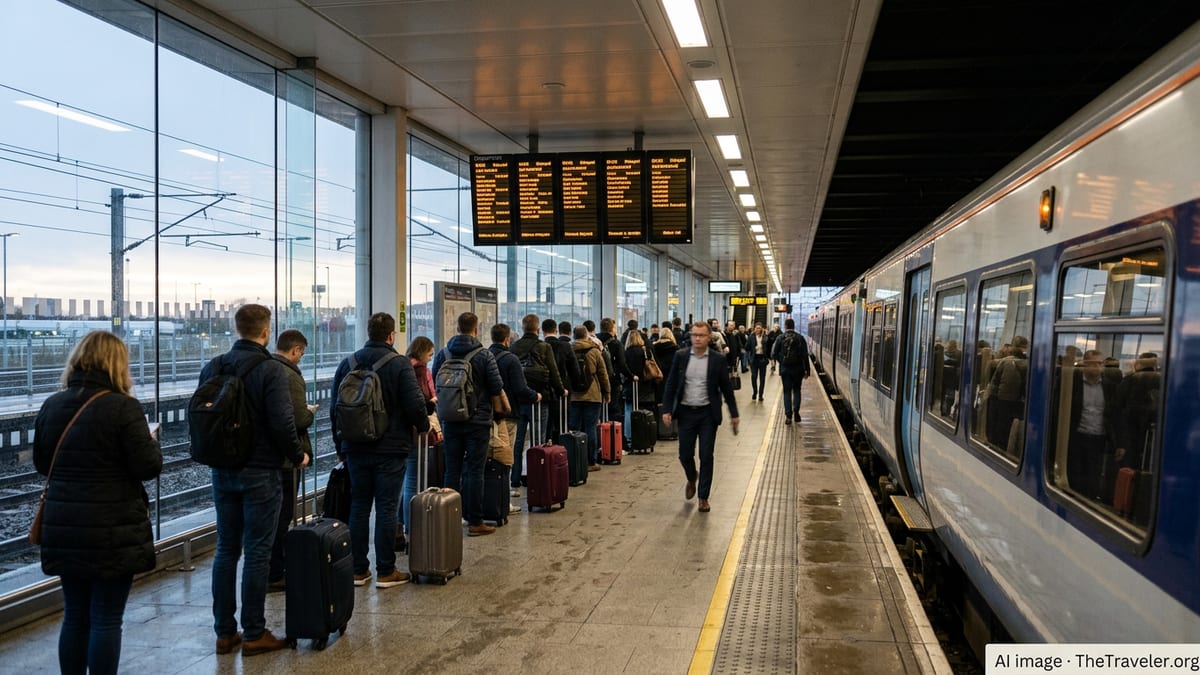
Collision on Busy Approach to St Pancras
According to published coverage, the collision occurred at around 5:15 p.m. local time on June 19 when two trains travelling toward London St Pancras International came into contact on the approach north of Bedford. Both services were operated by East Midlands Railway, a key intercity provider linking the English Midlands and northern towns with the capital.
Publicly available information indicates the trains involved were the 4:40 p.m. service from Corby to St Pancras and the 3:50 p.m. service from Nottingham to the same London terminus. Early reports describe a violent impact on a section of track that carries frequent high speed services into the city.
Images and video shared on social media show passengers standing on an adjacent roadway and embankments near a line of stationary carriages, with emergency vehicles positioned alongside the tracks. Witness accounts published by international news agencies describe people being thrown forward by the force of the collision and emerging from carriages with visible injuries.
Rail tracking data cited in media reports places the incident on the main line corridor between Bedford and Luton, an intensely used stretch for both regional and long distance trains heading into St Pancras.
Casualties and Emergency Response
Reports from major news outlets indicate that at least one person was killed in the collision, with a significant number of passengers and railway staff sustaining injuries ranging from minor to serious. Initial accounts speak of broken bones, head injuries and shock among those on board.
Emergency services from across the region responded in large numbers, including ground ambulances, an air ambulance and specialist hazardous incident teams. Publicly available statements from regional ambulance services describe a coordinated effort to triage and evacuate the injured from the railway line to nearby hospitals.
Photographs taken from the scene show medical personnel working alongside fire and rescue crews to assist passengers who had been guided or helped down from the carriages to a service road parallel to the tracks. Some travelers appear to be wrapped in foil blankets, while others are shown sitting or standing in groups as they awaited transport or further instructions.
Local media coverage notes that a major incident was declared across the area, triggering protocols that mobilize additional hospital capacity and specialized resources. As of Friday evening, detailed breakdowns of injuries had not yet been publicly confirmed, with assessments ongoing.
Severe Disruption Across the East Midlands Route
The Bedford collision quickly led to widespread disruption across the East Midlands Railway network and on connecting services into London. According to operational updates carried by British and international outlets, East Midlands Railway cancelled all remaining services into and out of London St Pancras for the rest of Friday.
Passengers heading for the capital from cities such as Nottingham, Derby, Sheffield and smaller towns along the Midland Main Line were advised not to travel, or to seek alternative routes via other operators and London terminals where possible. Crowded concourses, queues for ticket assistance and departure boards filled with cancellations were reported at several stations north of the incident.
Travel industry analysts noted that the line into St Pancras is not only a commuter artery but also a key link for leisure and business travelers moving between London and regional destinations. The timing of the crash on a Friday evening, at the start of a busy summer travel period, compounded the impact on passengers.
Rail planners indicated that disruption could extend into the weekend while investigators examined the site and engineers assessed potential damage to track, signaling and rolling stock. Replacement buses and diversions via other routes were expected to operate at reduced capacity, lengthening journey times for many travelers.
Emerging Questions Over Cause and Safety Systems
As the immediate rescue phase continued, attention began turning to how two southbound passenger trains came to collide on a modern, intensively signaled main line. Early coverage emphasizes that it is too soon for definitive conclusions, and that formal investigations will need to reconstruct train movements, signal aspects and any communication between railway control and crews.
Rail commentators referenced previous high profile collisions in Britain and elsewhere in Europe to underline the range of potential factors, including human error, technical failure, trackside equipment problems or issues with train protection systems. Some publicly available commentary from railway experts notes that the corridor north of London is equipped with modern safety technology, raising questions about how multiple layers of protection might have been breached or circumvented.
Industry unions and passenger groups have already signaled interest in understanding whether staffing levels, training, rolling stock condition or timetable pressures could have played a role. Published statements from worker representatives describe deep concern about reports of serious injuries among both train crews and passengers.
Investigators are expected to examine event recorder data from the trains, signaling logs, maintenance records and any available CCTV footage from the line or inside the carriages. The findings are likely to influence future safety recommendations, infrastructure investment decisions and protocols for operating high speed services on busy mixed traffic routes.
Impact on Passengers and Regional Travel Confidence
For passengers caught up in Friday’s collision, the immediate concern has centered on medical care, reuniting with family and securing onward travel or accommodation. Social media posts from those on board describe confusion and fear in the moments after the impact, followed by a gradual, orderly evacuation guided by railway staff and first responders.
Travel commentators suggest that the incident could temporarily dent confidence in long distance rail travel on the Midland Main Line, particularly among casual visitors and families planning summer trips into London. However, they also point to the generally strong safety record of British railways in recent years, with fatal collisions between passenger trains remaining relatively rare.
Tourism bodies and regional business groups are expected to watch closely for any prolonged fallout on visitor numbers to cities such as Nottingham, Leicester and Derby, which rely heavily on fast rail connections to the capital. If line closures or reduced timetables extend beyond the initial investigation period, hotels and attractions in affected areas may experience short term cancellations or itinerary changes.
As information continues to emerge, the focus for many travelers will be clarity on service restorations, ticket flexibility and alternative routes into London. Rail operators and transport authorities are likely to face ongoing scrutiny over how they communicate with passengers and support those directly affected by the Bedford crash.