


More news on this day
Rail passengers across a busy intercity corridor are facing severe disruption after a serious train incident led to widespread service suspensions and public warnings to avoid travel unless absolutely essential.
Get the latest news straight to your inbox!
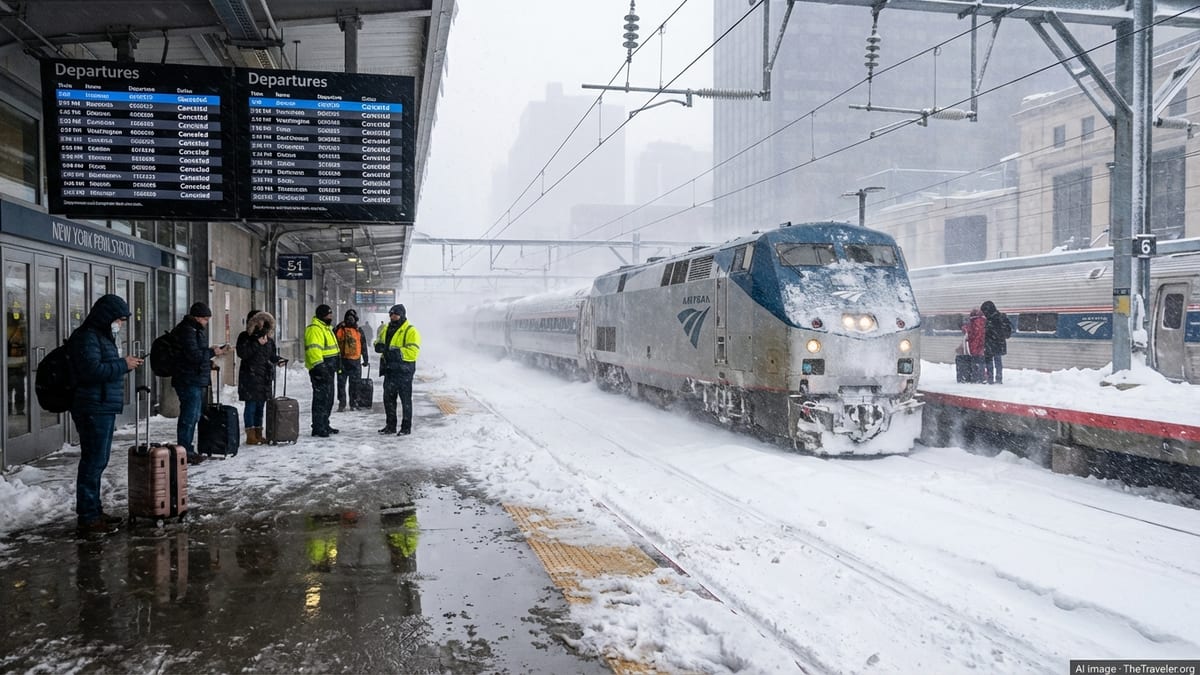
Serious crash brings services to a standstill
A major passenger train crash has triggered significant disruption across a key rail route, with operators suspending services and issuing urgent guidance for people to reconsider their journeys. Initial reports indicate that a high speed service collided with an obstruction on the line, causing extensive damage to rolling stock and track infrastructure and forcing an immediate halt to traffic in both directions.
Published coverage from regional and national outlets describes a scene of confusion as trains were stopped mid journey, stations quickly filled with stranded travelers and staff worked to provide information and support. While full details of the cause and sequence of events are still emerging, rail infrastructure managers have confirmed that services cannot safely resume until inspections and recovery work are complete.
The crash has effectively severed a major travel artery during a busy period, with knock on effects rippling across connecting lines and long distance services. With timetables in disarray and replacement capacity limited, many travelers are facing cancellations, extended delays and last minute changes to their plans.
Early accounts suggest that the scale of damage will require prolonged engineering work, making it likely that disruption will extend well beyond the initial day of the crash. Railway operators have begun revising schedules and reallocating train sets, but the system remains under heavy strain.
Passengers urged to avoid non essential journeys
In the hours following the crash, rail companies and infrastructure managers issued strong public messages urging passengers not to travel on the affected route unless absolutely necessary. Publicly available advisories emphasize that only a very limited service is operating, with short notice cancellations expected and alternative routes heavily congested.
Travel alerts recommend that anyone who has not yet started their journey should consider postponing trips, seeking refunds, or switching to different days where possible. Travelers who must move are being advised to check live information before heading to stations and to prepare for significantly extended journey times.
The warnings reflect concerns that station concourses and platforms could become overcrowded if normal passenger numbers attempt to travel on a severely reduced service. Operators are also working to prioritize space for those with essential journeys, including people connecting to international flights, medical appointments or time critical work commitments.
Transport commentators note that such direct “do not travel” appeals are generally reserved for the most disruptive incidents, underlining the seriousness of the crash and its impact on network capacity. The language used in current travel notices signals that the rail system remains in emergency response mode rather than normal operations.
Wide ranging disruption across the rail network
The immediate closure of the crash site and adjacent sections of track has led to suspensions on multiple routes, with knock on delays spreading far beyond the immediate area. According to published timetables and disruption summaries, some operators have canceled entire blocks of services, while others are diverting trains along slower, less direct lines where capacity allows.
Passengers on already crowded alternative routes are encountering packed trains, longer dwell times at stations and occasional short formation services as rolling stock is repositioned. In some regions, bus replacement services have been introduced, but these are constrained by road capacity and driver availability, limiting the number of passengers that can be moved.
Interchange hubs are experiencing particularly acute pressure as travelers attempt to reroute around the blockage. Screens and public address announcements show a shifting picture of partial reopenings, revised departure platforms and cascading delays as control centers adjust operations in real time.
Freight movements have also been affected, with some freight trains held outside key junctions or rerouted onto secondary lines, adding to network complexity. Analysts caution that the combined impact on passenger and freight reliability could take days to unwind, even after the main line is reopened.
Safety investigations and infrastructure inspections under way
While operational teams work to stabilize the timetable, specialist investigators and engineering crews are focusing on the crash site. Publicly available information indicates that accident investigators are gathering data on train speed, signaling status, track condition and any potential technical failures. This work will inform both short term safety decisions and longer term recommendations.
Infrastructure managers have closed the affected section to all traffic while they assess damage to rails, sleepers, overhead lines and signaling equipment. Heavy lifting machinery is being used to recover derailed vehicles, which must be carefully re railed or moved before permanent repairs can begin. The condition of bridges, embankments and drainage in the vicinity is also being checked for secondary damage.
Travel reports highlight that the timing of the reopening will depend not only on the progress of the investigation but also on the ability of engineers to restore equipment to a standard that allows safe operation at planned speeds. In some previous rail incidents, lines have initially reopened at reduced speeds and capacity before gradually returning to normal.
Officials overseeing transport policy have emphasized in public statements that understanding the root causes of the crash will be critical for maintaining confidence in rail travel. The incident is expected to prompt renewed scrutiny of maintenance regimes, signaling systems and operational procedures on busy passenger corridors.
What travelers should do in the coming days
For travelers with imminent rail journeys, the strongest advice from publicly available guidance is to reconsider plans wherever flexibility exists. Those with advance tickets on the affected route are generally being offered rebooking options or refunds, though precise terms vary by operator. Passengers are being encouraged to consult official journey planners and operator channels on the day of travel rather than relying on earlier information.
Where journeys cannot be postponed, travelers are advised to allow substantially more time to reach destinations, to expect crowding, and to carry essentials such as water, snacks and any required medication in case of extended periods on board or in stations. Guidance also suggests checking connecting services carefully, as missed links may require overnight stays or alternative arrangements.
Travel industry observers point out that major rail incidents often lead to a temporary shift toward road and air transport, placing additional pressure on highways, regional airports and coach networks. As a result, people switching modes at short notice may also encounter higher prices or limited availability.
Despite the severity of the crash and the current disruption, rail safety records in many countries continue to show a low rate of serious incidents relative to the huge number of journeys made each year. As investigations progress and infrastructure is repaired, attention will turn to how lessons from this event can be applied to further reduce risks for passengers and staff while restoring a reliable, high frequency rail service on the affected corridor.