


Passeig de Gràcia is where Barcelona turns the volume up on everything it does best. Here, flagship fashion houses sit beside some of Antoni Gaudí’s most famous buildings, café terraces look onto sculpted stone facades, and metro commuters share the pavement with architecture students clutching sketchbooks. To experience this avenue properly is not just to walk from Plaça de Catalunya to Gràcia, but to weave shopping, Gaudí and street life into one long, memorable day.
Get the latest updates straight to your inbox!
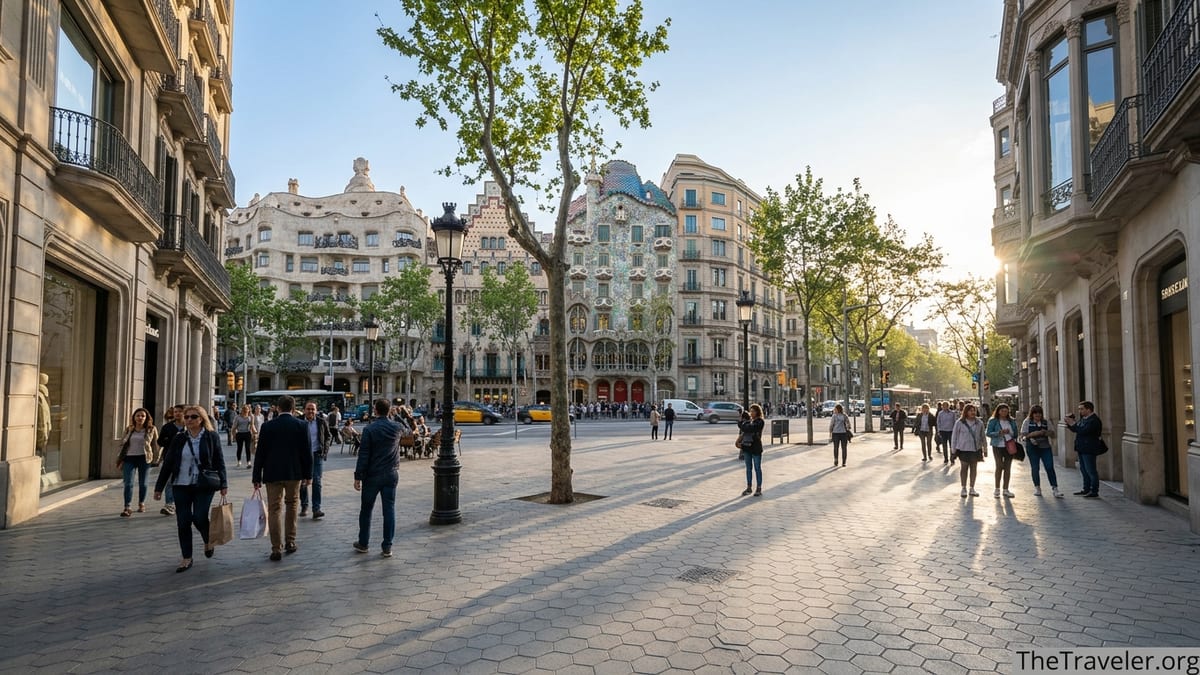
Understanding Passeig de Gràcia’s Layout and Atmosphere
Passeig de Gràcia runs roughly 1.3 kilometers between Plaça de Catalunya and the Gràcia neighborhood, and it is one of Barcelona’s main shopping and business arteries. The lower end near Plaça de Catalunya feels fast-paced and urban, with department stores and banks, while the upper stretch closer to Avinguda Diagonal becomes more residential and elegant, lined with stately modernista buildings. The whole boulevard is broad, shaded by plane trees, and has unusually wide sidewalks with patterned tiles inspired by Gaudí, which you will frequently see people photographing.
Although it is famous for being Spain’s most expensive shopping street in rental terms, you do not need a luxury budget to enjoy it. Designer boutiques, from global maisons to Spanish labels, share the street with mid-range fashion brands, pharmacies, bakeries and everyday cafes. Between them, you will see locals heading to offices in the Eixample district, tourists queuing at Gaudí houses, and street musicians using the acoustics of doorway arches to amplify a guitar or violin.
The boulevard is easy to reach and navigate. Passeig de Gràcia has its own metro and commuter train hub roughly halfway along the avenue, served by several lines that connect quickly to Sagrada Família and other districts. Many visitors choose to start at Plaça de Catalunya and stroll uphill, letting the crowds thin out as they move away from the most hectic square in the city.
Because Passeig de Gràcia is both a shopping street and a sightseeing corridor, the rhythm of the day changes by the hour. Early mornings tend to be calmer, with delivery vans and office workers dominating the scene. Late morning brings tour groups clustering in front of Casa Batlló and Casa Milà, while evenings often feel almost theatrical, as façades are lit up and locals linger on terraces with vermut or a glass of cava.
Planning Your Ideal Passeig de Gràcia Day
For most travelers, the best way to experience Passeig de Gràcia is to build one or two Gaudí visits into a relaxed day of walking, shopping and café stops. A popular pattern is to reserve a mid-morning ticket for Casa Batlló, then schedule La Pedrera (Casa Milà) for late afternoon or early evening, using the hours in between for lunch and browsing the shops. Both houses use timed entry, so it is worth choosing slots in advance instead of hoping to buy at the door, especially in spring, summer and during holidays.
Typical adult online tickets for Casa Batlló in 2026 start at around the mid-30 euro range for the most basic daytime tier, with higher levels costing more but adding extras such as access to immersive rooms or rooftop terraces. La Pedrera’s standard daytime visit tends to be slightly cheaper, often in the mid-20 euro range for general admission, with separate, more expensive night experiences that include rooftop projections or drinks. Exact prices shift with demand and advance purchase, but budgeting around 60 to 80 euros per adult for both Gaudí interiors is realistic if you choose standard tiers.
If your budget or time is tighter, consider seeing the houses only from the outside and reserving paid admission for just one. Standing across the street from Casa Batlló at different angles still reveals its rippling, dragon-like roof and bone-shaped balconies in impressive detail, and La Pedrera’s undulating stone façade and sculptural chimneys are visible from the street and nearby corners. In that case, you could buy a single timed entry to the one that appeals to you most and then spend the rest of the day enjoying Passeig de Gràcia as a high-end promenade, ducking into boutiques and side streets whenever something catches your eye.
The season and time of day you choose will shape your experience. Summer afternoons can be hot and bright, so early morning or evening strolls feel more pleasant, especially if you plan to linger at outdoor tables. In winter, the avenue is quieter, and in the weeks before Christmas, festive lights and window displays turn it into one of the most atmospheric places in the city after dark. Regardless of the month, try to leave at least half a day free, so you are not rushing from one booking to the next without time to simply watch the street.
Experiencing Gaudí on Passeig de Gràcia: Casa Batlló and La Pedrera
Passeig de Gràcia is unique in that it hosts two of Antoni Gaudí’s most celebrated residential works. Casa Batlló, at number 43, is often described as his most fantastical townhouse, with a façade resembling a shimmering dragon. A standard daytime ticket in 2026 typically grants access to the noble floor, attic, rooftop and the Gaudí Cube immersive room, with audio guides available in multiple languages. Higher-priced tiers add elements such as more in-depth multimedia, access to additional rooms or special early opening hours that appeal to photographers seeking emptier interiors.
Just a short walk uphill, at the corner of Carrer Provença, sits La Pedrera, also known as Casa Milà. Where Casa Batlló is all curves and color, La Pedrera is more austere from a distance, with a pale, wave-like stone façade. Once inside, the building opens up into courtyards, a museum-style attic with catenary arches and one of the most iconic rooftops in Barcelona. Standard tickets usually include access to these areas and an audioguide. Separate night experiences, typically priced a bit higher, add a light and sound show on the rooftop plus a drink, transforming the chimneys into an open-air stage.
To make the most of your visits, think carefully about timing. Booking Casa Batlló for as close to opening time as you can manage allows you to experience the main floors before they fill with tour groups, which matters if you plan to linger over details such as the colored glass, carved doors or the central light well. For La Pedrera, many travelers enjoy a late-afternoon slot that flows into sunset on the rooftop, when the city gradually lights up and the shadows on the sculpture-like chimneys grow longer.
If you are particularly interested in Gaudí or architecture, consider joining a guided small-group tour that links both houses in sequence. Some operators sell combination experiences that walk you along Passeig de Gràcia while explaining the “Block of Discord,” where Casa Batlló stands alongside works by other modernista architects, before continuing to La Pedrera. These tours often cost more per person than buying standard tickets separately, but they can add valuable context, especially if you are seeing Gaudí’s work for the first time and want to understand how it differs from his contemporaries.
Shopping Along Spain’s Most Expensive Street
Passeig de Gràcia is considered one of the priciest retail streets in Spain for commercial rents, and you will notice that immediately in the brand mix. Near Plaça de Catalunya, international high-street fashion chains sell seasonal collections at prices similar to those in other European capitals. As you walk north, storefronts become increasingly upscale, with major luxury maisons, Spanish designer labels and flagship cosmetics and jewelry boutiques occupying prime corners. Window displays are worth lingering over even if you do not intend to buy.
A practical way to structure your shopping is to mix aspirational browsing with targeted purchases. Many travelers use the avenue to shop for quality Spanish items they will actually use, such as leather shoes, handbags or locally made clothing, and then duck into luxury fashion houses mostly to admire the interiors and displays. Sales staff in higher-end stores are accustomed to visitors, and while they appreciate genuine interest, you should not feel pressured to buy. If you do intend to purchase a big-ticket item, remember that Spain’s VAT refund system may allow you to reclaim a portion of the tax at the airport, provided you keep your receipts and follow the instructions given in-store.
Not all shopping on Passeig de Gràcia is about global brands. Look for Spanish names in fashion and accessories, as well as multi-brand boutiques on nearby streets such as Rambla de Catalunya, which runs parallel just one block away and often feels more relaxed. There, you might find mid-priced shoes from local makers, linen clothing suitable for Mediterranean summers or jewelry that uses Catalan design motifs. Combining Passeig de Gràcia with its side streets gives you a richer sense of Barcelona’s retail personality than staying on the boulevard alone.
Be aware that some flagship stores occasionally close for renovations, especially after several years of heavy footfall. If there is a particular brand you are hoping to visit, it is worth checking just before your trip whether their Passeig de Gràcia location is open as usual or operating from a temporary space elsewhere in the city. For everyday needs such as sunscreen, basic clothing or snacks, there are also pharmacies and general stores either on the avenue or just around the corner on cross streets.
Cafés, Dining and People-Watching
One of the simplest pleasures on Passeig de Gràcia is claiming a café table and watching the avenue go by. Many corners have outdoor terraces where you can order a cortado, a glass of fresh orange juice or a mid-morning pastry and linger without feeling rushed. Prices on the boulevard are typically higher than in more residential neighborhoods, but a coffee or drink on the main drag can still feel like good value given the setting, especially if you choose a spot with a clear view of a Gaudí façade or one of the ornate lampposts that line the street.
For lunch, travelers often choose between sit-down restaurants on Passeig de Gràcia and more casual spots on adjoining streets. On the avenue itself, some hotel restaurants and brasseries offer fixed-price midday menus that include a starter, main course, dessert and drink, which can work out more economical than ordering à la carte. Just a block or two off the boulevard, you will find smaller tapas bars and bistros where the prices soften and the atmosphere feels more local, particularly toward the Gràcia end of the avenue.
In the late afternoon and early evening, terraces become a stage for the city’s ritual of vermut or pre-dinner drinks. Ordering a glass of vermut on tap with a small plate of olives or potato chips is a very Barcelonan way to take a break after sightseeing. If you plan to stay in the area for dinner, remember that many locals eat later than northern European or North American visitors. Restaurants may not fill up until 9 or even 10 p.m., so an early reservation can give you quieter surroundings and attentive service.
People-watching here offers its own kind of sightseeing. You will see office workers in understated business attire, teenagers heading to language schools, families pushing strollers and visitors from all over the world, often pausing mid-crosswalk for one more photograph. Street performers sometimes set up on broader corners or near metro entrances; while many are talented, they rely on tips, so it is courteous to contribute a small coin if you stop to enjoy a full song or routine.
Practical Tips: Tickets, Transport and Crowds
Because Passeig de Gràcia’s Gaudí houses are among Barcelona’s top attractions, some basic planning goes a long way. For Casa Batlló and La Pedrera, buying tickets online before you go almost always saves time and often a little money compared with walk-up prices, especially in 2026, when demand remains strong in Gaudí’s centenary year. Timed entry slots can sell out for peak hours, particularly late mornings and early evenings, so reserving a few days ahead is sensible in high season.
Transport is straightforward. The Passeig de Gràcia metro and train station connects to several city lines and regional services, making it easy to visit the avenue from neighborhoods such as Barceloneta, the Gothic Quarter or Sagrada Família. If you are staying near Plaça de Catalunya, you can simply walk uphill along the avenue, stopping first at Casa Batlló, then continuing toward La Pedrera. Bicycle and scooter lanes exist on nearby streets, but given the number of pedestrians and frequent crossings, most visitors find walking the safest and most enjoyable option.
To avoid the worst of the crowds, try to schedule at least one Gaudí visit for the earliest or latest slot that fits your day. Weekdays outside of school holidays are generally calmer than weekends, and winter, apart from Christmas and New Year, is quieter than spring and summer. Queues for bag checks and security can form even with timed tickets, so arriving 15 to 20 minutes before your slot reduces stress and gives you time to orient yourself, take a few exterior photos and find the correct entrance line.
Safety-wise, Passeig de Gràcia is one of the more monitored and patrolled areas of the city, but it is still wise to take standard precautions against pickpockets, especially around metro entrances, at bus stops and in any dense crowd. Use a bag that closes securely, avoid leaving phones or wallets on café tables and be cautious if approached by strangers with petitions, “found” items or other distractions. Staying aware of your surroundings allows you to relax and enjoy the architecture without unnecessary worry.
Beyond the Main Façades: Side Streets and Small Discoveries
While most visitors focus on the main stretch between Plaça de Catalunya and La Pedrera, some of Passeig de Gràcia’s most rewarding experiences lie just off the avenue. Rambla de Catalunya, running parallel one block west, offers a more human-scale promenade with a central pedestrian strip, smaller shops and a dense scattering of open-air terraces. Spending an hour wandering between the two streets gives you a sense of how the grand, formal Eixample grid can still hold pockets of neighborhood life.
Architecturally minded travelers should pay attention not only to Gaudí but also to his contemporaries. On the block where Casa Batlló stands, neighboring townhouses by other modernista architects form what locals call the “Block of Discord,” a row of competing styles and flourishes. Even without entering, you can stand across the street and compare details such as wrought iron balconies, stained glass and sculpted stonework, then continue uphill to notice how ornamentation subtly changes from block to block.
Look down occasionally as well as up. Sections of the sidewalk on and around Passeig de Gràcia feature hexagonal tiles with stylized sea motifs linked to Gaudí, and you will sometimes see visitors crouching to photograph their feet against the pattern. Small pockets of greenery appear in the form of street trees, planters and the occasional tiny square where locals sit on benches during lunch breaks. These modest elements soften what could otherwise feel like a purely commercial artery.
If time allows, consider continuing beyond La Pedrera into the direction of the Gràcia neighborhood, where the wide boulevard narrows into streets with a more village-like feel. Many travelers enjoy ending their Passeig de Gràcia day by drifting into Gràcia’s plazas for a casual dinner, effectively transitioning from grand avenue to intimate squares in the space of a short walk.
The Takeaway
Passeig de Gràcia rewards travelers who treat it as more than just a way to get from one monument to another. It is at once an open-air Gaudí gallery, a showcase of Barcelona’s shopping scene and a living everyday street where residents commute, meet friends and conduct business. By combining timed entries to Casa Batlló and La Pedrera with unhurried wandering, café stops and a bit of targeted shopping, you can turn a stroll along this single avenue into one of the richest days of your trip.
Whether you arrive with a detailed plan or simply the intention to walk from Plaça de Catalunya to Gràcia, a little awareness of timing, tickets and side streets will help you avoid crowds and overspending while still seeing the highlights. Pay attention to the details, from the dragon-like tiles above you to the patterned stones beneath your feet, and Passeig de Gràcia will reveal itself as a place where Barcelona’s creativity, commerce and daily life intersect in plain sight.
FAQ
Q1. How much time should I plan for Passeig de Gràcia, including Gaudí visits?
Most visitors are comfortable with a half day to see the avenue and the exteriors of Casa Batlló and La Pedrera. If you plan to tour the interiors of both houses, browse shops and sit down for lunch or coffee, allow a full day so you can keep a relaxed pace.
Q2. Is it worth paying to go inside both Casa Batlló and La Pedrera?
If you are interested in architecture or design, seeing both interiors offers two very different perspectives on Gaudí’s work and is usually worth the combined cost. Travelers with limited time or budget often choose one interior visit, then enjoy the other building from the outside, which still gives a strong visual impression.
Q3. When are Passeig de Gràcia and the Gaudí houses least crowded?
Early morning and late evening on weekdays tend to be the calmest times, especially outside of major holidays and school breaks. Booking the first or last entry slots for Casa Batlló or La Pedrera, and avoiding weekend middays, will usually mean smaller crowds and more pleasant conditions.
Q4. Do I need to buy tickets in advance for Casa Batlló and La Pedrera?
Advance purchase is strongly recommended, particularly in spring, summer and during Gaudí-related centenary events in 2026. Online timed tickets help you avoid sold-out time slots and often reduce the time spent queuing at the entrance.
Q5. What is the best way to reach Passeig de Gràcia from other parts of Barcelona?
Passeig de Gràcia has a central metro and train station served by multiple lines, making it easy to reach from most neighborhoods. Many travelers staying near Plaça de Catalunya simply walk uphill from the square, while others arrive directly by metro from areas such as Sagrada Família, Barceloneta or the Sants station district.
Q6. Is Passeig de Gràcia safe for evening strolls?
The avenue is one of the city’s better-lit and more monitored streets, and many people walk there well into the evening for shopping or dinner. As in any busy urban area, you should keep an eye on your belongings and be cautious in crowded spots, but most visitors feel comfortable walking there after dark.
Q7. Are there affordable places to eat near Passeig de Gràcia?
Yes. While some restaurants on the avenue are high-end, more moderately priced cafés and tapas bars can be found on nearby streets such as Rambla de Catalunya and within a few blocks toward the Gràcia neighborhood. Exploring one or two side streets usually reveals options with more local pricing.
Q8. Can I enjoy Passeig de Gràcia without shopping at luxury stores?
Absolutely. Many travelers come primarily for the architecture, atmosphere and people-watching, using the shops as a backdrop rather than a main activity. Window-shopping, photographing façades and relaxing at a café terrace offer a rich experience even if you do not make any major purchases.
Q9. Are there guided tours that focus on Passeig de Gràcia and Gaudí?
Several walking tours include Passeig de Gràcia as a core part of their route, often combining commentary on modernista architecture with timed entries to Casa Batlló, La Pedrera or both. These tours cost more than visiting independently but can be useful if you prefer structured explanations and help navigating ticket logistics.
Q10. What should I wear and bring for a day on Passeig de Gràcia?
Comfortable walking shoes are essential, as you will likely cover several kilometers on foot and climb stairs inside the Gaudí houses. In warmer months, lightweight clothing, sunscreen, a hat and a refillable water bottle make the day more comfortable, while in cooler seasons a light jacket and scarf are usually sufficient given Barcelona’s generally mild climate.