


More news on this day
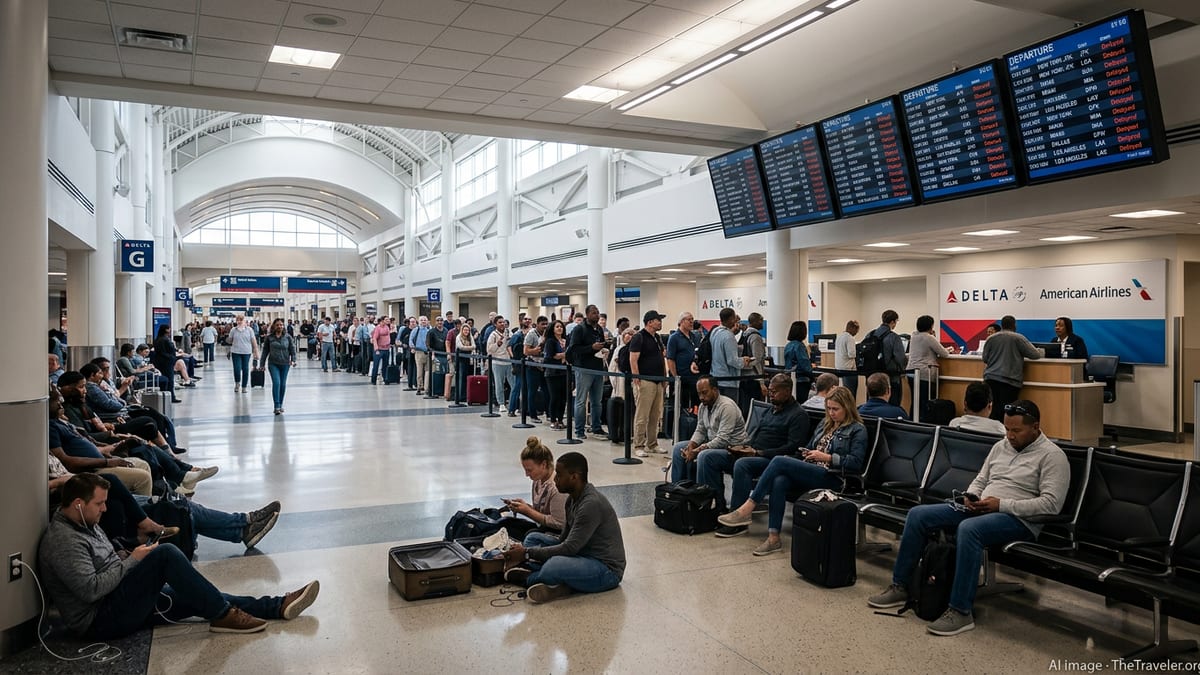
Hundreds of travelers were left stranded at Harry Reid International Airport in Las Vegas as a wave of disruptions hit departures to Dallas, Austin, New York City, Monterrey, Toronto and several other destinations, snarling operations for multiple major U.S. carriers.
Get the latest news straight to your inbox!
Major Carriers Face Widespread Schedule Disruptions
Publicly available flight tracking data and airport status boards on Thursday indicated a cascading series of delays and cancellations affecting departures from Las Vegas to several key domestic and international hubs. Routes to Dallas, Austin, New York City, Monterrey and Toronto were among those experiencing significant disruption, with departures on carriers including Southwest Airlines, American Airlines, Frontier Airlines and Delta Air Lines particularly affected.
The disruptions appeared to build over several hours, as early delays on morning and midday departures fed into later bank schedules. Passengers reported missed connections, rolling gate changes and extended waits in crowded concourses as aircraft and crew assignments were repeatedly adjusted. The impact was especially visible on high-demand corridors linking Las Vegas with Texas and the U.S. East Coast, along with cross-border services to Canada and Mexico.
Published passenger statistics for Harry Reid International show that Southwest, American, Delta and Frontier rank among the airport’s most prominent operators by volume, meaning any operational irregularities have an outsized effect on overall throughput. On a typical busy day, Las Vegas handles tens of thousands of departing passengers, so even a modest percentage of cancellations or long delays can translate into hundreds of stranded travelers waiting for alternative options.
While the precise mix of causes varied by flight and destination, available information pointed to a combination of aircraft availability, crew reassignments and broader network congestion that rippled across multiple hubs. For travelers in Las Vegas, that translated into extended time on hold with airline call centers, long lines at customer service counters and competition for limited rebooking seats later in the day.
Key Routes to Dallas, Austin, New York, Monterrey and Toronto Affected
Las Vegas is deeply connected to other major North American cities, and the routes most affected by the latest disruption underscore how dependent the region’s travelers are on these links. Dallas and Austin rank among the most important domestic connections from Las Vegas, with American Airlines, Southwest and Frontier regularly operating multiple daily departures serving both business and leisure demand.
New York City routes, typically operated by major U.S. network carriers out of hubs such as John F. Kennedy International and LaGuardia, are another critical plank in Las Vegas connectivity. Disruptions on this corridor can quickly ripple outward, impacting not just point to point travelers but also those connecting onward to Europe and the U.S. East Coast.
On the international front, Monterrey and Toronto services represent key cross-border markets from Las Vegas. Flights to Monterrey typically draw strong demand from both business and visiting-friends-and-relatives segments, while Toronto links Las Vegas with one of Canada’s busiest aviation hubs. Any prolonged irregular operations on these routes can cause bottlenecks for travelers attempting to return home or begin long-planned vacations.
Reports from passengers stranded at Harry Reid described queues forming early at gates serving Texas and New York flights, followed by mounting frustration as departure times were pushed back repeatedly. Travelers booked on international legs often faced the added complication of missed onward connections and the need to rebook in coordination with multiple carriers.
Operational Strain at a High-Volume Leisure Hub
Harry Reid International Airport is one of the United States’ busiest leisure gateways, serving millions of passengers each month and ranking among the top origin and destination airports in the country. Official traffic reports show that Southwest, American, Delta and Frontier together account for a substantial portion of the airport’s domestic capacity, making their operational resilience a crucial factor in keeping traffic flowing smoothly.
That high baseline of demand means that when irregular operations occur, the airport can quickly experience congestion at check in, security and boarding areas as delayed passengers overlap with later waves of departing travelers. Seating becomes scarce, food and retail concessions face heavier-than-anticipated crowds and available rebooking inventory on later flights can disappear rapidly.
Recent months have also seen Harry Reid in the spotlight for other operational incidents, including emergency responses to aircraft issues and separate disruptions in its parking and ground facilities. While those episodes were resolved, they underscored how sensitive a high throughput airport can be to any unplanned interruption.
For many of the stranded passengers in the latest wave of disruption, the timing was particularly challenging, with summer travel demand rising and capacity on popular routes already tightly booked. Travelers reported having to consider alternative routings through secondary hubs, overnight stays in Las Vegas or shifting their plans by a full day or more to secure a confirmed seat out of the city.
Stranded Travelers Navigate Limited Rebooking Options
As cancellations and lengthy delays mounted, passengers at Harry Reid International turned to every available channel to salvage their itineraries. Many travelers attempted to rebook through airline mobile apps and websites while simultaneously waiting in line at airport customer service desks, hoping to secure scarce seats on remaining departures to Dallas, Austin, New York, Monterrey and Toronto.
Publicly available coverage of similar recent disruptions across the U.S. industry suggests that same day rebooking can become difficult in peak travel periods once a certain threshold of cancellations is reached. With multiple carriers tackling their own operational challenges, traditional fallback options such as switching to another airline at the last minute may offer limited relief, especially for groups and families seeking to stay together on the same flight.
Some travelers in Las Vegas reportedly opted to book overnight hotel stays and rework their plans for the following day rather than remain in terminals late into the night. Others looked into alternative routings through nearby hubs, accepting more complex itineraries in exchange for a confirmed path out of the city. For international passengers, additional complications included coordinating with foreign carriers and adjusting ground transportation plans at final destinations.
Travel insurance coverage, schedule change waivers and credit card protections can play a role in softening the financial impact of such disruptions, though many passengers only discover the limits of their coverage once they are already affected. Consumer advocates often encourage travelers heading through busy hubs like Las Vegas to build extra time into itineraries, particularly when onward connections or international segments are involved.
Ongoing Impacts for the Summer Travel Season
The latest disruption at Harry Reid International arrives at a time when airlines across North America are preparing for one of the busiest summer travel seasons in recent years. Industry reports point to robust demand on leisure routes linking Las Vegas with major population centers in Texas, the Northeast, Mexico and Canada, putting additional pressure on carriers to maintain reliability.
Operational events that strand hundreds of passengers in a single day can have lingering consequences. Aircraft and crew repositioning often continues into subsequent days, and the residual effects may be felt in the form of tighter seat availability, elevated fares on remaining inventory and diminished flexibility for travelers seeking last minute changes.
For passengers planning upcoming trips through Las Vegas, publicly available guidance from aviation analysts typically emphasizes monitoring flight status early and often, signing up for airline alerts, and considering earlier departures in the day when possible. Early flights are statistically more likely to depart on time and provide additional fallback options if rebooking becomes necessary.
While conditions at Harry Reid International gradually stabilized following the latest wave of cancellations and delays, the experience served as a reminder of how quickly air travel plans can unravel when multiple major carriers encounter simultaneous operational strain. For those stranded in Las Vegas, the journey eventually continued, but often after long hours of uncertainty and significant changes to their original itineraries.