


More news on this day
Rail services on a key route into central London were severely disrupted on Friday evening after two passenger trains collided near Bedford, prompting a major emergency response and reports of multiple injuries among commuters heading home.
Get the latest news straight to your inbox!
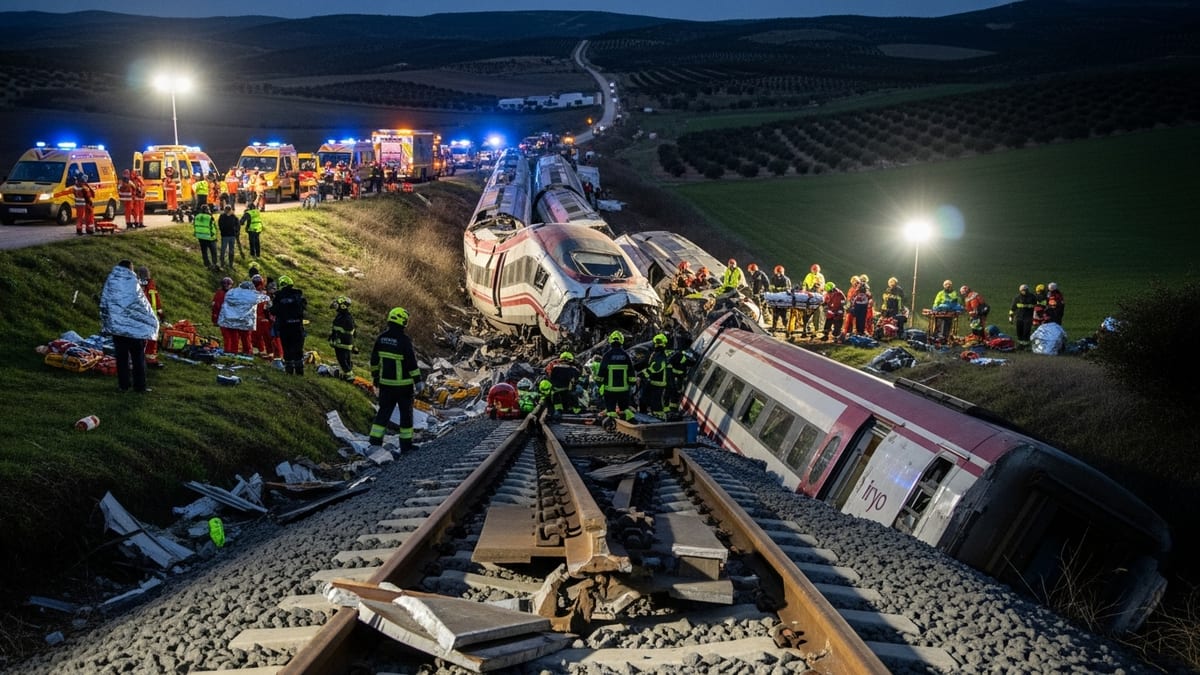
Collision on Busy St Pancras Main Line
Early reports indicate that the crash occurred on lines linking London St Pancras with towns and cities in the East Midlands and central England, on a stretch of track south of Bedford. The incident was reported in the early evening, around the peak commuting period, when trains on the corridor are typically heavily used.
Images shared on social media and in initial news coverage appear to show two damaged trains still on the rails, one standing behind the other on the same southbound line. Publicly available information suggests that one train was stationary when it was struck from behind by a following service, although the precise sequence of events has not yet been confirmed in official investigative findings.
The route is used by high speed intercity services as well as regional and commuter trains serving communities between London, Bedford, Leicester, Nottingham and Sheffield. The collision came at a time when many passengers were travelling home from work, adding to concern about the potential scale of injuries.
According to published coverage, Bedford Hospital was placed on alert for a significant number of casualties following the crash, reflecting early expectations that dozens of people might require medical assessment or treatment.
Large-Scale Emergency Operation Near Bedford
A major emergency response was launched within minutes of the first reports, with photographs and video from the scene showing numerous ambulances, fire engines and police vehicles positioned along the trackside and adjacent roads. Air ambulances were also reported to have attended, reflecting concerns about serious trauma injuries among some of those on board.
Footage circulating online appears to show passengers being led away from the trains along the ballast and trackside, some with visible bandages and others supported by fellow travellers. Witness accounts shared with broadcasters and in local media describe a sudden jolt, smoke inside carriages and people being thrown from their seats as the trains came to an abrupt halt.
Publicly available information describes injuries ranging from cuts and bruises to suspected fractures. Early reports did not confirm any fatalities, but several people were described as seriously hurt, and the full medical picture is expected to emerge only after hospitals complete assessments.
Rescue teams appeared to focus first on stabilising the scene, checking for fuel leaks or fire risk, and then conducting systematic sweeps through each carriage. The presence of specialist rail incident units and accident investigators was also reported as the evening progressed.
Severe Disruption on London St Pancras Corridor
The crash triggered immediate and widespread disruption across the rail network north of London. According to service updates cited in UK media, journeys between London St Pancras, Bedford, Leicester, Nottingham, Sheffield and Corby were heavily affected, with all lines initially blocked in the area of the collision.
Train operators on the Midland Main Line advised passengers not to travel on affected routes unless essential, noting that services were cancelled, diverted or terminating short of their usual destinations. Replacement road transport was reported to be in limited supply during the evening peak, leaving some travellers facing long waits or having to find alternative routes.
Real-time journey planners showed knock-on delays spreading across the wider network as trains and crews were displaced. Passengers already on board services south and north of Bedford described extended unscheduled stops while signalling centres and control rooms worked to manage congestion around the blocked section.
Infrastructure managers are expected to keep the line closed in the immediate vicinity of the crash until investigators have gathered key evidence and recovery teams have been able to assess track, signalling and overhead line equipment for damage. Even after an initial reopening, reduced speeds and altered timetables are likely until full repairs are completed.
Early Focus on Signalling and Train Protection Systems
Because the apparent sequence involves one train reportedly striking another from behind on the same track, early public discussion has focused on the performance of signalling and train protection systems on this part of the network. Commentators with knowledge of UK rail operations have pointed out that modern signalling and automatic warning technologies are designed to prevent such collisions.
Specialist rail forums and early analysis shared in transport-focused communities refer to the possibility of a technical fault affecting a safety system, or an emergency stop by the first train that left insufficient separation. Some reports mention a potential issue linked to the Automatic Warning System or related train protection equipment, although these references remain unverified until formal investigations publish their findings.
The Rail Accident Investigation Branch has indicated through publicly available statements that inspectors have been sent to the site to begin collecting data, including trackside equipment logs, signal box records, on-train data recorders and driver statements. This material is expected to underpin a detailed timeline of events and a technical assessment of how two in-service trains came to occupy the same section of track.
In past UK rail incidents, investigators have typically examined not only hardware and software performance but also operational procedures, communication protocols and any wider factors such as weather or infrastructure works. A similar multi-layered approach is anticipated in the Bedford collision, given the significance of the route and the potential for lessons to be applied across the wider network.
Questions Over Passenger Safety and Network Resilience
The collision near Bedford is already prompting broader questions about safety margins on busy intercity corridors and the resilience of the network during major incidents. Regular users of the line have expressed concern in public forums about how a rear-end collision could occur on a modern, intensively managed railway.
Rail campaigners and safety specialists are likely to scrutinise emerging findings for any indication that maintenance backlogs, equipment age or staffing pressures may have played a role. Some discussion has highlighted the importance of continued investment in advanced signalling, such as the European Train Control System, which is being rolled out in stages on parts of the UK rail network to provide continuous speed supervision.
The crash has also rekindled debate about emergency preparedness. Observers note that, while images show a substantial and rapid response from local and regional services, large numbers of passengers remained stranded on trains elsewhere on the route as control centres worked to reroute or hold services. Future reviews may examine how well information was communicated to passengers on board trains and at stations during the evolving disruption.
For now, attention remains on the injured and on efforts to restore a measure of normality to one of the country’s most important north–south rail arteries. Further updates are expected as hospitals provide more detail on casualties and investigators share initial findings from the scene.