


More news on this day
Kazakhstan’s key air bridge to the Gulf has come under renewed strain as Air Astana suspends, extends and then begins restoring flights to the United Arab Emirates, creating fresh uncertainty for travelers who rely on Dubai as a hub for long-haul connections across the Middle East, Asia and Europe.
Get the latest news straight to your inbox!
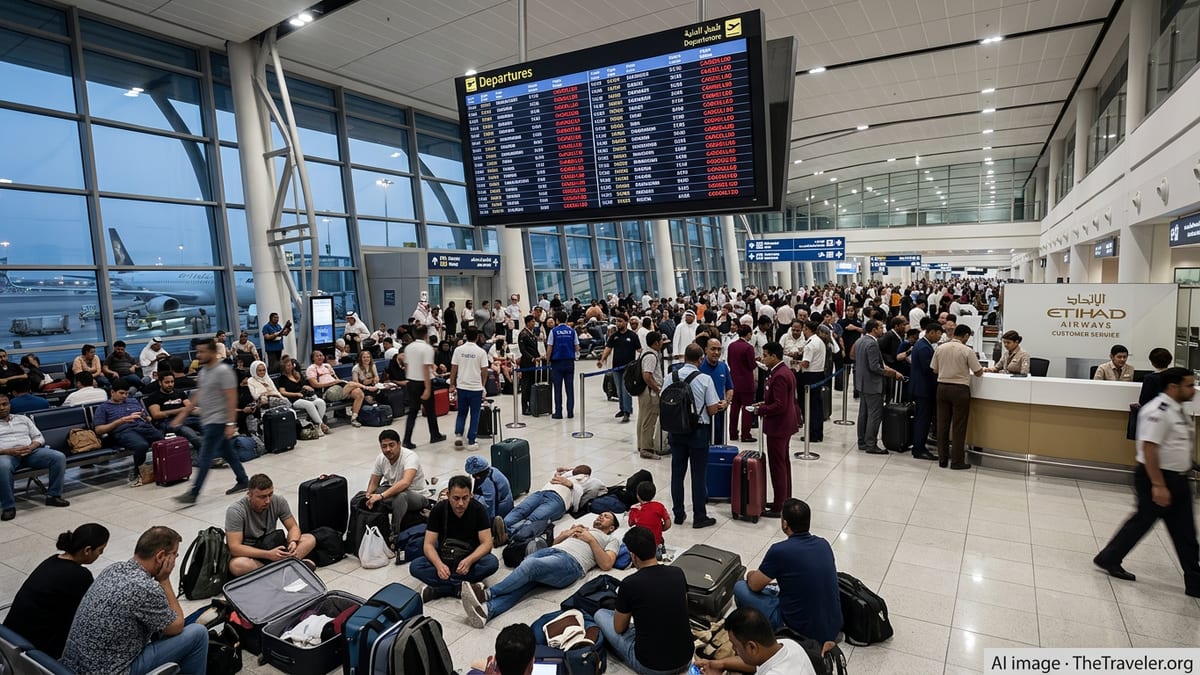
A Sudden Halt on a Critical Kazakhstan–UAE Corridor
Publicly available information from Kazakhstan-based outlets indicates that Air Astana temporarily halted its Dubai services from Almaty and Astana in mid July, citing escalation of the security situation in parts of the Middle East. Reports from Interfax-Kazakhstan and local news sites describe a rolling series of cancellations, initially for select dates and then extended through July 14, affecting both origin and return services.
Coverage on Kazakh platforms such as Zakon.kz characterizes the move as a suspension of air links with the United Arab Emirates, at least for several days, rather than minor schedule adjustments. The cancellations disrupted what had been a steadily rebuilt network after earlier springtime suspensions related to regional airspace restrictions and conflict-driven overflight concerns.
For leisure travelers from Kazakhstan heading to Dubai and northern emirates, the latest halt arrived at the height of the summer holiday season. For business passengers and migrant workers who use Air Astana’s Gulf routes to connect onward to South Asia, Africa or Southeast Asia via major UAE hubs, the sudden removal of multiple frequencies created a scramble for alternatives on other carriers.
The suspension also underlined Dubai’s importance in Air Astana’s wider strategy. Investor documents released earlier in 2026 frame the Gulf, and Dubai in particular, as a central pillar of the airline’s international network, feeding traffic between Central Asia, Europe and Asia. Any prolonged disruption on this corridor therefore has outsized consequences for connectivity well beyond Kazakhstan and the UAE.
From February Overflight Bans to July Cancellations
The July disruption does not exist in isolation. Earlier this year, Kazakhstan’s civil aviation authorities issued a ban on flights over and near several Middle Eastern states, including Iran and others affected by conflict, prompting Air Astana and low-cost affiliate FlyArystan to divert routes and suspend some Gulf services. Regulatory notices and subsequent airline statements show that flights to Dubai, Medina, Jeddah and Doha were among those affected at the end of February.
In March, Kazakhstan’s aviation administration and the transport ministry coordinated repatriation flights for passengers left stranded when UAE services were suddenly halted. Public updates at the time detailed special operations designed to recover travelers whose itineraries had been interrupted between late February and early March, including those who had begun their journeys via Dubai.
By late spring and early summer, Air Astana gradually restored UAE connectivity, using longer routings that avoided restricted airspace. Industry commentary and travel forums noted an increase in flight times on Kazakhstan–Dubai routes, as carriers traced more southerly paths to maintain compliance with overflight bans while keeping services on sale during a period of robust demand.
The July cancellations therefore represent a renewed tightening of a corridor that had only recently reopened. For travelers, the pattern illustrates how regulatory decisions, security assessments and operational constraints can change at short notice, even after a route appears to have stabilized.
How the Suspension Ripples Through Gulf Itineraries
For many Kazakhstan-based travelers, a ticket to Dubai is only the first leg of a longer journey. Dubai International Airport functions as a mega-hub, linking Central Asia to dozens of onward destinations on Emirati and other Gulf carriers. When Air Astana removes its nonstops from Almaty or Astana, entire chains of self-connected itineraries can collapse, especially for passengers who have pieced together journeys across multiple airlines.
Public discussion on travel forums in both Kazakhstan and the UAE reflects this vulnerability. Contributors describe missed onward flights and disrupted trips when regional carriers adjust schedules with limited warning. Because Air Astana and some Gulf airlines operate on separate tickets without integrated through-check or baggage agreements, travelers are often responsible for shouldering the risk of missed connections in Dubai.
The July suspension particularly affects price-sensitive passengers who combine a Kazakhstan–Dubai sector on Air Astana or FlyArystan with a low-cost or promotional long-haul fare from the UAE. When the initial leg is canceled, rebooking the entire journey at short notice can be significantly more expensive, especially during peak summer travel months when load factors are already high.
Beyond individuals, tour operators that package Kazakhstan–UAE holidays or onward trips through Dubai must quickly rework itineraries or move groups to alternative hubs such as Istanbul, Doha, Jeddah or Muscat. This redirection lengthens travel times and complicates visa and transit requirements, but may be the only realistic way to maintain departure dates.
Alternatives for Kazakhstan–UAE Travel Right Now
Even as Air Astana’s Dubai services face disruption, not all air links between Kazakhstan and the Gulf are cut. Flight information and aviation databases show that other carriers continue to connect the region, although capacity is fluid and schedules remain subject to change as the security landscape evolves.
Kazakhstan’s own FlyArystan earlier canceled its Aktau–Dubai route until late August, according to Interfax-Kazakhstan, shrinking low-cost options between western Kazakhstan and the UAE. On the other hand, Gulf-based carriers, including those from the UAE and Qatar, have at times adjusted routings and frequencies rather than eliminating services entirely, using longer flight paths and altering departure times to work around airspace restrictions.
Travelers willing to piece together more complex journeys can often connect via third-country hubs. Istanbul, Tbilisi, Baku and major Saudi airports appear frequently in traveler reports as fallback points when direct Kazakhstan–UAE links are unreliable. However, such workarounds introduce additional layovers and increase the chances of missed connections if disruption spreads.
Given the volatility, public advice circulating in aviation circles emphasizes checking flight status on airline apps shortly before departure, avoiding tight self-made connections in Dubai or Abu Dhabi, and considering flexible tickets that allow free date changes. For those with nonessential travel, postponing trips or routing away from the Gulf entirely during tense periods may reduce the risk of being stranded.
Should Travelers Rethink Gulf Hubs for the Near Term?
The question for many Kazakhstan-based travelers is whether to keep relying on the UAE as their primary transit gateway or to shift loyalty to alternative hubs until the situation stabilizes. The latest Air Astana suspension suggests that, at least in the short term, itineraries built around Gulf connections carry heightened operational risk compared with pre-crisis norms.
That does not mean the UAE has lost its status as a strategic hub. Dubai and Abu Dhabi still offer unrivaled global reach, frequent departures and competitive fares across Europe, Asia and Africa. But reliance on a single gateway makes travelers vulnerable when regional security tensions flare or when airspace closures force sudden schedule overhauls. Multi-hub strategies, where passengers hold backup options through Istanbul, Doha or regional Central Asian hubs, can provide a measure of resilience.
For airlines like Air Astana, the latest disruption underscores the need to balance commercial dependence on Gulf connectivity with the operational realities of flying near conflict-affected regions. Investor materials and route announcements show a growing focus on direct links to China, India and other Asian markets, which may gradually diversify risk away from any one transit point, even as Dubai remains central.
In the meantime, travelers planning Kazakhstan–UAE or Gulf-connected trips in the coming weeks may be wise to build in longer layovers, secure comprehensive travel insurance and monitor regional developments closely. The pattern of short-notice suspensions, followed by partial resumptions, suggests that flexibility rather than rigid, time-critical itineraries is the safer strategy while Middle Eastern airspace remains unsettled.