


More news on this day
Typhoon No. 7 is sweeping across Japan’s southern islands, forcing All Nippon Airways (ANA) and Japan Airlines (JAL) to cancel dozens of flights to and from Okinawa and nearby island airports, with more than 20,000 travelers facing disruption at the height of the early summer travel period.
Get the latest news straight to your inbox!
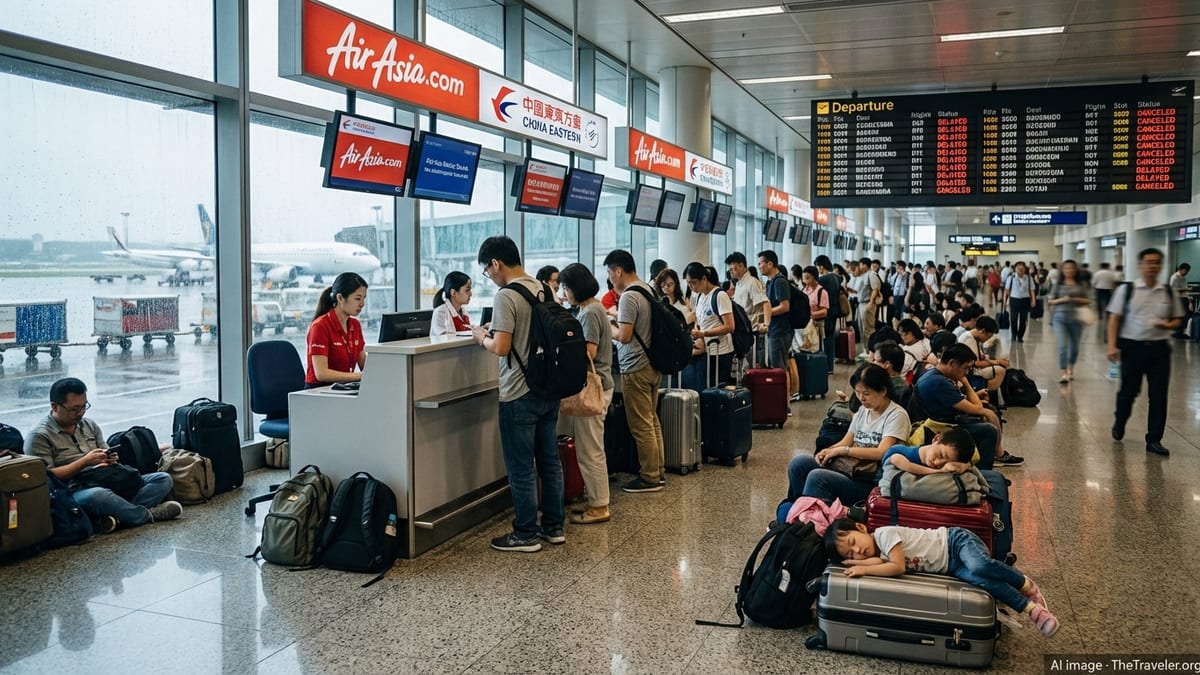
Wide-Ranging Cancellations at Okinawa and Outlying Island Airports
Publicly available airline and local media information indicate that cancellations are concentrated around Naha, Miyako and Ishigaki, key gateways to Japan’s southwest island chain. As the storm’s strong winds and heavy rain close in, carriers have been preemptively grounding services rather than attempting to operate through deteriorating conditions.
Coverage from Japanese broadcasters and regional newspapers shows ANA canceling at least 62 domestic flights over June 25 and 26, primarily on routes touching Naha, Miyako and Ishigaki. JAL Group is reported to have halted a similar number of services over the same period, with more than 50 flights scrubbed on June 25 alone as Typhoon No. 7’s approach made operations increasingly difficult.
Local reports from Okinawa describe entire days of activity being wiped out at smaller island airports such as Miyako and Shimojishima, where all flights on June 25 have been listed as canceled. Knock-on effects are also being felt at larger hubs as aircraft and crews are displaced, leading to additional disruption beyond the immediate storm zone.
While the impact so far is heaviest in the southern islands, transport operators on Japan’s main islands are also preparing for effects from the outer rainbands of the system, including potential delays on high-speed rail lines and connecting domestic flights as the storm’s remnants move north.
Tens of Thousands of Travelers Affected at Peak Travel Time
According to figures carried by Japanese television news and regional outlets, more than 20,000 passengers have already been affected by the wave of cancellations and schedule changes at ANA and JAL. That total is expected to rise if the storm tracks close to Okinawa longer than forecast or if winds remain above safety thresholds into the following day.
The disruption comes during a busy early-summer period, with domestic leisure travelers heading to Okinawa’s beaches and international visitors increasingly adding the islands to their itineraries. The combination of full flights and limited seat availability on alternative services makes same-day rebooking difficult, particularly for those traveling in groups or on fixed itineraries.
Travelers with onward connections, including international flights from Tokyo and Osaka, face particular uncertainty. Industry observers note that even when a typhoon quickly moves away from major hubs, aircraft positioning and crew rotation can take additional time to normalize, occasionally leading to follow-on delays or isolated cancellations well after the worst weather has passed.
Some low-cost and regional carriers have responded by mounting extra flights where possible once conditions improve, but the tight timing of the storm and the already dense summer schedules limit how many stranded passengers can be moved quickly.
Flexible Ticket Policies and How Passengers Can Respond
ANA and JAL have activated special weather-related ticket policies covering flights to and from Okinawa-area airports during the storm window, according to their public notices and travel advisories. These typically allow passengers booked on affected routes to change dates or request refunds without the usual change or cancellation fees, even on lower-cost fares that are often more restrictive.
For travelers whose flights are not yet canceled but fall within the advisory period, publicly available guidance indicates that many can still make voluntary changes online or through call centers if forecasts suggest a high probability of disruption. However, the most flexible options are normally offered once an official decision on cancellation has been published in the airline’s flight status systems.
Airport and tourism information sites in Okinawa advise passengers to confirm their flight’s status directly with their airline before heading to the airport and to consider arranging alternative accommodation in case departures are delayed into the following day. With phone lines and service counters frequently crowded during major weather events, digital channels are often the fastest route for rebooking once systems have been updated.
Travel insurance policies that cover weather-related disruption may provide additional support in some cases, though coverage varies widely. Travelers are encouraged by consumer advocates to retain boarding passes, e-tickets and any written notices of cancellation in order to support later claims for out-of-pocket expenses.
Storm Track and Operational Outlook at Naha Airport
Forecast data compiled by private weather services and aviation-focused meteorological providers describes Typhoon No. 7, locally named Mekkhala, as a compact but intense system passing close to Okinawa’s main island. Strong crosswinds and heavy rain are expected to continue around Naha Airport through June 25, gradually easing into June 26 as the system weakens and moves away.
Specialized aviation weather forecasts for Naha suggest that conditions are likely to remain challenging during much of the day, including periods of low cloud ceilings and gusts that exceed typical operational limits for safe takeoffs and landings on certain runways. Airlines generally opt to cancel or consolidate flights when forecasts show sustained periods of unsafe conditions rather than risk last-minute turnbacks or diversions with planes already in the air.
Once winds fall below critical thresholds and visibility improves, carriers are expected to begin repositioning aircraft and restoring regular schedules. However, clearing backlogs of stranded passengers can take several operating cycles, especially where aircraft are needed to return to mainland hubs before they can be redeployed on other routes.
Weather models currently indicate that the broader impact on Japan’s central and northern regions will be limited mainly to rain and localized transport delays, but operators are monitoring for any change in track that might bring stronger conditions closer to the main domestic air corridors.
Advice for Tourists Currently in or Heading to Okinawa
Travel and tourism bodies in Japan emphasize that typhoon-related disruption, while inconvenient, is a regular feature of travel to and within the country during the summer and early autumn months. For visitors already in Okinawa, local guidance recommends staying indoors during peak winds, following instructions posted by hotels and accommodations, and allowing extra time after the storm for transport networks to recover before attempting long-distance travel.
For those still planning to fly into the region in the coming days, checking both the typhoon forecast and the latest airline notices before making changes is important. In some recent storms, early forecasts of severe impact were followed by a rapid weakening or change of track, leading to fewer cancellations than initially feared. In other cases, such as the present Typhoon No. 7 event, carriers moved quickly to curtail operations once it became clear that conditions would deteriorate around key airports.
Travel specialists suggest building buffer time into itineraries that include Okinawa during the peak of the typhoon season, such as adding an extra day before critical long-haul departures or avoiding same-day transfers between remote islands and international flights. Booking accommodations with flexible cancellation policies can also make it easier to adjust plans at short notice if flights are rescheduled.
While the immediate focus remains on safely riding out the current storm and assisting affected passengers, aviation analysts note that Japan’s experience with typhoons has led to steadily improving contingency planning, clearer communication protocols and more proactive cancellation and waiver policies, all of which can help travelers navigate events such as Typhoon No. 7 with more confidence.