


More news on this day
Air Canada is extending the suspension of its services to Dubai and Tel Aviv well into 2027, as the flag carrier continues to respond to an extended regional crisis, volatile airspace conditions and evolving travel advisories across the Middle East.
Get the latest news straight to your inbox!
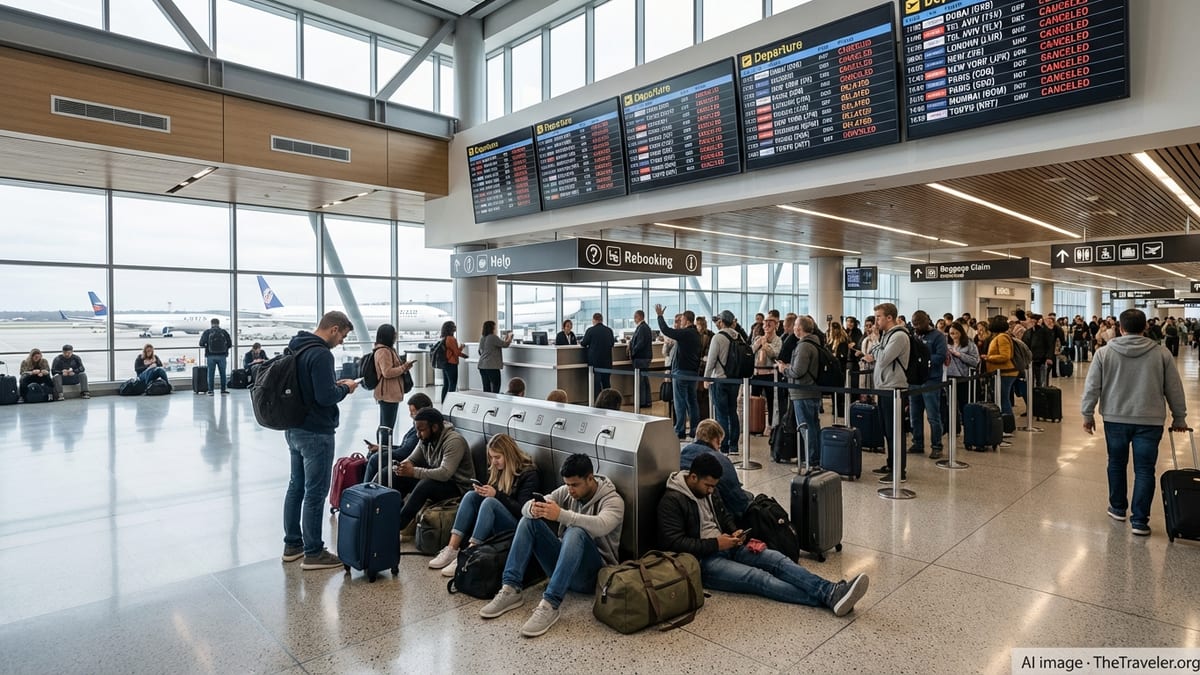
Suspensions Stretch From Temporary Measure to Long-Term Pause
What began as a short-term safety response has now become a long-running interruption on two of Air Canada’s key Middle East routes. Publicly available travel updates and schedule information show that the airline initially suspended its non-stop Toronto–Dubai service in mid-2025 as a precaution amid escalating tensions and intermittent airspace closures affecting several Gulf and Levant destinations.
Over the first half of 2026, those disruptions were repeatedly extended as the conflict widened and airports around the region faced partial shutdowns or damage. Aviation and news reports describe a pattern of closures and restrictions at major hubs, including Dubai International and Tel Aviv’s Ben Gurion Airport, following strikes and counterstrikes involving Israel, Iran and allied forces. The situation has produced a highly unstable operating environment for long-haul carriers routing over or into the region.
By March 2026, multiple industry summaries and airline advisories indicated that Air Canada’s planned resumptions to Tel Aviv had been postponed, while Dubai flights remained on hold beyond their original restart dates. Community updates and travel waiver notices circulating among passengers and aviation watchers throughout the spring referenced continuing suspensions to both cities and suggested that normal operations were unlikely to return quickly.
More recent schedule snapshots referenced by travelers in early August 2026 indicate that bookings on Air Canada-operated flights to Dubai and Tel Aviv are no longer available for departures through at least early January 2027. Some customers report seeing previously confirmed tickets rerouted via European partners instead, reinforcing indications that the pause has shifted from a short-term operational adjustment to a longer-term strategic withdrawal from the two markets.
Regional Crisis and Airspace Risks Shape Airline Decisions
The extended halt to Dubai and Tel Aviv services is rooted in a broader regional crisis that has reshaped traffic flows across the Middle East. Aviation chronologies for 2026 describe a series of airstrikes and retaliatory attacks that affected airports in Dubai, Abu Dhabi, Kuwait and elsewhere, prompting emergency closures of airspace and widespread cancellations across multiple carriers.
These events compounded the instability that had already followed the Gaza war and subsequent clashes, which had driven many international airlines to suspend or sharply curtail flying to Israel beginning in late 2023. Overflight routes through Iraqi, Iranian, Syrian and Israeli airspace have also been subject to intermittent restrictions, complicating long-haul flight planning between North America, Europe and Asia.
According to published coverage, airlines have been forced to weigh safety and regulatory considerations against commercial demand, often opting to suspend or reroute flights when the risk profile or operational complexity becomes too high. Analysts cited in financial and aviation reports note that longer detours around conflict zones can significantly increase flight times and fuel burn, undermining the economics of marginal long-haul routes, especially when demand is volatile.
For Air Canada, which faces elevated jet fuel costs and capacity pressures across its network, the combination of security uncertainties, diversion requirements and cost inflation appears to have tipped the balance toward keeping Dubai and Tel Aviv off the map for the foreseeable future. The airline has previously framed similar suspensions as precautionary steps and has emphasized the importance of aligning its schedule with official travel advisories and the latest risk assessments.
Impact on Passengers and Network Connectivity
The prolonged pause in services to Dubai and Tel Aviv is having a visible impact on travelers who once relied on Air Canada’s non-stop links to two of the region’s most important hubs. Dubai has served as a key gateway for connections onward to South Asia, Africa and other Gulf states, while Tel Aviv has been an important destination for both business and visiting friends-and-relatives traffic from Canada’s sizable Jewish and Israeli diaspora communities.
Reports shared by passengers indicate that customers holding tickets for later in 2026 are being rebooked on partner airlines via European hubs such as Frankfurt, often combining an Air Canada transatlantic leg with a regional segment operated by another carrier. In some cases, travelers say their original non-stop itineraries still appeared as “scheduled” in mobile apps even as route information on public booking channels flagged the underlying services as suspended, creating confusion and prompting calls to customer service.
Travelers with points-based or multi-carrier itineraries also describe challenges in obtaining clear guidance on refund eligibility and change fee waivers, particularly when third-party booking platforms or codeshare agreements are involved. However, public postings referencing Air Canada’s Middle East travel flexibility policies suggest that affected customers are generally being offered options to reroute, rebook for later dates, or shift to alternate destinations in Europe, India, Africa or other regions, subject to specific fare rules and validity windows.
For corporate travel planners and tour operators, the lack of a firm restart date complicates longer-term planning. Some have begun steering clients toward alternative routings that rely on European or Gulf-based carriers for the Middle East portion of their journeys, assuming that the Canadian airline’s own non-stop services may remain unavailable through at least the winter 2026–27 travel season.
Competitive Landscape and Industry-Wide Disruptions
Air Canada’s strategy mirrors broader moves by international airlines that have adjusted or suspended Middle East services in response to the evolving crisis. European and Asian carriers have issued a series of schedule changes throughout 2026, including extended cancellations to Tel Aviv and temporary halts to Dubai and other Gulf hubs at various points as the conflict has flared.
Business media coverage of global airline performance notes that these disruptions come at a time when demand for international travel remains robust overall, even as carriers confront higher fuel costs and shifting geopolitical risks. Some airlines have opted to redeploy capacity away from affected markets and toward transatlantic or intra-Asia routes, while relying on alliance partnerships and codeshares to preserve limited connectivity into the Middle East.
For travelers based in Canada and the northern United States, the disappearance of direct Air Canada flights to Dubai and Tel Aviv strengthens the competitive position of foreign carriers that continue to serve the region, whether via Europe or through alternative Gulf gateways where operations have stabilized. At the same time, any renewed escalation or expansion of airspace closures could quickly redraw these options, underscoring how fluid the situation remains.
Industry observers caution that airlines are likely to continue making short-notice adjustments as they respond to changing risk assessments and government guidance. In this environment, carriers such as Air Canada may prioritize flexibility, preserving the ability to restart suspended routes quickly once conditions permit, while avoiding firm public commitments that could be overtaken by events.
Outlook: No Firm Timeline for Resumption
As of early August 2026, there is no publicly available timetable for the full restoration of Air Canada’s non-stop services to Dubai and Tel Aviv. Booking channels and traveler reports both point to a suspension horizon stretching at least through early January 2027, with some indications that availability may not return even for dates beyond that window.
Analysts following airline scheduling patterns suggest that a combination of factors will likely determine when the routes can be safely and economically reinstated. These include sustained stability in regional security, a normalization of airspace access across key corridors, clearer guidance from Canadian and international authorities on travel risk levels, and sufficient demand to justify deploying long-haul aircraft on the routes again.
For now, the carrier appears focused on accommodating displaced passengers through partner networks and alternative routings, while maintaining flexibility to adapt quickly if the situation improves. Travelers planning trips to Dubai, Tel Aviv or nearby destinations in 2026 and early 2027 are being encouraged, through public advisories and community channels, to monitor their bookings closely and remain prepared for further schedule changes.
With the regional crisis still unresolved and airspace conditions subject to rapid change, Air Canada’s extended postponement of Dubai and Tel Aviv services highlights just how closely the global aviation network is tied to geopolitical developments, and how long the effects of a major conflict can reverberate across airline route maps.