


More news on this day
Passengers flying between Malaysia and Singapore faced extended delays after a Singapore Airlines service at Kuala Lumpur International Airport was held on the ground for hours due to a tyre problem, triggering a cascade of schedule disruptions across one of Southeast Asia’s busiest short-haul corridors.
Get the latest news straight to your inbox!
What Happened During the Kuala Lumpur Tyre Incident
Publicly available flight-tracking data and aviation community reports indicate that a Singapore Airlines Boeing 737 Max 8 operating the Singapore–Kuala Lumpur shuttle experienced burst tyres on landing at Kuala Lumpur International Airport in mid-June, leading to an extended on-runway stoppage. The aircraft, operating under the carrier’s regional flight numbering on the popular Singapore–Kuala Lumpur route, came to a safe stop but could not be moved without specialist equipment and replacement wheels.
Aviation enthusiasts monitoring Kuala Lumpur International Airport movements reported that one of the airport’s three runways was temporarily closed while ground teams assessed the damage and prepared to tow the aircraft. Moving a jet that has suffered tyre damage can be a slow process, as towing on exposed wheel rims can harm the runway surface and additional equipment may be needed to stabilise the landing gear.
Operational information shared within regional aviation forums suggests that Singapore Airlines had to arrange for replacement tyres and possibly an axle jack to be flown in, a factor that extended the on-ground recovery. The need to protect runway integrity, together with safety checks on the aircraft’s landing gear and brake assemblies, contributed to an overall disruption period approaching six hours.
While no injuries were reported in connection with the incident, the combination of a blocked runway and a grounded aircraft at a major Southeast Asian hub triggered a ripple effect of flight delays, cancellations and missed connections for passengers traveling between Malaysia and Singapore and onward to other destinations.
Impact on Flight Operations in Kuala Lumpur and Singapore
The temporary closure of a runway at Kuala Lumpur International Airport reduced capacity during a busy operating window and required arriving and departing flights to be rerouted to the remaining runways. Flight status pages for Singapore Airlines and other carriers serving Kuala Lumpur showed delays and a small number of diversions as air traffic controllers adjusted to the reduced runway availability.
Singapore-bound services from Kuala Lumpur were among the hardest hit, with at least one Singapore Airlines departure from the Malaysian capital reportedly delayed by close to six hours while the affected aircraft remained immobilised. Connecting itineraries via Singapore Changi Airport, including flights onward to Australia, Europe and regional Southeast Asian destinations, were also disrupted as missed minimum connection times forced rebooking.
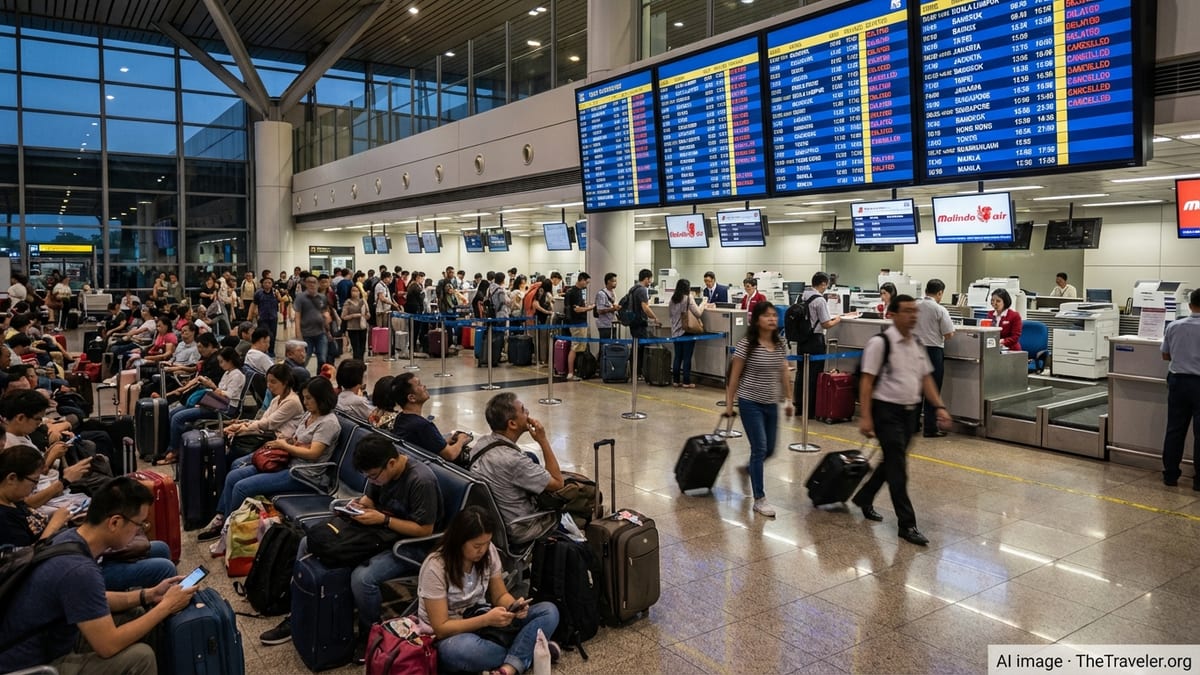
Travellers reported longer queues at boarding gates and customer service counters as airlines worked through re-accommodation options. Some passengers were transferred to alternative flights on Malaysia Airlines or low-cost carriers on the Kuala Lumpur–Singapore route, while others were placed on later Singapore Airlines departures once aircraft and crew became available again.
The incident came at a time when airlines in the region are already managing tight schedules and high load factors as travel demand continues to recover. Any extended ground delay or aircraft unavailability can quickly translate into wider network disruption, particularly on short-haul trunk routes that rely on fast turnarounds and multiple daily frequencies.
Why Tyre Incidents Cause Prolonged Airport Disruptions
Tyre failures on commercial jets are relatively rare but can have outsized operational consequences when they occur on a runway. Modern passenger aircraft tyres operate under high load and pressure, and when one or more tyres burst on landing, debris, potential wheel damage and the risk of structural harm to the landing gear must all be checked before the aircraft can be moved.
Safety protocols usually require an inspection of the affected tyres, wheels and surrounding components before towing, along with a runway sweep for rubber fragments and any loose metal. If the aircraft has come to rest with weight bearing directly on a damaged wheel or rim, specialist lifting equipment such as an axle jack is needed to fit replacement tyres before the jet can be taxied or towed away.
For airports like Kuala Lumpur International, where specific jacks or tyre types may not be stocked in large numbers for every aircraft variant operating at the field, replacement parts may need to be flown in from a carrier’s home base or a nearby maintenance facility. This logistics step can add several hours to the recovery timeline, even if the underlying incident poses no immediate danger to passengers.
The need to protect runway surfaces further slows the process. Dragging a large commercial aircraft on bare wheel rims can damage the asphalt or concrete, potentially forcing extended runway closures for repairs that would have a much wider and longer-lasting effect on airport operations than the original event.
Knock-On Effects for Regional Travel Between Malaysia and Singapore
The Kuala Lumpur tyre incident occurred against the backdrop of increasingly dense air traffic between Malaysia and Singapore, one of the busiest international city pairs in the world. Singapore Airlines, Malaysia Airlines and several low-cost carriers operate multiple daily flights linking Kuala Lumpur International Airport and Singapore Changi Airport, making the route a critical connector for both business and leisure travellers.
Recent commercial developments have further tightened the operational and commercial ties between the two flag carriers. In June, Malaysia Airlines and Singapore Airlines introduced joint fare products on the Kuala Lumpur–Singapore route under a strategic joint business partnership, aiming to offer more coordinated schedules and pricing across both networks. This closer cooperation means that disruptions affecting one carrier’s operations can quickly spill over into shared booking and re-accommodation arrangements.
With load factors on many Kuala Lumpur–Singapore flights reported to be high, a multi-hour delay to one narrow-body aircraft can displace hundreds of passengers over the course of a day. Travellers connecting in Singapore to long-haul services may face missed departures, overnight stays or re-routing via alternative hubs, particularly when subsequent flights are already close to full.
Ground transport links between Kuala Lumpur and Singapore, including premium coach services and cross-border buses, provide some alternatives for stranded passengers, but journey times are significantly longer than the one-hour flight, and last-minute availability can be limited when disruption affects a large number of travellers at once.
Practical Advice for Travellers Facing Similar Disruptions
For passengers planning trips between Malaysia and Singapore in the coming days, published guidance from airlines and recent operational experience point to several practical steps. Travellers holding separate tickets for onward connections should build in generous buffer time at Singapore Changi Airport, as short self-made connections are particularly vulnerable when an unexpected event disrupts one segment of the journey.
Passengers booked on the Kuala Lumpur–Singapore route are advised to monitor their flight status through airline apps or airport information displays on the day of travel. Real-time updates can provide early warning of delays linked to runway issues, weather or aircraft maintenance, giving travellers more time to explore rebooking options or adjust ground transport plans.
Those with urgent same-day connections may wish to discuss alternatives with airlines as soon as disruption appears likely, including rerouting via other Malaysian airports with links to Singapore or shifting to a later long-haul departure if available. In situations where a technical problem such as a tyre incident grounds a specific aircraft, airlines often prioritise safety inspections and repairs before dispatching the jet again, which can mean extended waits even after a delay is first announced.
Finally, travellers are encouraged to keep essential items, including medications, chargers and basic toiletries, in their cabin baggage in case they are separated from checked luggage due to missed connections or overnight rebooking. While the Kuala Lumpur tyre incident underlines the resilience of modern aviation safety systems, it also illustrates how a single technical event can significantly disrupt schedules across a tightly interconnected regional network.