


More news on this day
Air travelers across the United States faced another day of schedule turbulence as roughly 135 flights were cancelled and about 1,910 delayed on Sunday, April 12, 2026, with disruption concentrated at major hubs serving Atlanta, Boston, Chicago, Dallas, Houston, Los Angeles and New York, according to live tracking data and published reports.
Get the latest news straight to your inbox!
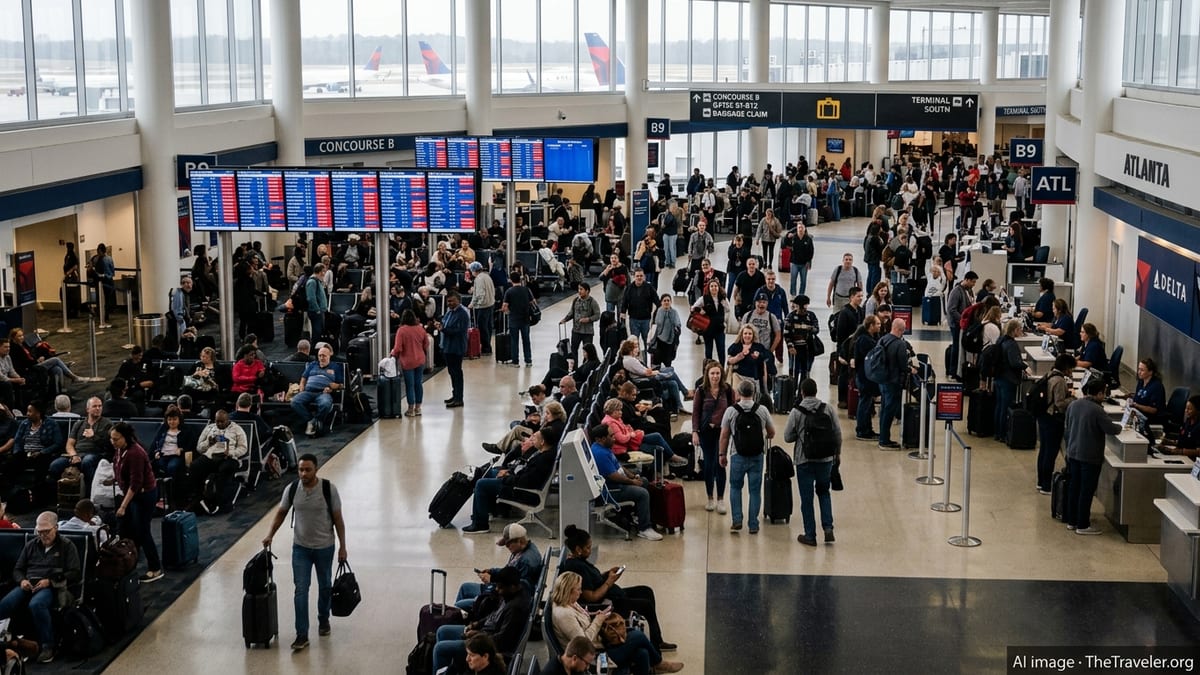
Major Hubs Struggle To Keep Schedules On Track
Publicly available flight status dashboards for April 12 indicated that cancellations and delays were spread across the national network, but pressure remained heaviest at some of the country’s largest connecting airports. Aggregated data showed that major hubs including Atlanta, Boston, Chicago, Dallas, Houston, Los Angeles and New York airports all recorded elevated levels of late and disrupted operations compared with a typical spring Sunday.
While the total number of outright cancellations remained in the low hundreds, the much larger volume of delays signaled mounting congestion within the system. Travel industry coverage noted that delays often ripple more severely through hub airports, where tight connection windows leave little room for schedule slippage before missed flights start to multiply.
Operational analysts frequently highlight that contemporary hub-and-spoke networks can appear to be functioning, with most flights still operating, even as passengers experience significant disruption. On days such as April 12, airlines may keep a high percentage of flights technically operating while accepting extensive late departures and arrivals that strain airport facilities, crew rotations and passenger itineraries.
For travelers, the practical effect at crowded hubs was longer lines at check-in and security, busier gate areas and a higher probability of missed connections, particularly during the late afternoon and evening peaks when earlier delays tend to cascade.
Delta, American, United And Low-Cost Carriers All Affected
The disruption cut across the U.S. airline landscape, touching legacy network carriers and low-cost operators alike. Reports drawing on airline-level data indicated that Delta Air Lines, American Airlines and United Airlines collectively accounted for a significant share of delayed flights, reflecting their large footprints in key hubs such as Atlanta, Dallas–Fort Worth, Chicago O’Hare, Houston and major New York airports.
Low-cost and ultra low-cost carriers, including Spirit Airlines and JetBlue, also appeared in delay and cancellation tallies. Their operations are tightly scheduled, with shorter turn times on the ground and fewer spare aircraft available, which can leave them particularly vulnerable when early-day disruptions upset aircraft and crew positioning.
Industry observers note that airlines on days like April 12 often try to preserve as much of the published schedule as possible by opting to delay rather than cancel flights outright. This can reduce the number of passengers who must be reaccommodated onto new services but can also lengthen travel days considerably for those already at the airport or in transit.
The uneven distribution of cancellations and delays among carriers underscored how differences in hub locations, fleet mix and crew bases can shape the impact of a single day’s operational strain. Certain airlines experienced concentrated pressure at a few core airports, while others saw smaller disruptions spread more evenly across multiple cities.
Why Delays Far Outnumber Cancellations
The imbalance between the 135 cancellations and approximately 1,910 delays highlighted a familiar pattern in U.S. air travel, in which carriers prioritize keeping flights operating, even if substantially late. Aviation analysts regularly point to several reasons for this strategy, including the need to keep aircraft and crews positioned for subsequent services and to avoid the complex rebooking efforts that follow a cancellation.
Published commentary on recent disruption days has emphasized that a high delay count can be as damaging to passenger experience as a larger wave of cancellations. Long ground holds and rolling departure estimates contribute to missed connections, lost hotel reservations and additional costs for travelers, even when flights eventually depart.
Regulatory and commercial considerations also shape airline behavior. While U.S. rules do not impose European-style standardized compensation for delays, carriers have publicly outlined customer service commitments that can include meal vouchers or hotel accommodations when delays stem from causes within the airline’s control. These policies, along with financial and reputational pressures, encourage airlines to manage disruptions in ways that limit the number of fully cancelled flights.
At the operational level, dispatchers and network planners weigh trade-offs throughout the day, sometimes deciding to hold a departure for incoming connecting passengers, which can protect itineraries for dozens of travelers but risks creating choke points elsewhere in the schedule. The April 12 statistics suggest that such triage produced more late flights rather than mass cancellations across the board.
Impact On Passengers Across The Country
For passengers, the result of Sunday’s disruption was a travel environment marked by uncertainty and extended journey times. Even travelers departing from smaller regional airports felt the consequences if they were connecting through one of the strained hubs, where gate changes, aircraft swaps and last-minute schedule adjustments were more common than usual.
Experience from previous nationwide disruption events shows that missed connections can continue to affect passengers for days after the initial spike in delays, particularly on heavily utilized routes where spare seats are limited. Observers noted that travelers arriving late into busy hubs on April 12 may have encountered fewer same-day rebooking options, especially on evening departures to smaller markets.
Travel columns and consumer advocates regularly advise passengers to monitor their airline’s mobile app and text alerts closely on days with high delay counts. The April 12 data reinforced that guidance, as carriers often update departure times and gate assignments digitally before airport display boards and public address announcements reflect the changes.
Families, business travelers and international passengers connecting onto long-haul services faced additional complications. Extended ground times at U.S. hubs can jeopardize onward connections to Europe, Latin America or Asia, raising the likelihood of involuntary overnight stays and the need for new routing options the following day.
What Travelers Can Do On High-Disruption Days
Recent coverage of flight disruption patterns in the United States offers a consistent set of practical steps for dealing with days like April 12. Travel experts recommend confirming flight status before leaving for the airport, using both airline apps and third-party trackers, to reduce the risk of spending extra hours in terminals if a significant delay or cancellation is already known.
Passengers who discover a cancellation or a delay long enough to jeopardize their plans are typically encouraged to act quickly to secure alternative arrangements. Publicly available guidance emphasizes that rebooking options, including seats on later flights or reroutes through different hubs, shrink rapidly once a disruption becomes widespread and thousands of travelers are competing for the same limited capacity.
Federal consumer information also outlines when travelers may be entitled to refunds or additional support after cancellations and severe delays. While specific benefits vary by airline and by the cause of the disruption, many carriers now publish customer service dashboards that summarize what they provide in terms of meal vouchers, hotel stays or frequent flyer mileage credits when delays or cancellations are attributable to internal issues rather than weather or air traffic control constraints.
Looking ahead to the remainder of the spring travel season, analysts suggest that days with similar profiles of high delays but relatively modest cancellation numbers are likely to recur, particularly around busy weekends and holiday periods. For travelers, that means continuing to build extra time into itineraries, favoring longer connection windows through congested hubs and staying prepared for same-day changes as the national aviation system manages increasing demand.