


More news on this day
U.S. travel guidance for parts of the Middle East tightened again this weekend, as widely circulated embassy security alerts warned Americans to prepare for possible flight cancellations, periodic airspace closures, and other sudden travel disruptions across a group of countries in the region.
Get the latest news straight to your inbox!
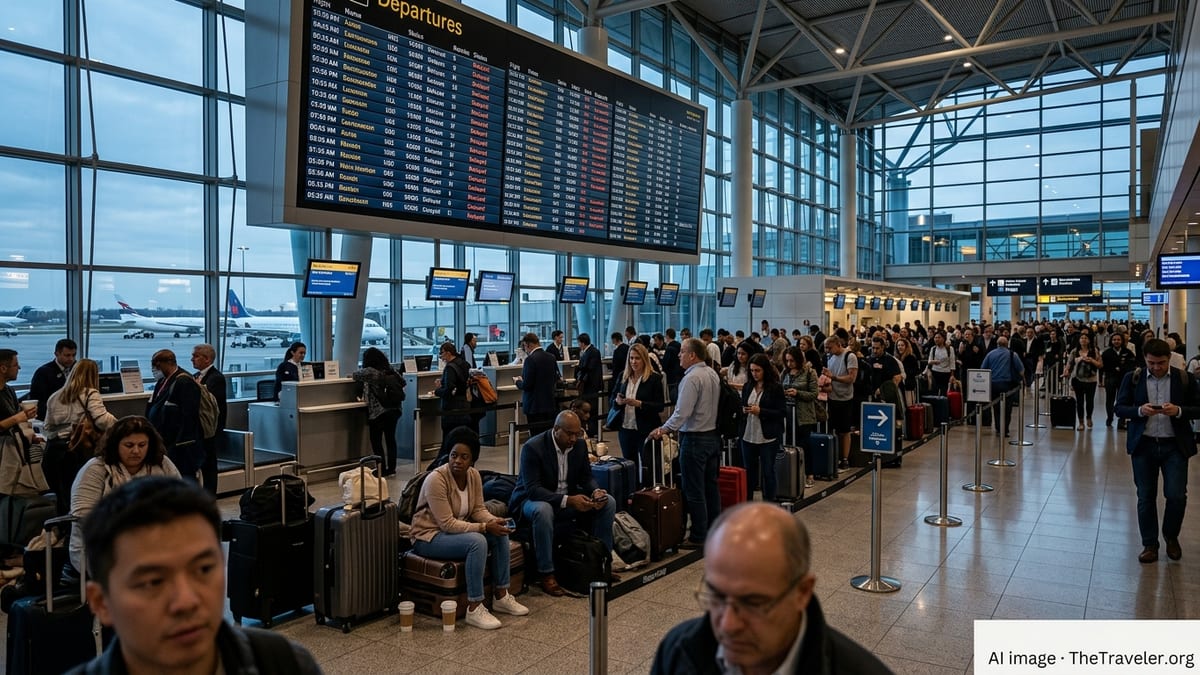
What the new warning is, and why it is being emphasized now
Published coverage dated September 19 and September 20, 2026, indicates the U.S. government has refreshed broad security messaging tied to escalating regional tensions, with a focus on the practical knock-on effects for travelers: disrupted flight schedules, temporary airspace restrictions, and the possibility of rapid changes in local security conditions.
The most consistent theme across the alerts is not a single new entry ban or a uniform “do not travel” directive, but rather a heightened readiness posture for Americans already in the region or planning to transit through it. That posture centers on monitoring airline operations closely and being prepared to adjust plans quickly if commercial routes are canceled or rerouted.
The State Department has also maintained broader global caution messaging in 2026, describing the Middle East security environment as complex and prone to unforeseen escalation, and explicitly highlighting flight cancellations and periodic airspace closures as realistic scenarios for travelers.
The 11-country focus and the broader set of places showing parallel alerts
While the topic has circulated online as an “urgent warning for 11 countries,” publicly available reporting around the latest wave of embassy notices points to multiple U.S. diplomatic posts issuing similar travel-disruption language on or around September 19, 2026. Some coverage describes at least 11 embassies posting near-identical warnings about disruptions being possible.
In the same news cycle, published lists and reposts of the alerts have commonly referenced Gulf and neighboring locations such as Bahrain, Iraq, Israel (including the West Bank and Gaza in some postings), Jordan, Kuwait, Lebanon, Oman, Qatar, Saudi Arabia, and the United Arab Emirates, with Iran frequently mentioned in region-wide caution language. Because the wording is repeated across different embassy sites and updates can change quickly, travelers should verify the exact alert text on the destination page for each country before departure.
It is also important to distinguish between a “security alert” style notice and a country’s standing Travel Advisory level. A security alert can be urgent and time-sensitive even when the overall advisory level remains unchanged, and it can focus on immediate operational impacts such as airport access, airspace closures, and reduced staffing rather than a full reassessment of risk indicators.
What travelers may experience: airspace changes, cancellations, and reroutes
The most immediate, traveler-facing risk described in the alerts is disruption to commercial aviation. The State Department’s 2026 worldwide caution language specifically flags flight cancellations, periodic airspace closures, and the likelihood that some airlines may postpone resuming earlier schedules or cancel select routes.
For travelers, that can translate into last-minute rerouting through alternate hubs, longer connections, or the need to rebook on different carriers when certain overflight corridors close. Even when airports remain open, irregular operations can affect baggage handling, ground transportation, and the ability to reach terminals if local security restrictions tighten around key infrastructure.
Another practical issue is the knock-on effect for consular services. When security conditions tighten, some posts can reduce routine appointments or operate with limited capacity. Travelers who may need passport replacement services, emergency documentation, or assistance after an arrest, accident, or medical emergency should plan for possible delays and limits on what can be done quickly in-country.
How to prepare if you have upcoming travel booked
Travelers with plans in the affected region should focus on operational readiness rather than speculation. Public guidance emphasizes checking directly with air carriers to confirm flights are still scheduled, and contacting airlines for change details when itineraries are affected.
Because changes can occur within hours, it is also worth building flexibility into lodging and ground transport where possible. That may include confirming hotel cancellation terms in advance, avoiding tight same-day connections, and saving copies of key documents in secure offline storage. Travelers transiting through major hubs should watch for changes to transit rules if reroutes force entry into a country that was not part of the original plan.
The State Department also encourages Americans to enroll in STEP (the Smart Traveler Enrollment Program) to receive destination-specific updates from the nearest U.S. embassy or consulate. That step can be especially useful during fast-moving disruptions, when local alerts may include airport access restrictions, curfews near sensitive areas, or instructions for sheltering in place during temporary incidents.
Context: travel advisories, alerts, and how to read them
U.S. Travel Advisories are structured into four levels, ranging from Level 1 (“Exercise Normal Precautions”) to Level 4 (“Do Not Travel”), and they use risk indicators such as terrorism, civil unrest, crime, and wrongful detention to summarize key concerns. Separately, embassy and consular alerts can be issued to address rapidly changing conditions, including transportation interruptions and localized security incidents.
For travelers trying to make decisions quickly, the practical approach is to read both layers together: the standing advisory level explains the baseline risk environment, while the latest embassy alerts explain what may be changing right now, especially around airports, border crossings, and major urban centers.
In this latest round, the repeated emphasis on flight cancellations and airspace closures suggests the U.S. message is aimed at avoiding travelers getting stranded mid-itinerary. For many Americans, the decision point may not be whether a destination remains technically open, but whether it can be reached reliably and exited smoothly if conditions shift.