


More news on this day
Air travelers across the United States faced another day of mounting disruptions as major hubs including Boston, Atlanta, Chicago, Miami, Houston, New York and Washington D.C. logged 1,902 delayed flights and 56 cancellations, affecting operations at Delta Air Lines, Southwest, American, United, Alaska and several smaller carriers.
Get the latest news straight to your inbox!
Major Hubs See Cascading Delays and Cancellations
Publicly available tracking data shows that the latest round of disruptions was concentrated at some of the country’s busiest airports, with Boston Logan, Atlanta Hartsfield-Jackson, Chicago’s O’Hare and Midway, Miami International, Houston’s Bush Intercontinental and Hobby, New York’s major airports and Washington-area fields all reporting significant numbers of delayed departures and arrivals.
The imbalance between 1,902 delays and 56 outright cancellations suggests that airlines focused on keeping schedules intact where possible, often by pushing departure times back rather than cutting flights entirely. For passengers, however, extensive delays can be nearly as disruptive as cancellations, leading to missed connections, late-night arrivals and extended time in crowded terminals.
Carriers most visibly affected in the data include Delta Air Lines, Southwest Airlines, American Airlines, United Airlines and Alaska Airlines, reflecting their large footprints at the impacted hubs. Smaller and regional operators also experienced knock-on effects where they share gates, airspace and ground resources with these larger networks.
The disruption comes at a moment when U.S. carriers were already operating with tighter margins for error following capacity adjustments, staffing changes and schedule reshaping heading into the peak summer travel period.
Weather, Congested Airspace and Tight Schedules Converge
While specific causes vary by airport and flight, recent patterns indicate that a combination of unsettled weather, congested airspace and tightly packed schedules continues to drive many of the delays. Summerlike storm systems and shifting wind patterns frequently affect operations along the East Coast and in the Midwest at this time of year, slowing takeoffs and landings and forcing traffic-management programs that ripple through the national network.
Operational data and previous federal statistics highlight how even modest weather issues can trigger significant slowdowns when airlines are operating full schedules. When air traffic control implements spacing restrictions or ground holds, flights at large hubs can quickly back up, forcing airlines to juggle aircraft and crew availability and leading to rolling delays across multiple cities.
Airlines have also trimmed some routes and frequencies in recent months in response to fuel costs and demand patterns, but they continue to schedule aircraft and crews very tightly. Industry performance reports show that late-arriving aircraft and air-carrier-related delays are persistent contributors to disruption, reinforcing how small breakdowns can rapidly affect dozens of subsequent flights.
In this latest wave of delays, the concentration at major coastal and central hubs underscores how sensitive the national system remains to any combination of weather, congestion and ground-operations challenges.
Delta, Southwest, American, United and Alaska Feel the Strain
The disruption was particularly visible across the networks of Delta, Southwest, American, United and Alaska, which collectively dominate traffic through many of the affected hubs. Atlanta-based Delta and Dallas-based Southwest rely heavily on high-frequency domestic operations that can be vulnerable when early-morning or midday delays begin to cascade.
American and United, with large operations at Chicago, Miami, New York and Houston, often face additional complexity coordinating domestic and international banks of flights. When departures are held or arrivals are slowed, widebody aircraft, long-haul crews and connecting passengers can all be caught in the resulting bottlenecks.
Alaska Airlines, which has expanded its presence at several large U.S. airports in recent years, is not as large as the biggest three legacy carriers but still sees its daily operation shaped by the same shared infrastructure and airspace. When gate space, taxiways or departure slots tighten at a major hub, smaller and mid-sized carriers can struggle to recover quickly.
Recent federal on-time performance summaries underline that while most U.S. carriers complete the vast majority of their scheduled flights, even a small percentage of cancellations and a larger pool of delays can translate into tens of thousands of disrupted passengers on a busy travel day.
Travelers Confront Long Lines, Missed Connections and Rebooking Challenges
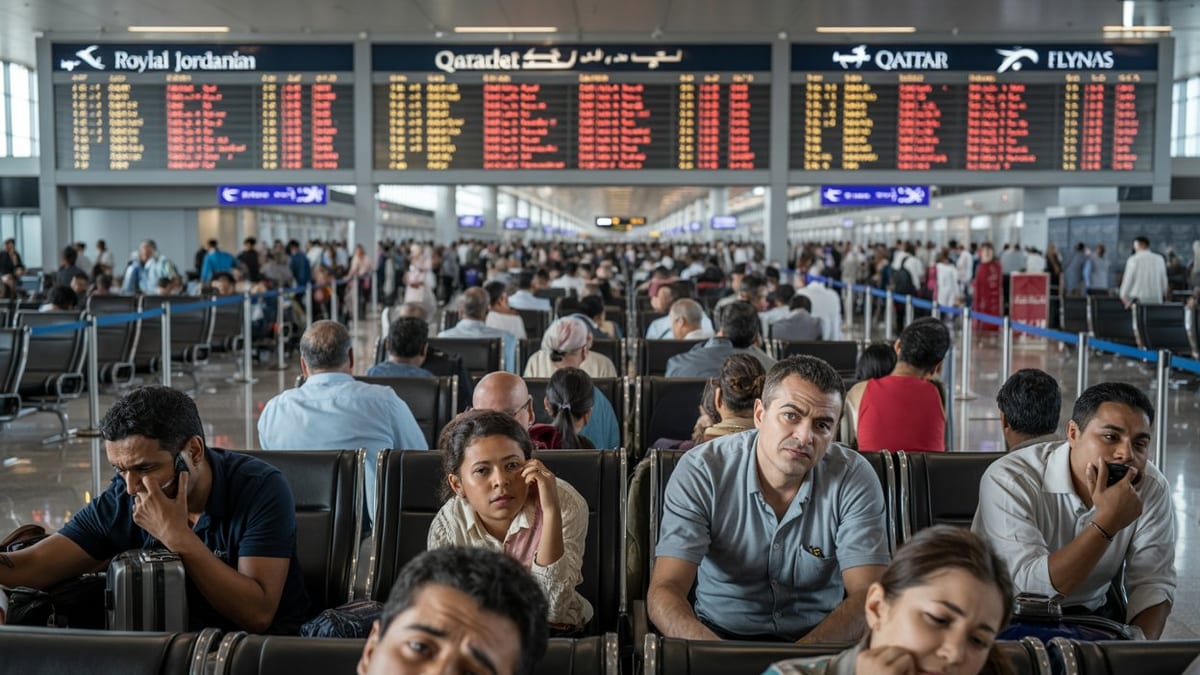
For passengers, the numbers translate into crowded departure halls, longer lines at check-in counters and security, and growing pressure on airline call centers and digital channels. Travelers caught in multi-hour delays often spend extended periods at the gate waiting for updated departure times, with limited clarity about whether a flight will ultimately operate.
Missed connections are a particular concern when delays cluster at hub airports. A late inbound flight can easily cause travelers to miss onward departures, especially for those booked on tight layovers or connecting to the final flights of the day to smaller markets. Once those last departures leave, rebooking options narrow and overnight stays become more likely.
In this environment, publicly available guidance from travel experts continues to emphasize booking earlier flights where possible, allowing extra connection time at major hubs and closely monitoring flight status through airline apps and airport display systems. Passengers are also encouraged to review their carrier’s policies on meal vouchers, hotel assistance and refunds when significant delays or cancellations occur.
Frequent flyers increasingly look to same-day change tools and standby options to escape prolonged delays, but capacity limits and full loads often constrain these workarounds when disruptions are widespread across multiple carriers and cities.
What Today’s Disruptions Signal for the Summer Travel Season
The volume of delays and cancellations recorded in this latest incident serves as an early stress test for the U.S. aviation system heading into the peak summer season. Airlines have already signaled targeted schedule cuts and adjustments for the coming months, with some carriers reducing frequencies on select routes and pausing certain seasonal services in an effort to match capacity to available resources.
Industry analysts note that even with these adjustments, demand for leisure and visiting-friends-and-relatives travel remains strong, leaving many flights near or at capacity. When a busy schedule collides with operational challenges, there is limited slack in the system to absorb disruptions without passengers feeling the impact.
The current pattern of large-scale delays paired with a smaller number of outright cancellations suggests that carriers are attempting to preserve as many itineraries as possible, even at the cost of reliability and on-time performance metrics. For travelers, this means that itineraries are more likely to operate, but not always as scheduled.
As the summer rush approaches, the experience unfolding at airports in Boston, Atlanta, Chicago, Miami, Houston, New York, Washington D.C. and beyond points to a season in which advance planning, flexible expectations and close attention to real-time flight information will be essential parts of navigating U.S. air travel.