


More news on this day
A polar expedition cruise ship anchored off Cape Verde has become the center of an international health investigation, with passengers stranded on board after three suspected virus-related deaths and several additional illnesses linked to a rare hantavirus infection.
Get the latest news straight to your inbox!
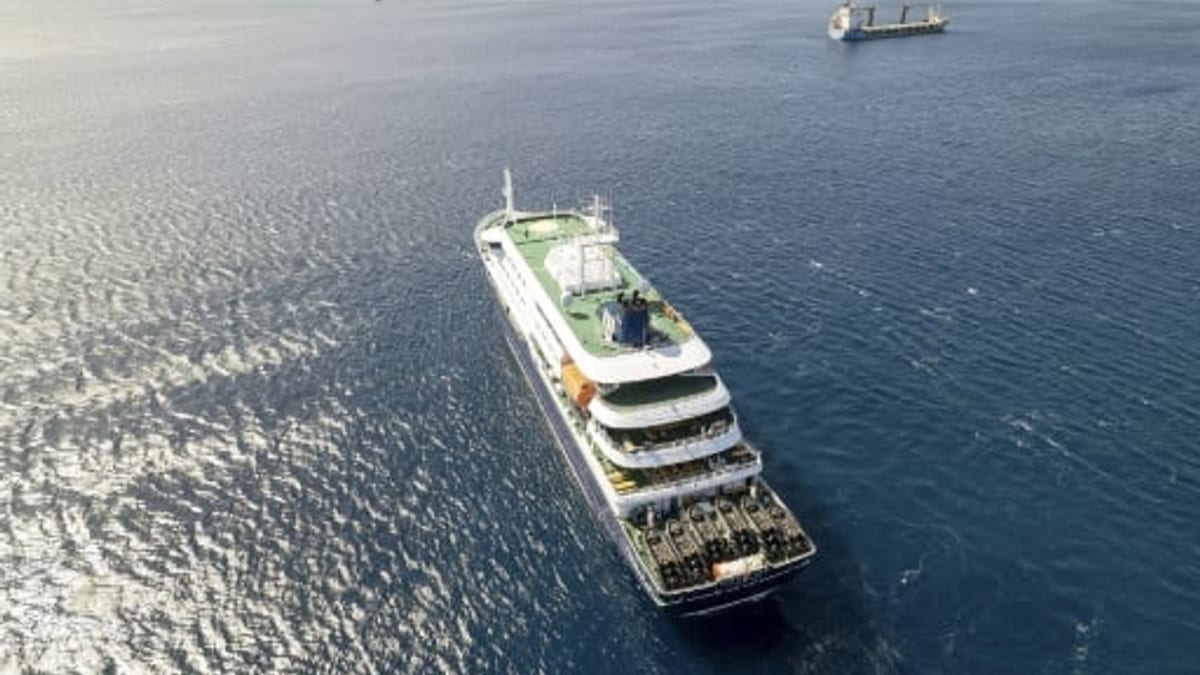
Cruise itinerary turns into mid-Atlantic health emergency
The MV Hondius, a Dutch-flagged expedition vessel operated by Oceanwide Expeditions, departed Ushuaia in southern Argentina in March on a weeks-long voyage that included landings in Antarctica and calls at remote South Atlantic islands before a planned final stop in Cape Verde. Publicly available information indicates that around 150 passengers and crew were on board for the voyage, which marketed itself as a nature-focused cruise through some of the world’s most isolated waters.
The journey took a grave turn in April when an elderly Dutch passenger who had previously traveled extensively through South America fell ill with fever, gastrointestinal symptoms, and respiratory distress. He died at sea in mid-April. Subsequent reports indicate that his wife later became sick after disembarking on the British territory of Saint Helena and died in Johannesburg on April 26, where laboratory testing confirmed hantavirus infection.
A third death, involving a German passenger who developed acute respiratory symptoms toward the end of the itinerary, was reported in early May. Together, these fatalities, along with several additional passengers and crew showing compatible symptoms, triggered urgent alerts to international health agencies and raised the prospect of a rare but serious virus circulating among people who had shared confined spaces aboard the ship.
As concern mounted, Cape Verdean authorities declined to allow the Hondius to dock in the capital, Praia, leaving the vessel anchored offshore while health officials assessed the risk and arranged evacuations for the most seriously ill.
Confirmed hantavirus case and growing list of suspected infections
According to summaries of World Health Organization updates and national health bulletins, at least one fatality linked to the ship has been confirmed as hantavirus through laboratory testing, while several other cases remain classified as suspected infections. WHO figures compiled in recent days point to at least seven to eight people who have developed symptoms consistent with hantavirus disease, including passengers and at least two crew members.
The majority of known cases trace back to individuals who had disembarked the ship at intermediate ports or were transported onward for medical care. One British passenger taken off at Ascension Island was flown to South Africa and remains in intensive care, while the confirmed Dutch case died after air travel from Saint Helena. More recently, reports indicate that crew members with severe symptoms were evacuated via Cape Verde for treatment in Europe.
Publicly available information suggests that investigations are focusing on the possibility that the original exposure occurred on the South American mainland before embarkation, given the lengthy incubation period of certain hantavirus strains. However, the clustering of illnesses among people who shared the same voyage, and the absence of known rodent infestations on board, has led experts cited in media coverage to examine whether limited person-to-person transmission may have taken place in the ship’s closed environment.
Health agencies in multiple countries, including South Africa, the Netherlands and Argentina, have opened epidemiological inquiries to piece together the chain of infections, using passenger manifests, flight records and medical reports to identify contacts and trace the virus’s path across continents.
Days at anchor off Cape Verde leave passengers in limbo
As the outbreak unfolded, the MV Hondius spent days stationary off the coast of Cape Verde, visible from Praia but unable to enter port. Photos and broadcast footage show health workers boarding in protective gear and small groups of evacuees being ferried ashore, while the majority of passengers and crew remained confined to the ship under isolation protocols.
Accounts compiled in international coverage describe a tense atmosphere on board, with passengers instructed to stay largely in their cabins, wear masks in shared spaces, and undergo regular temperature checks. Meal services and daily routines were reshaped to limit mingling, with staggered dining times and curtailed group excursions replacing the usual expedition schedule.
Local authorities in Cape Verde faced a difficult calculus, balancing the humanitarian need to assist those on board with concerns over the country’s limited hospital capacity and the logistical challenge of quarantining and testing travelers from more than 20 countries. Publicly available reports indicate that while the ship received medical support and resupply from shore, clearance for general disembarkation was withheld.
In the meantime, arrangements were negotiated for the Hondius to sail onward to Spain’s Canary Islands, where ports have more extensive facilities for infectious disease management. Plans under discussion involve coordinated repatriation flights, medical screening, and staggered disembarkation to reduce any residual risk to receiving communities.
Contact tracing spreads across continents
The outbreak has prompted a complex web of international contact tracing, as health agencies work to determine how far the virus may have spread beyond the ship. Reports from European and African outlets describe investigators tracking passengers who left the Hondius earlier in the voyage, including those who disembarked at Saint Helena, Ascension Island and subsequent air hubs.
Health ministries have highlighted particular concern around commercial flights where infected or potentially infected individuals were present. One widely cited example involves the Johannesburg-bound flight on which the Dutch passenger later confirmed with hantavirus traveled before her death. A member of the cabin crew from that flight has since been hospitalized in the Netherlands for evaluation, according to national media informed by official briefings.
Additional suspected cases have been reported in at least five countries, reflecting the global footprint of the cruise’s clientele and their onward journeys. Many of these individuals are under observation or undergoing testing, and public communication from health bodies stresses that case definitions are evolving as more laboratory results become available.
Despite the far-reaching nature of the contact-tracing effort, international organizations continue to characterize the overall public health risk from the cruise-linked outbreak as low, given the rarity of hantavirus infections and the small number of people with confirmed or probable disease relative to global travel volumes.
What travelers should know about hantavirus risk at sea
Hantaviruses are a group of rodent-borne pathogens more commonly associated with rural settings than with cruise ships. Infections are usually linked to contact with the urine, droppings or saliva of infected rodents, particularly in areas where people clean or disturb rodent-infested spaces. Certain strains, such as those found in parts of South America, are known to cause hantavirus pulmonary syndrome, a severe illness marked by fever, muscle aches and rapidly progressing breathing difficulties.
Medical references note that human-to-human transmission has historically been considered rare and largely limited to specific strains. The suspected chain of infections involving the MV Hondius is therefore drawing close scrutiny from virologists and epidemiologists, who are examining whether the shipboard cluster reflects a known pattern or hints at unusual transmission dynamics.
For travelers, particularly those joining expedition cruises to remote regions, the episode underscores the importance of pre-trip health assessments, careful review of recent travel histories, and transparency about symptoms that develop before boarding. The case is also prompting renewed attention to on-board surveillance systems, isolation capacity and contingency planning within the cruise sector, which has already spent years overhauling protocols in the wake of the COVID-19 pandemic.
Industry observers suggest that the handling of the Hondius outbreak will likely influence future port access rules and passenger screening standards, especially for small vessels visiting isolated destinations. As the ship continues toward the Canary Islands and investigations progress, the experience of those stranded off Cape Verde is emerging as a new reference point in the evolving relationship between adventure travel and global infectious disease risk.