


More news on this day
Air travel across Russia has been thrown into disarray after a wave of disruptions linked to drone attacks on southern airspace, with publicly available tracking data on Saturday indicating at least 131 flight delays and 16 cancellations affecting major carriers including Aeroflot, Lufthansa, Turkish Airlines and Qatar Airways, and key hubs in Moscow, St. Petersburg, Sochi, Kazan and other cities.
Get the latest news straight to your inbox!
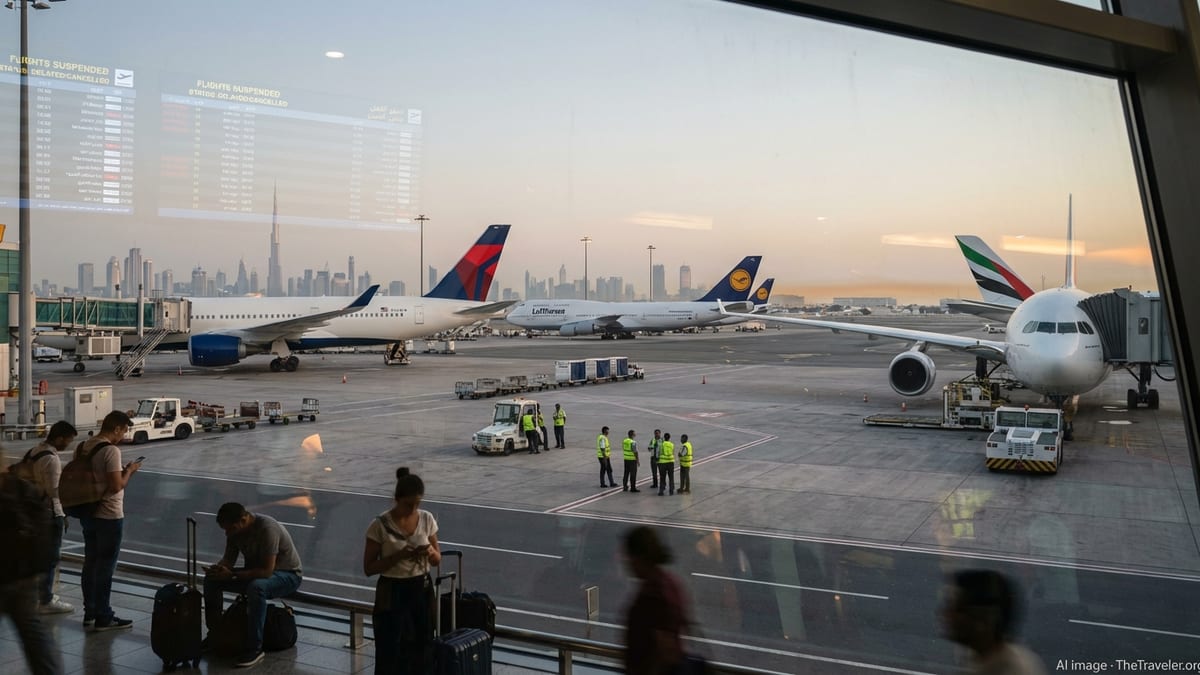
Drone Damage to Air Traffic Control Spurs Widespread Closures
Reports from regional outlets in Russia indicate that a drone strike on an air traffic control facility in Rostov-on-Don has forced aviation authorities to suspend operations at multiple airports in the south of the country. The affected control center coordinates a substantial share of traffic across the southern corridor, including routes serving popular Black Sea destinations and key regional capitals.
Following the incident, airport operations were temporarily halted in a broad arc of cities, including Sochi, Krasnodar, Mineralnye Vody, Volgograd and several others in southern Russia. These closures have cascaded into knock-on effects for flights transiting through Moscow and St. Petersburg, where carriers have been forced to adjust schedules, reroute aircraft and cut some services altogether.
The timing has amplified the disruption. The closures and restrictions began just ahead of the Victory Day holiday period, traditionally one of the busiest domestic travel windows in Russia. With leisure and family travel demand elevated, the sudden loss of southern capacity has stretched the system and created pressure at already busy hubs.
Publicly accessible flight-status boards and aviation data aggregators on Saturday showed dozens of delayed departures and arrivals across the network, particularly on routes linking Moscow with southern resorts and regional centers. Many services remained in a holding pattern as operators waited for clearer guidance on when airspace restrictions might be eased.
Major Carriers Grapple With Delays and Cancellations
Russia’s flag carrier Aeroflot appears among the most heavily impacted operators, given its dense domestic network and reliance on Moscow Sheremetyevo as a transfer hub. Monitoring of Aeroflot’s schedules on Saturday showed a cluster of delays on routes to and from cities in southern Russia, alongside a smaller number of outright cancellations.
Foreign airlines have also been caught in the turbulence. According to international flight-tracking platforms, European and Middle Eastern carriers such as Lufthansa, Turkish Airlines and Qatar Airways recorded delayed or canceled services on routes touching Moscow and St. Petersburg as the disruption rippled outward. Some carriers have cut rotations to southern destinations entirely for the coming days, while others are trimming frequencies or extending scheduled block times to account for congestion and rerouting.
In total, data compiled from multiple public trackers for Saturday’s operations pointed to at least 131 delayed flights and 16 cancellations involving both Russian and foreign airlines serving Russian airports. The figures are likely to be conservative, as rolling schedule adjustments and late operational decisions can lag in public feeds, and many services are being reclassified from cancellations to substantial delays as operators attempt to reposition aircraft and crews.
International passengers connecting through Russian hubs are facing additional uncertainty. Disruptions to southern domestic legs are breaking onward connections, and some travelers have reported being rebooked via alternative European or Middle Eastern hubs as airlines seek workarounds that avoid the most affected airspace.
Moscow, St. Petersburg, Sochi and Kazan Bear the Brunt
Moscow’s major airports have once again become focal points of disruption. Sheremetyevo, Domodedovo and Vnukovo collectively handle the bulk of Russia’s long haul international traffic as well as dense domestic banks serving the regions. With southern airspace constrained, departures from Moscow to Sochi, Krasnodar, Mineralnye Vody and other resort cities have been repeatedly pushed back or scrubbed.
St. Petersburg’s Pulkovo Airport has also seen mounting delays on services that rely on southern routing or aircraft cycling through affected airports. Publicly available data show extended ground times and irregular rotations as airlines attempt to keep at least part of their schedules running while avoiding closed or capacity-limited fields further south.
Sochi, one of Russia’s busiest leisure gateways, has been hit particularly hard. Local reports and national coverage describe prolonged suspensions of regular operations at the airport, with airlines forced to cancel or divert flights and travelers scrambling for rail and road alternatives. Other regional airports in the network, including Kazan, have experienced delays and schedule reshuffles as carriers juggle aircraft and crew assignments around the disruption zone.
The cumulative effect is a patchwork of service across the western half of the country. Some city pairs remain largely intact but operate with lengthy delays, while others are temporarily severed or served by irregular charter-style flights arranged at short notice.
Railways and Alternate Transport Step In
With air travel reliability sharply reduced across southern Russia, the national rail operator has begun to play a larger role in maintaining mobility. According to regional media reports, Russian Railways has announced additional services and extra capacity on existing trains linking Moscow with cities such as Adler, Novorossiysk, Mineralnye Vody, Astrakhan and Volgograd.
Rail authorities have indicated that there are sufficient seats available on many southern routes and that they are prepared to add carriages where technically feasible. Plans reported in local outlets include deploying extra trains from 10 May onward to absorb passengers affected by canceled flights, and opening additional ticket counters and waiting areas at key stations to handle the surge in demand.
Coaches and long distance buses are also seeing increased traffic as travelers turn to road options. Tour operators active on Russian social media channels have advised clients to confirm their itineraries frequently and to consider ground-based alternatives for domestic segments where air links are unstable or subject to last minute changes.
For many passengers, the shift from air to rail or road is extending journey times significantly. Routes that typically require a short domestic flight are being replaced by overnight or multi-day trips, complicating connections with international departures and disrupting work and holiday plans across the region.
Uncertain Outlook for Passengers and Airlines
Publicly available statements and coverage suggest that aviation authorities in Russia are treating the disruptions as a temporary response to security concerns, but there is little clarity over how long restrictions on southern airspace and airport operations will remain in place. The evolving nature of drone activity and the complexity of repairing and certifying damaged air traffic infrastructure make firm timelines difficult to predict.
Airlines face a challenging operational environment in the interim. Carriers must balance safety constraints with the need to maintain connectivity, all while managing crew duty limitations, aircraft positioning and rising fuel and insurance costs associated with longer routings. Industry analysts cited in Russian and international media note that repeated waves of disruption place additional financial strain on both domestic and foreign operators active in the Russian market.
For passengers, the immediate advice from consumer advocates and travel industry commentators is to monitor flight status continuously, maintain flexible plans where possible and familiarize themselves with ticket change and refund policies. Travelers holding tickets with Aeroflot, Lufthansa, Turkish Airlines, Qatar Airways and other affected carriers are being urged to use official channels and verified digital tools for the latest schedule updates, as conditions at individual airports can shift quickly during the day.
As the busy holiday period unfolds, the scale and duration of the current disruption will help determine how quickly Russia’s aviation system can stabilize. For now, the combination of drone-related security risks, infrastructure damage and tight network capacity has created one of the most challenging travel environments the country has seen in recent years.