


More news on this day
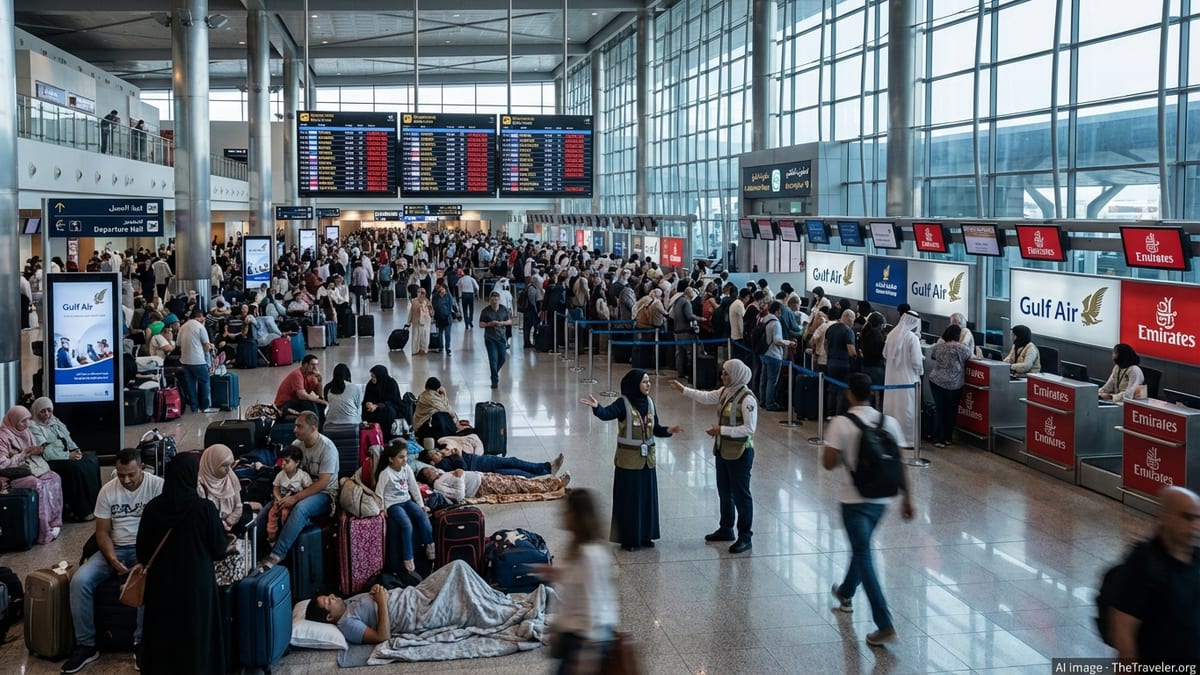
Major UAE carriers Emirates, Etihad Airways and Air Arabia have suspended services to Bahrain as renewed hostilities between the United States and Iran disrupt Gulf airspace and trigger rolling changes to regional flight schedules.
Get the latest news straight to your inbox!
Targeted suspensions on UAE–Bahrain routes
Publicly available flight information shows that Emirates, Etihad Airways and Air Arabia have halted a series of flights linking Dubai, Abu Dhabi and Sharjah with Bahrain in recent days, citing operational and security considerations linked to the regional situation. The adjustments come as Bahrain International Airport experiences intermittent disruption amid reports of renewed Iranian missile and drone activity in the wider Gulf.
Coverage in regional media indicates that Etihad’s services between Abu Dhabi’s Zayed International Airport and Bahrain were among the first to be affected, after a Bahrain-bound flight was forced to turn back when operations at Bahrain International were temporarily suspended. Subsequent schedules showed the cancellation of the affected rotation and related services on that route as operators reassessed safety margins and airspace availability.
Reports on airline trackers and aviation-focused outlets also highlight cancellations and delays by Emirates and low-cost sister carriers operating between the UAE and Bahrain. While some disruptions have involved short-notice schedule changes, the pattern emerging across the three UAE airlines points to a coordinated pullback from Bahrain pending greater clarity on airspace safety and the trajectory of the conflict.
For now, the suspensions appear focused on direct Bahrain routes rather than a broad halt to operations elsewhere in the network. However, the Bahrain adjustments sit alongside a wider wave of cancellations and reroutings involving Kuwait and other Gulf destinations, underlining how quickly flight patterns can be reshaped by events in the US-Iran confrontation.
US-Iran escalation reshapes Gulf airspace
According to published coverage of the conflict, the latest flight changes are unfolding against a backdrop of renewed US strikes on Iranian targets and Iranian attacks on facilities in Bahrain, Kuwait, Jordan and other states. These hostilities followed the breakdown of a fragile ceasefire earlier in the summer, with regional governments condemning what they describe as hostile missile and drone launches.
Civil aviation in the Gulf has found itself on the front line of the crisis. European regulators have reiterated warnings about flying in parts of the Middle East and Persian Gulf region, stressing that heightened military activity, air defence alerts and the risk of misidentification increase potential hazards for commercial traffic in and around affected flight information regions. While such advisories are not outright bans, they often prompt airlines to adjust routings, altitudes or frequencies, particularly on shorter regional sectors that border higher-risk zones.
In this context, airspace serving Bahrain has become a focal point. The country hosts key US military assets and sits close to areas of heightened tension, prompting periodic restrictions at Bahrain International Airport and temporary closures that can ripple across airline schedules. Each disruption forces carriers to re-evaluate the viability of same-day rotations and the resilience of their wider networks if aircraft and crew are held out of position.
Industry analysts note that Gulf carriers have considerable experience navigating regional crises, from previous flare-ups in the Gulf to broader Middle East conflicts. Even so, the pace and intensity of the current US-Iran escalation, combined with the proximity of sensitive military infrastructure to busy civil air corridors, have raised the stakes for operational planners seeking to balance safety, regulatory guidance and commercial continuity.
Network implications for Emirates, Etihad and Air Arabia
Operational updates monitored across airline websites and booking channels show that the Bahrain suspensions form part of a rolling series of changes affecting short-haul Gulf routes. Etihad has also extended cancellations on selected Kuwait services, while Emirates and Air Arabia have made targeted adjustments to flights linking the UAE with Kuwait and other nearby markets as the security picture shifts.
The concentration of cancellations on short regional legs reflects the pivotal role these sectors play in the hub-and-spoke strategies of UAE carriers. Flights to Bahrain, Kuwait and similar destinations typically act as feeders, connecting passengers onto long-haul services to Europe, Asia and the Americas. When a spoke destination becomes unreliable because of airspace concerns or intermittent airport closures, airlines face difficult decisions about whether to operate, reroute, or temporarily suspend services.
In the case of Bahrain, timetable changes suggest airlines are erring on the side of caution, prioritising predictable operations on core long-haul routes while trimming sectors that carry a higher risk of sudden disruption. This approach helps reduce the likelihood of aircraft diversions, last-minute turnbacks and cascading delays that can reverberate through global networks.
For carriers such as Air Arabia, whose business model is built around high aircraft utilisation on short- and medium-haul point-to-point routes, persistent uncertainty in nearby markets can be particularly challenging. Aircraft grounded by airspace closures or unexpected airport restrictions translate directly into lost revenue and can complicate fleet and crew planning at a time when demand on other routes remains relatively robust.
Impact on passengers and booking trends
Travelers holding tickets between the UAE and Bahrain have been among the most directly affected by the latest wave of suspensions. Publicly available updates show that impacted passengers are being offered rebooking on later dates where services are expected to resume, or on alternative routes via other Gulf hubs where capacity and routing options permit.
At the same time, there are signs that some travelers are responding to the uncertainty by postponing non-essential trips or seeking routings that avoid conflict-adjacent airspace altogether. Travel industry analyses of the 2026 Iran war have already documented a broader shift in booking patterns, including a preference for airlines and itineraries perceived to offer greater distance from active conflict zones and potential missile or drone trajectories.
Despite these concerns, data from aviation trackers and anecdotal accounts suggest that many flights into and out of the UAE remain busy, particularly on long-haul services to North America, Europe and key Asian markets. This indicates that, for now, the main impact of the latest escalation is being felt on short-haul regional links such as those to Bahrain and Kuwait, rather than on the UAE’s position as a global transit hub.
Airlines and airports in the region continue to advise passengers to monitor flight status closely in the days before departure, as schedules may change at short notice while carriers adjust to evolving airspace restrictions and security assessments.
What travelers should watch in the coming days
With the situation between the United States and Iran still fluid, aviation observers expect further adjustments to Gulf flight schedules to remain possible. The extent and duration of suspensions to Bahrain routes operated by Emirates, Etihad and Air Arabia are likely to depend on whether airspace stability improves and whether any new military activity directly affects civil aviation infrastructure.
Future guidance from international aviation safety bodies will also be closely watched. Updated advisories regarding Gulf and adjacent airspace can influence how airlines plan routings over and around Bahrain, Kuwait and the broader Persian Gulf, particularly at higher cruising altitudes used by long-haul traffic. Any change in such recommendations could trigger additional route changes or, conversely, support a gradual restoration of previously suspended services.
For travelers, the most practical step remains to stay in close touch with official airline channels and to allow extra flexibility in itineraries that involve Bahrain or nearby destinations while tensions remain elevated. Many carriers have been introducing more flexible rebooking policies during the conflict period, though these can vary by route and fare type.
As the regional picture evolves, the Bahrain suspensions by UAE airlines illustrate how quickly geopolitical developments can reshape even well-established air corridors. The coming weeks will show whether the latest cancellations prove to be a short-term adjustment or a sign of more durable changes in how Gulf carriers serve some of their closest neighbours.