


More news on this day
Air travel to and from the United Arab Emirates is facing another day of heavy disruption, with publicly available tracking data indicating 514 delayed flights and 23 cancellations across the country’s main hubs as regional tensions and shifting airspace conditions continue to ripple through airline schedules.
Get the latest news straight to your inbox!
Regional Tensions Push Disruptions to New Highs
Recent days have seen a sharp rise in flight disruption across the Gulf, and the latest figures from aviation tracking platforms underscore how strongly the United Arab Emirates is being affected. The tally of 514 delayed services and 23 outright cancellations reflects conditions at Dubai International, Abu Dhabi’s Zayed International Airport and Sharjah International, where airlines are still working around capacity constraints and evolving routings.
Published coverage from Gulf-based outlets describes a patchwork of schedule changes on key regional routes, particularly those linking the UAE with Kuwait and Bahrain. Airlines have periodically suspended or cut frequencies on these sectors, citing operational reasons that coincide with periods of heightened security concerns and temporary airspace restrictions in parts of the wider region.
The result for travelers is an increasingly unpredictable operating environment. Flights that do depart are often running behind schedule as carriers absorb longer routings, adjust crew patterns and re-time departures to avoid congested corridors, compounding the total number of delays recorded within a 24-hour window.
Key Routes Affected Across UAE Hubs
According to recent flight-status updates, services between the UAE and Kuwait have been among the hardest hit. Reports indicate that several UAE-based carriers have cancelled or suspended flights between Dubai, Abu Dhabi, Sharjah and Kuwait International Airport over multiple days, with some cancellations extended through the current weekend.
Connections between Abu Dhabi and Bahrain have also been affected. Travel coverage notes that selected flights on this route were removed from schedules over a series of days, contributing to the latest wave of cancellations and forcing passengers onto alternative routings through other Gulf hubs where capacity allows.
At the same time, long-haul services touching UAE airports are feeling secondary impacts. While many intercontinental flights continue to operate, they are frequently subject to knock-on delays as aircraft and crews arrive late from disrupted regional sectors, or as departures are held for new routings that avoid sensitive airspace.
Airlines Adjust Schedules and Routings
Publicly available information from airline status pages shows a mix of tactical adjustments and short-notice cancellations as carriers respond to the evolving situation. In some cases, specific flight numbers between the UAE and neighboring Gulf states have been cancelled for several consecutive days, while other services have been consolidated or retimed.
Some international airlines serving Dubai and other regional hubs have also altered their schedules, including suspending individual routes or extending temporary suspensions that were originally announced for shorter periods. These measures are contributing to the overall count of disrupted flights linked to UAE airports, even when the aircraft themselves are operated by foreign carriers.
Operational data suggests that routings for certain flights have been lengthened, adding flying time and increasing the likelihood of downstream delays. Aircraft and crew then arrive late for subsequent rotations, setting off a cascading effect that can be seen in the elevated number of late departures and arrivals throughout the day.
Passenger Experience and Practical Impacts
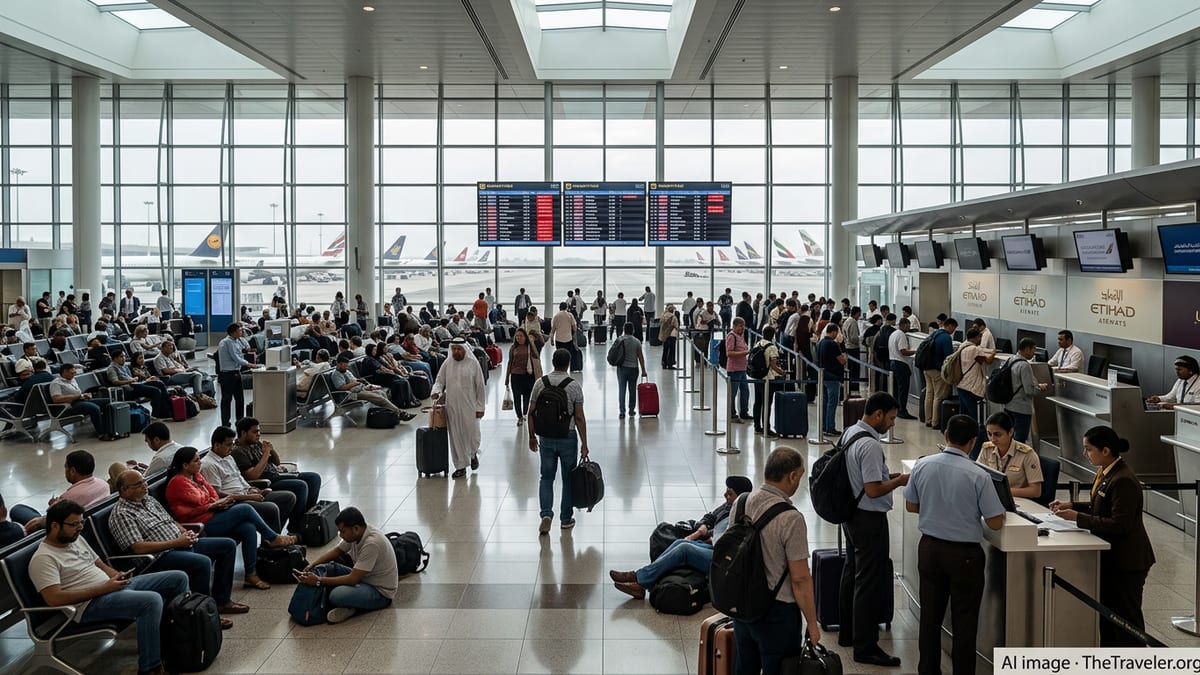
For passengers, the surge in disruption is translating into longer waits at airport terminals, missed connections and last-minute changes to onward travel plans. Social media posts and traveler reports describe busy customer-service desks and crowded rebooking queues, particularly at peak periods when several delayed flights overlap at the same gate areas.
Travel coverage also highlights increasing reliance on digital tools as airlines encourage passengers to monitor their flight status via apps and websites before setting out for the airport. With delays and cancellations often announced on short notice, advance verification has become an essential step for travelers attempting to avoid unnecessary time in terminals.
Some travelers are opting to build longer buffers into their itineraries, especially when connecting through the UAE to other destinations in the Middle East and South Asia. Extended layovers and more flexible booking arrangements are emerging as common strategies to manage the risk of missed onward flights in such a fluid operating environment.
Outlook for the Coming Days
Analysts following the region’s aviation sector suggest that disruption levels are likely to remain elevated in the near term, as airspace dynamics and operational conditions continue to evolve. Any further changes to regional security or routing constraints could quickly translate into additional delays and cancellations for flights involving UAE hubs.
Airlines are expected to keep adjusting schedules on a rolling basis, focusing on routes most exposed to regional hotspots while attempting to preserve connectivity on core long-haul services. Industry observers note that once airspace and scheduling patterns stabilize, carriers will still need time to reposition aircraft and crews, meaning that a full return to normal operations may lag behind any improvement in the wider regional environment.
For now, the latest count of 514 delays and 23 cancellations provides a snapshot of a system under strain. As the situation develops, travelers planning to transit through Dubai, Abu Dhabi or Sharjah are being advised by publicly available guidance to remain flexible, check their flight status frequently and be prepared for itineraries that may change even on the day of departure.