


More news on this day
Flight operations across the United Arab Emirates have come under renewed pressure, with publicly available tracking data and media reports indicating 514 delays and 23 cancellations affecting services over recent days, as regional tensions and airspace constraints continue to ripple through one of the world’s busiest aviation hubs.
Get the latest news straight to your inbox!
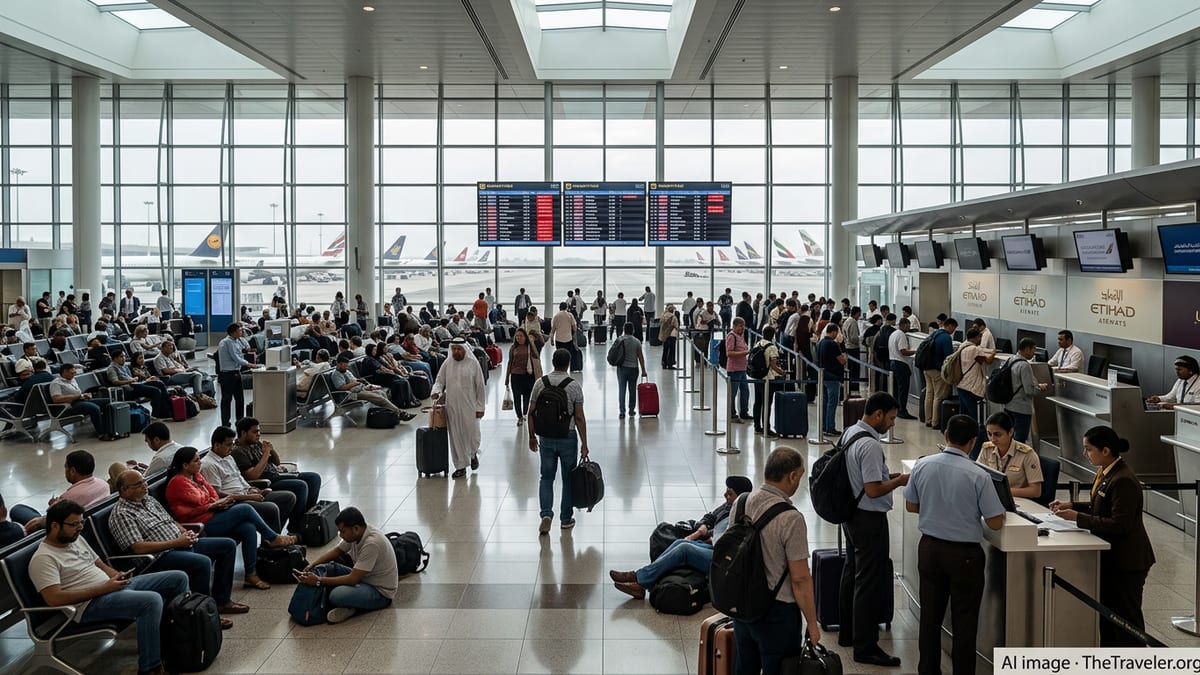
Growing Operational Strain Across UAE Airports
The latest disruption figures reflect a system already operating near capacity at the height of the summer holiday season. Dubai International, Abu Dhabi’s Zayed International Airport and Sharjah International handle hundreds of departures and arrivals each day, leaving airlines with limited room to absorb sudden schedule shocks.
Published coverage from regional outlets describes a pattern of rolling delays, aircraft rotations pushed behind schedule and short-notice cancellations on selected routes, particularly to nearby Gulf destinations. These changes are feeding into the aggregate tally of 514 delayed flights and 23 cancellations, as measured over a recent multi-day period using publicly available flight-status portals.
Industry data providers and airline dashboards show that many affected services are departing late rather than being scrubbed altogether. However, once aircraft and crews fall out of position, knock-on effects are felt across the network, including on long-haul flights that depend on tight connection banks at UAE hubs.
As a result, passengers are facing longer-than-normal waits at departure gates, late-night arrivals and tighter connections, even when their own flights are not directly listed among the cancellations.
Regional Tensions and Airspace Restrictions Drive Disruptions
The latest wave of schedule changes is closely tied to the security environment in the wider Gulf region. Recent reports from major UAE and regional news outlets note intermittent airspace restrictions and operational adjustments linked to ongoing tensions involving Iran, the United States and several Gulf states.
Coverage of Kuwait’s airspace disruptions, including temporary suspensions of operations at Kuwait International Airport, has highlighted how closely intertwined Gulf aviation networks are. When air traffic in Kuwait slows or halts, services from Dubai, Abu Dhabi and Sharjah to the country are reduced or cancelled, contributing directly to the UAE’s disruption totals.
In parallel, risk-based rerouting around sensitive air corridors has increased flying times on selected routes. Longer routings can require additional fuel, alternative crew planning and schedule padding, all of which reduce operational flexibility. Even modest changes on a handful of corridors can cascade into broader delays when aircraft are needed back at UAE hubs for onward flights.
Travel advisories issued by various governments and airlines urge passengers to monitor developments closely, underlining that conditions remain fluid and that further adjustments are possible at short notice.
Airlines Trim and Adjust Schedules
Major UAE-based carriers have continued to publish rolling updates to their schedules in recent days. Publicly available information from airline status pages and local media reports indicates targeted cancellations and suspensions rather than a blanket halt of operations.
Etihad Airways has extended the suspension of certain flights between Abu Dhabi and Kuwait, as well as select services to Bahrain, citing operational reasons in earlier advisories. Similar route-specific cancellations have been reported for flights between UAE airports and Kuwait by other carriers based in the country, contributing to the current disruption totals.
At the same time, international airlines have adjusted their services into the UAE. Regional coverage describes some foreign carriers suspending flights to Dubai or Abu Dhabi for defined periods, or rerouting aircraft to avoid congested or restricted corridors, which can further strain airport capacity when operations resume.
While core trunk routes between the UAE and major long-haul markets in Europe, North America and Asia continue to operate, some have experienced schedule changes, added connection times or aircraft swaps, all of which can translate into measurable delays even when flights ultimately depart.
Passenger Experience: Longer Queues, Tighter Connections
For travelers, the disruption is being felt most acutely in longer queues at check-in and transfer desks, as well as uncertainty around connection windows. Social media posts and online forums frequented by UAE-based travelers describe busy terminals, occasional gate changes and extended periods onboard aircraft awaiting departure slots.
Passengers connecting through Dubai, Abu Dhabi or Sharjah are particularly exposed when inbound flights arrive late and connection times are already tight. Rebooking demand rises in these circumstances, sometimes overwhelming customer service channels and prolonging the time needed to secure alternative routings.
In some cases, travelers have reported being automatically rebooked onto later flights or different routings when original services were cancelled. Others have encountered last-minute notifications advising of delays, urging them to remain in contact with their airline’s mobile app or email updates throughout their journey.
Compensation and care policies vary by carrier and by the jurisdiction governing a particular itinerary. Travel analysts note that while some passengers may be entitled to accommodation, meal vouchers or alternative transport in the event of significant disruption, claims can be complex when delays are linked to security conditions or airspace closures, which are often categorized as extraordinary circumstances.
What Travelers Should Do Now
With disruption statistics still elevated and the regional situation unsettled, aviation specialists advise travelers to build additional flexibility into their plans. This includes allowing more time for connections, particularly when itineraries involve multiple carriers or transfers between different Gulf hubs.
Publicly available guidance from airlines and airports consistently recommends checking flight status repeatedly in the 24 hours before departure and again before leaving for the airport. Many carriers have updated their mobile apps and notification systems to push real-time alerts, which can be crucial when decisions about rebooking need to be made quickly.
Travelers are also encouraged to review ticket conditions, including change fees, refund rules and any waivers currently in place. Some airlines have introduced limited-period flexibility policies on affected routes, permitting date or routing changes without standard penalties.
Although the underlying drivers of the current disruption lie largely outside carriers’ direct control, the combination of 514 documented delays and 23 cancellations underscores how rapidly conditions can change in a region that is central to global air travel. Industry observers suggest that elevated volatility is likely to persist in the near term, even if the overall number of flights operating to and from the UAE remains high.