


More news on this day
Flight disruptions across the UAE remain a moving target as Gulf tensions continue to affect airspace risk assessments and day-to-day airline operations, prompting rolling delays, selective route cancellations, and frequent schedule adjustments by Emirates, Etihad Airways, Air Arabia, and flydubai.
Get the latest news straight to your inbox!
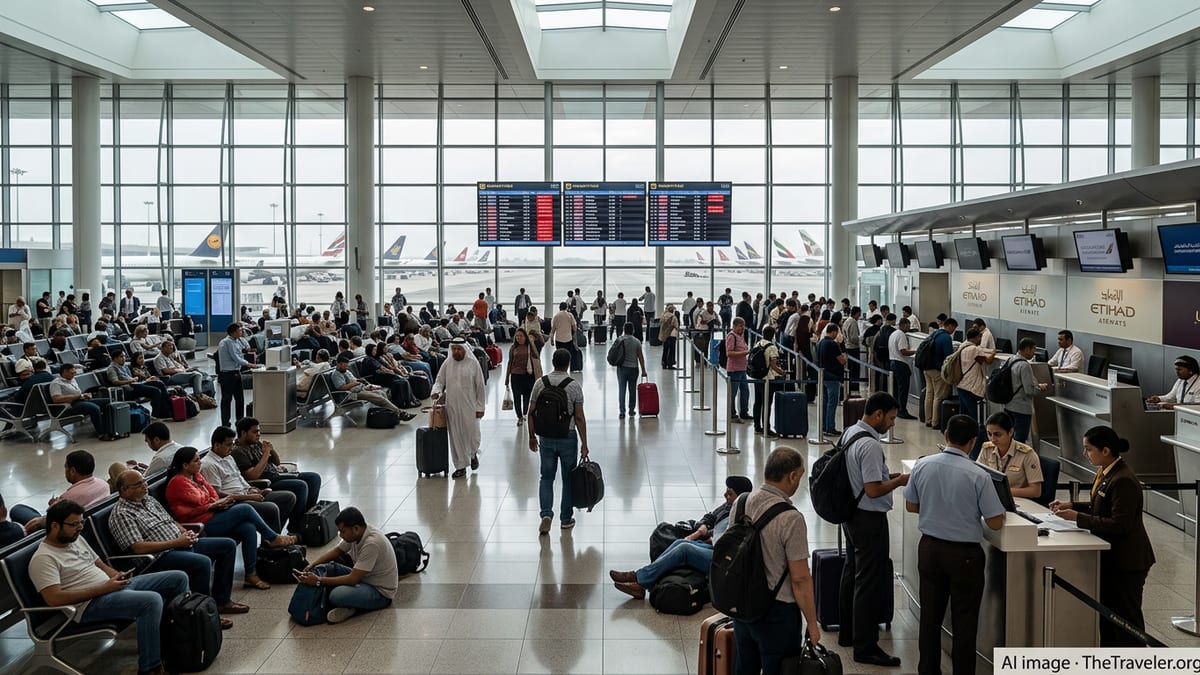
What’s driving the latest disruptions
Published coverage and aviation safety advisories show that the current wave of irregular operations is being shaped by conflict-related risk warnings and intermittent restrictions across parts of Gulf airspace. The European Union Aviation Safety Agency (EASA) extended a Conflict Zone Information Bulletin covering the airspace over the waters of Bahrain, Kuwait, Qatar, and the United Arab Emirates, as well as the Gulf of Oman west of longitude 58°E, with validity running through September 30, 2026.
Those advisories do not automatically ground flights, but they can influence airline routing decisions, trigger longer detours, and tighten operational margins that can cascade into late arrivals, missed connections, and aircraft and crew rotations falling out of sequence. In practice, this means travelers may see a flight operating one day and then changed, retimed, or cancelled later as conditions evolve and carriers revise schedules.
Separately, recent disruption has also been compounded by non-regional events that hit the same networks, including air traffic control issues affecting UK airports reported in early September, alongside other operational shocks that can ripple into UAE hubs through delayed inbound aircraft and crew.
Emirates: rolling delays, some cancellations, and “check before you go” messaging
Emirates has continued to publish travel updates advising customers to regularly check flight status and monitor notifications for delays, changes, or cancellations before heading to the airport. That guidance has been repeated across multiple update cycles in 2026 as disruptions have come and gone with changes in regional conditions.
In early to mid-September 2026, published coverage tracked widespread delays affecting Dubai International Airport operations, with specific Emirates services from the UK appearing among the impacted flights on certain days. Other reporting noted Emirates cancellations on some long-haul services during the same period, illustrating how wide-body networks can still be affected when upstream disruptions hit.
For travelers, the practical takeaway is that Emirates’ schedule integrity can shift quickly on days when airspace risk and ATC capacity constraints overlap. Checking flight status close to departure and rechecking again on the day of travel is especially important for passengers with tight onward connections through Dubai.
Etihad: selective route impacts and flight-by-flight status checks
Etihad’s public flight-status tools and travel updates have pointed passengers toward verifying individual flight numbers, particularly during periods when air traffic control disruptions and regional security developments coincide. Recent Etihad updates have also highlighted specific incidents that can disrupt service, underscoring that the airline is managing irregular operations on a flight-by-flight basis rather than issuing blanket network-wide cancellations.
In September 2026, published coverage of UAE airport operations showed Etihad flights among those experiencing delays, including services linked to Kuwait. Earlier summer reporting also documented Etihad cancellations on certain Kuwait rotations extending into late July 2026, indicating that Kuwait-linked schedules have been among the more sensitive corridors during this cycle of disruptions.
For passengers traveling via Abu Dhabi’s Zayed International Airport, the key risk is not only outright cancellation, but also departure retimes that can shift check-in and connection windows. Etihad’s reminders to keep contact details current in the booking remain relevant for receiving automated changes and reaccommodation options.
flydubai: operational updates, Bahrain and Kuwait sensitivity, and codeshare knock-ons
flydubai has maintained an operational-updates page indicating it is monitoring the situation and updating schedules accordingly, a standard approach during extended periods of regional volatility. Because flydubai operates a high-frequency, narrow-body network across the Gulf and nearby markets, it is particularly exposed to short-notice airspace changes and airport-level constraints.
Published coverage in September 2026 reported cancelled flydubai services on the Dubai–Bahrain corridor on specific days, with knock-on effects also visible via separate Emirates flight codes on the same routes. Earlier coverage in mid-2026 also documented cancellations affecting services to Bahrain and Kuwait, illustrating how the most impacted city-pairs can remain the same even as the precise flight numbers and dates change.
For travelers, this means codeshare listings can add confusion: a flight may appear under an Emirates code but be operated by flydubai, and operational changes can follow the operating carrier’s decisions. Verifying the “operated by” field in the booking and checking the operating airline’s status tools can reduce surprises.
Air Arabia: disruptions can be episodic, with some markets more exposed
Air Arabia has also faced periods of disruption tied to regional escalations in 2026, with published coverage at different points in the year describing temporary suspensions and cancellations affecting Gulf routes. Reporting has repeatedly pointed to Bahrain and Kuwait as two of the more disruption-prone markets during this cycle, reflecting the broader operational sensitivity around certain airspaces and airports.
Because Air Arabia operates through multiple hubs, including Sharjah and Abu Dhabi, impacts can show up as either route-level cancellations, retimed departures, or irregular operations that complicate onward travel for passengers connecting within the carrier’s network. When disruptions are driven by airspace restrictions or intermittent airport closures, airlines can also face constraints on how quickly they can reposition aircraft back into schedule.
For passengers holding Air Arabia tickets, the most reliable approach is to recheck the flight status close to departure, confirm airport terminal and check-in times, and review any change or refund rules attached to the fare type purchased. Where published information is limited or update timestamps are unclear, travelers may need to rely primarily on the airline’s live booking management tools and airport flight information displays.