


More news on this day
UAE travellers are facing another round of schedule disruption as Emirates, Etihad Airways, Air Arabia and flydubai adjust operations in response to regional tensions, while Air France extends its suspension of Dubai services through early September.
Get the latest news straight to your inbox!
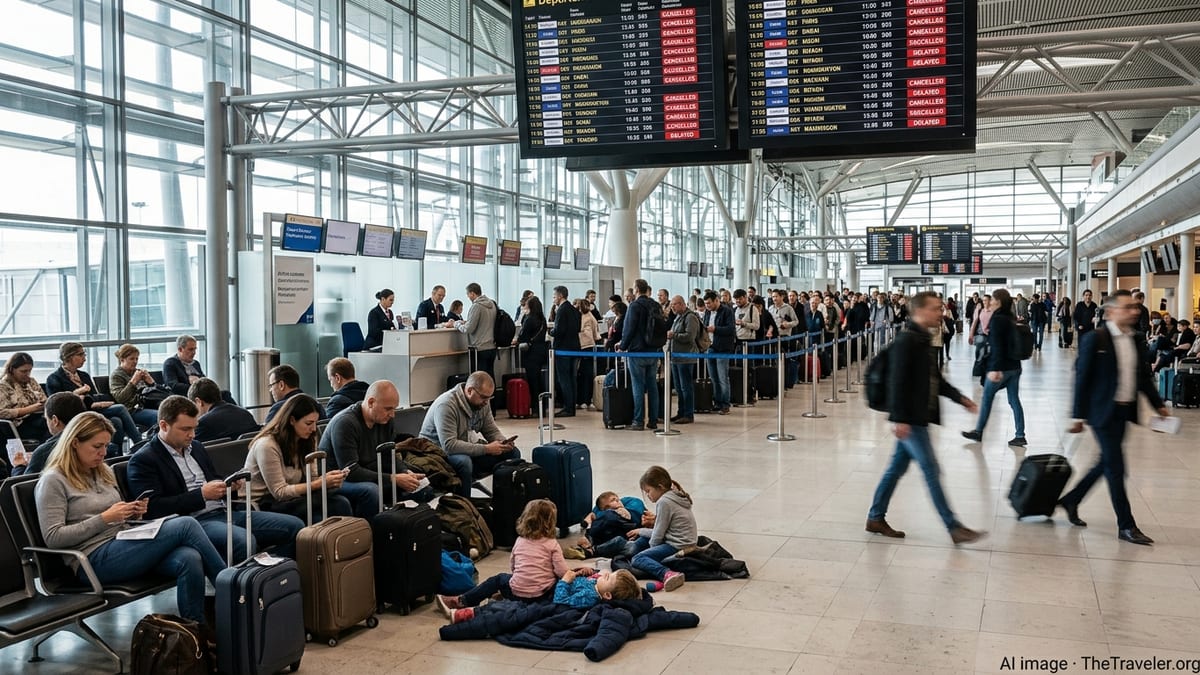
Regional tensions keep UAE flight schedules under pressure
Published coverage indicates that airlines across the Gulf are continuing to navigate a volatile operating environment, with renewed US–Iran tensions and related airspace warnings feeding directly into flight plans. Recent advisories highlight a mix of normal, delayed and cancelled services at Dubai International and Abu Dhabi’s Zayed International Airport, even as both hubs remain open and functioning for most traffic.
Reports from UAE media show that Emirates, Etihad, Air Arabia and flydubai are maintaining the bulk of their networks but are selectively cancelling or rescheduling flights, particularly on routes that cross or border higher-risk areas. Passengers are being urged in public advisories to treat any confirmed itinerary as subject to change and to rely on real-time updates rather than assuming historical patterns or past days’ operations will continue unchanged.
The European Union Aviation Safety Agency has extended its conflict-zone information bulletin for Gulf airspace through 30 September, reinforcing guidance for European and other carriers to exercise caution when planning routes in the region. This framework helps explain why international airlines have taken more conservative positions on certain destinations, while UAE-based carriers work within local approvals to keep core connections running.
Air France prolongs Dubai suspension as other carriers trim routes
Against this backdrop, Air France has extended its halt on Dubai flights, with publicly available timetables and regional reporting indicating that services remain suspended through at least 4 September. Earlier guidance issued in July pointed to a temporary stoppage of Dubai and Riyadh routes, and subsequent updates confirm that the pause on Dubai operations has been rolled forward as tensions persisted into late summer.
Coverage in UAE outlets notes that Air France’s decision sits alongside a broader pattern of caution by a number of European and North American airlines, some of which have maintained or reintroduced suspensions on Gulf and wider Middle East routes. These measures are often framed as responses to evolving security assessments and airspace constraints rather than airport-specific issues in Dubai, where infrastructure remains available for carriers that choose to operate.
While Air France and several other foreign airlines keep Dubai flights on hold, local carriers are using their regional hubs to absorb some of the displaced demand. However, they are doing so with schedule tweaks of their own, leaving the overall picture fragmented for travellers who might traditionally mix and match between Gulf-based airlines and European legacy carriers on the same corridors.
Emirates and Etihad manage rolling delays and targeted cancellations
Emirates and Etihad Airways continue to operate extensive networks from Dubai and Abu Dhabi but have introduced targeted cancellations and timing changes on a number of routes. Recent rundowns of flight status show Emirates services to Kuwait remaining suspended, even as select flights to Bahrain have been restored after earlier pauses. Timetable trackers and airline statements suggest that westbound services are sometimes flying longer routings to avoid restricted airspace, increasing block times.
Etihad has faced some of the most visible disruption in recent days, with reports from Abu Dhabi listing delays to more than a dozen services spanning Europe, Asia and the wider Middle East. Earlier in the summer, Etihad extended cancellations on specific Kuwait services, and similar targeted adjustments continue to appear in public flight-status feeds as conditions change. Published information also points to congestion at certain times of day in Abu Dhabi, with ripple effects for connecting passengers.
For both airlines, operational messages emphasize that the bulk of flights are still running, but often not exactly as scheduled. Passengers connecting through Dubai or Abu Dhabi are being advised via public channels to allow additional time for transfers, monitor gate assignments closely and anticipate potential last-minute rerouting of their inbound or outbound legs.
Air Arabia and flydubai adjust Gulf and regional operations
Low-cost carriers Air Arabia and flydubai, which play a significant role in short- and medium-haul connectivity across the Gulf and into Central and South Asia, have also made schedule changes. Reporting on recent days’ operations from Dubai and Abu Dhabi shows delays and cancellations on a cluster of flydubai routes, including services from cities such as Almaty, Bishkek, Moscow, Jeddah, Astana, Minsk, Addis Ababa, Damascus, Abha and Baghdad.
Air Arabia and its Abu Dhabi offshoot have experienced interruptions on some links to Kuwait and Bahrain since mid-summer, with coverage noting that several flights initially marked as cancelled were later reinstated as conditions allowed. The pattern has been one of short-notice decision-making, with airlines reopening seats as operational windows appear, and then pulling back again if airspace or security assessments tighten.
Operational updates published by flydubai describe a generally reduced schedule relative to earlier in the year and warn that flight durations and transit times can be longer than usual due to temporary rerouting. These advisories are consistent with wider regional reporting that points to ongoing airspace management challenges and capacity constraints as carriers work to thread safe paths between key hubs.
What passengers flying from the UAE should expect this week
For travellers holding tickets on Emirates, Etihad, Air Arabia or flydubai in the coming days, the most immediate impact is uncertainty. Public travel advisories for both Dubai and Abu Dhabi stress that arriving and departing flights may be delayed, retimed or swapped to different aircraft types at short notice, even when sectors ultimately operate. Crowded terminal periods are also being flagged as a concern, particularly as residents return from summer holidays and as some passengers rebook after earlier cancellations.
Given Air France’s extended suspension of Dubai flights and continued schedule reductions by other international carriers, passengers who would normally rely on direct European services may find themselves routed via alternative hubs or shifting to Gulf-based airlines instead. Travel agents and airline booking platforms are displaying a growing number of itineraries that involve longer journey times or overnight connections to work around the current patchwork of operating approvals.
Guidance published by airlines and airports recommends arriving at the terminal earlier than usual, completing online check-in where possible and tracking flight status through official digital channels in the hours before departure. With conflict-zone bulletins and airspace advisories in place until at least the end of September, observers suggest that a fully predictable schedule for UAE flights is unlikely to return in the very short term.
Gulf News: Emirates, Etihad, Air Arabia, flydubai cancellations and delays
The National: UAE travel advisory on Dubai and Abu Dhabi airport disruptions
The National: Middle East flights, which airlines are flying and which remain suspended