


More news on this day
As Mexico’s Tren Maya rail network boosts visitor numbers across the Yucatán Peninsula, the remote Calakmul region is emerging as a deliberate counterpoint: a World Heritage jungle stronghold where conservation limits keep growth in check and travel patterns are subtly shifting rather than surging.
Get the latest news straight to your inbox!
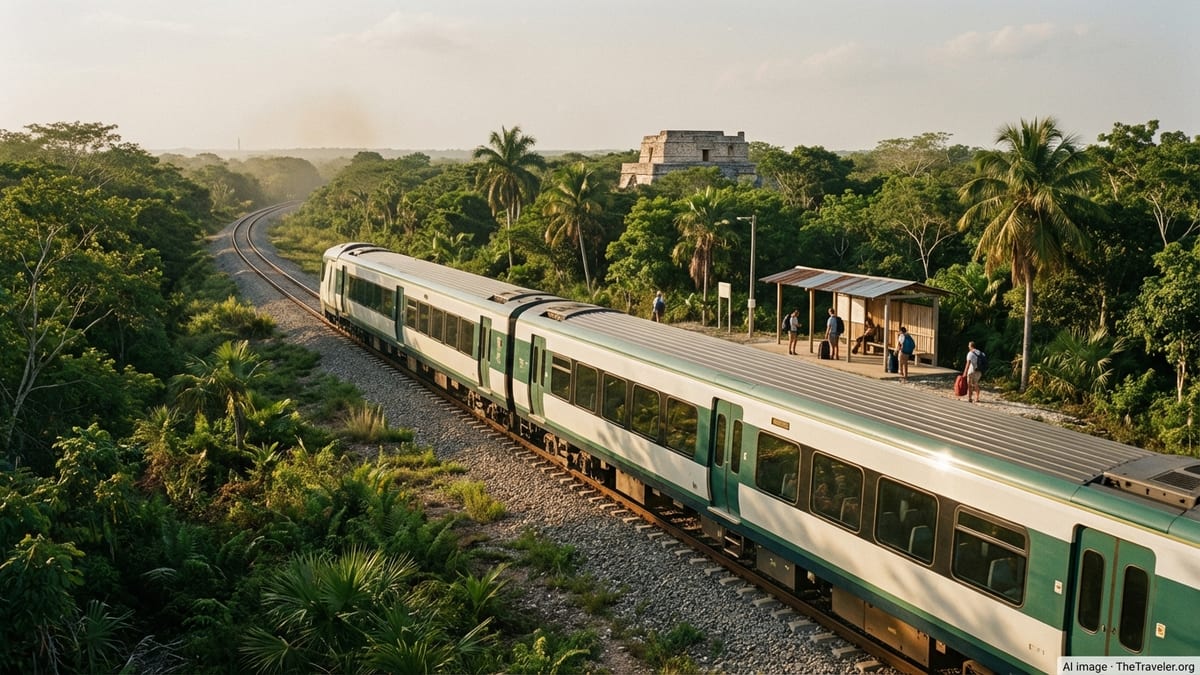
Rail Boom Reorients Tourism Across the Peninsula
Passenger figures and infrastructure reports indicate that Tren Maya has moved from its start-up phase into full-scale operation, with routes now spanning more than 1,500 kilometers around southeast Mexico. Government data and independent coverage show ridership climbing sharply since late 2023, supported by additional trainsets, new services between major hubs such as Mérida, Cancún and Playa del Carmen, and a growing network of park-and-ride style connections from airports and resorts to inland stations.
Publicly available summaries of the line’s performance suggest that millions of passengers have now used the service, although totals remain below the tens of millions originally projected. The rail system nonetheless represents a structural change in how visitors move between Caribbean beaches, colonial cities and archaeological sites, with more trips shifting from buses and domestic flights to rail, particularly on core leisure corridors.
Official planning documents describe how the project stitches together several UNESCO-listed destinations, including Chichén Itzá, Uxmal, Palenque, Sian Ka’an and Calakmul, into a single tourism circuit. This integrated map has encouraged tour operators and independent travelers to consider multi-stop itineraries that once required complex transfers, often adding inland jungle and lesser-known ruins to beach-centered vacations.
At the same time, policy papers and academic analyses note that the network remains a work in progress, with service patterns and station facilities still evolving. Questions over long-term demand, operating costs and environmental impacts continue to shape how the line is promoted and how future add-on projects, such as logistics terminals and shuttle connections, are timed and funded.
Calakmul’s World Heritage Status Keeps Growth Measured
Calakmul, inscribed by UNESCO as a mixed cultural and natural World Heritage site, occupies a distinctive place in this new tourism geography. Rather than being marketed as a mass-access rail stop, the ancient city and its surrounding tropical forests are framed in conservation documents as a fragile landscape where visitation must be carefully managed.
Recent state-of-conservation reports submitted to UNESCO outline how the archaeological core is embedded in one of Mesoamerica’s largest remaining tropical forest blocks, home to jaguars, tapirs and scarlet macaws. These reports highlight previous recommendations to minimize the environmental footprint of large infrastructure, including the Tren Maya alignment, and to prioritize low-impact tourism models that favor small groups and long-stay, nature-focused travel.
Mexican environmental and cultural agencies have publicly emphasized the need for strict zoning, capped visitor numbers in sensitive areas, and a focus on scientific monitoring of wildlife and forest cover. National communications stress that the reserve’s value lies as much in its intact ecosystems as in its monumental pyramids, reinforcing the idea that access conveniences should not automatically translate into higher volumes.
This approach differentiates Calakmul from more intensively visited sites along the rail route. While places such as Chichén Itzá and Tulum feature extensive parking, frequent coach arrivals and high daily counts, Calakmul’s planning framework leans toward controlled entry, limited facilities and longer travel times that naturally filter crowds.
Access Routes Evolve, but Calakmul Remains a Detour
On paper, the Tren Maya alignment brings the rail network closer to the municipality of Calakmul than ever before, with stations in Campeche state forming jumping-off points for overland connections to the reserve. However, current transport conditions and conservation policies mean the site functions more as a deliberate detour than a quick stop on a rail itinerary.
Travel accounts and regional reporting describe access to Calakmul as a combination of paved and narrower roads through forested areas, with journey times that can stretch to several hours from the nearest major hubs. Online discussions by recent visitors point to variable road quality and the need to plan for fuel, daylight and limited roadside services, factors that keep spontaneous, high-volume day trips in check even as overall regional connectivity improves.
Publicly available information on station amenities and tour offerings suggests that, while some Tren Maya stops are developing as gateways to nearby ruins and eco-parks, organized rail-to-van packages to Calakmul remain comparatively niche. Most travelers still reach the site via private vehicles, small-group tours or rental cars, indicating that the rail line has yet to fully rewrite the practical realities of reaching this jungle city.
Planning documents tied to the rail project reference comprehensive tourism strategies for the wider Calakmul municipality, but they frame the area as part of a broader eco-cultural corridor rather than a high-throughput node. In practice, the reserve continues to function as a frontier destination where distance and logistics are part of the appeal.
Conservation Scrutiny Shapes Future Visitor Flows
Calakmul’s role in emerging tri-national conservation efforts is another factor likely to influence how travel patterns evolve. In 2025, the governments of Mexico, Guatemala and Belize announced plans for a cross-border nature reserve to safeguard the wider Maya Forest, a mosaic of protected areas that includes the Calakmul Biosphere Reserve. Conservation groups welcomed the initiative while urging that rail expansion and tourism growth not undercut forest protection goals.
Within UNESCO processes, Mexico’s submissions emphasize that archaeological salvage, impact assessments and mitigation measures related to Tren Maya are ongoing around the Calakmul region. International advisory bodies have underlined the importance of continuous monitoring, adaptive management and integrated land-use planning, signaling that any future proposals to intensify access could face detailed review.
National environmental agencies have recently reiterated that the country has supplied updated data on Calakmul’s condition to the World Heritage Committee, responding to concerns over the pace and completeness of previous reporting. The discussion underscores how global scrutiny can shape the narrative around a single destination, elevating it from a remote ruin to a test case for balancing infrastructure, tourism and biodiversity.
For travelers, these dynamics translate into a site where rules, opening hours and access conditions may shift cautiously over time, guided not only by demand but by habitat thresholds and heritage benchmarks. The result is a slower, more regulated visitor experience that contrasts sharply with the increasingly streamlined movement offered by the trains circling the peninsula.
New Itineraries Blend Rail Convenience and Jungle Restraint
As Tren Maya schedules stabilize and more travelers become familiar with the network, agencies and independent visitors are beginning to weave Calakmul into extended loops that combine rail segments with traditional road transfers. Sample itineraries featured in regional tourism materials outline multi-day journeys linking Cancún or Tulum with Campeche City, inland nature reserves and lesser-known archaeological zones before heading toward the Calakmul forests.
These patterns indicate a subtle shift in Mexico travel habits. Instead of flying directly in and out of a single beach resort, visitors increasingly explore the idea of overland circuits that layer culture, wildlife and community tourism. Calakmul’s controlled access means it often becomes the anchor of the “slowest” section of such trips, where travelers spend more nights in smaller lodges and engage in longer hikes and wildlife watching rather than quick photo stops.
Economic planning documents associated with Tren Maya position this type of diversified, spread-out visitation as one way to distribute tourism income beyond coastal hotspots. By keeping Calakmul comparatively low-density, the strategy aims to protect core ecosystems while encouraging adjacent communities to develop small-scale accommodation, guiding services and craft production.
For now, the contrast is striking: sleek trains carrying rising numbers of passengers along the Caribbean and inland corridors, and a jungle capital whose very remoteness and regulatory caution keep it from becoming just another station-side attraction. How Mexico manages this tension between connectivity and restraint around Calakmul is emerging as one of the most closely watched stories in the country’s evolving travel landscape.