


More news on this day
UAE travellers are facing another week of rolling flight disruptions, with Emirates, Etihad Airways, flydubai and Air Arabia adjusting schedules in response to regional tensions and overseas airspace issues that continue to trigger delays and cancellations.
Get the latest news straight to your inbox!
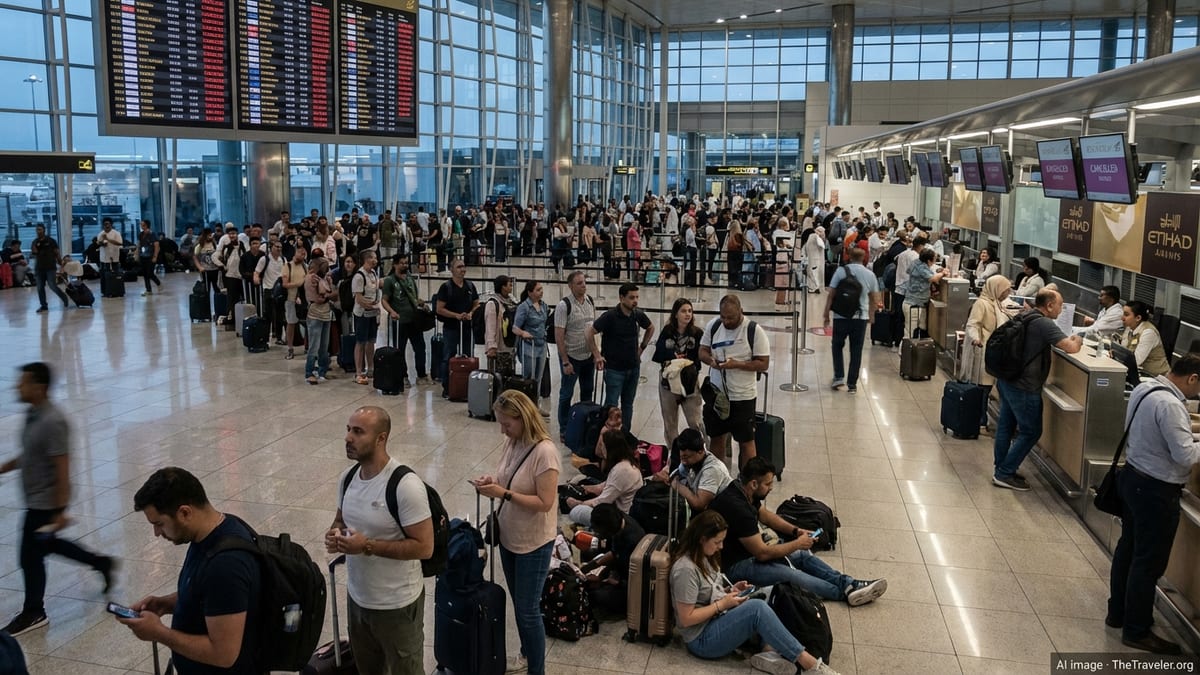
Mixed operations at Dubai and Abu Dhabi hubs
Publicly available flight data and local media reports indicate that operations at Dubai International (DXB), Al Maktoum International (DWC) and Abu Dhabi’s Zayed International Airport remain in a “mixed” pattern, with most services running but selected flights delayed or cancelled on short notice. Recent coverage highlights that both Dubai and Abu Dhabi have seen sporadic disruption across regional and long-haul routes in early September, rather than a complete shutdown of any major corridor.
Reports from Gulf-based outlets on September 8 and 10 describe queues and extended processing times for some departures as airlines re-time flights or substitute aircraft. However, the same reports note that the four UAE carriers continue to operate the bulk of their scheduled services, particularly on high-demand routes across the Gulf, India, Southeast Asia and Europe.
Airport flight-status boards and the Dubai Airports online tracker show a pattern of scattered delays throughout the day instead of concentrated disruption at specific time windows. Passengers are being advised in public updates to monitor flight status digitally before heading to the airport, as schedules remain subject to change at short notice.
Industry observers say the UAE’s major hubs are functioning with a high level of resilience, but with limited slack in the system even relatively small external shocks can ripple quickly across daily schedules.
Regional security tensions reshape Gulf flight schedules
The latest wave of changes is closely tied to heightened tensions between the United States and Iran and subsequent airspace risk assessments over sections of the Gulf region. Gulf-focused coverage in the past week notes that several international airlines have temporarily suspended or reduced services to Dubai while monitoring the security situation, even as UAE carriers continue to operate many of their own routes.
One widely cited example is Air France’s decision to extend the suspension of its Dubai flights until at least September 15, while it reviews guidance on regional airspace and rerouting options. According to published reports, some European authorities have also maintained or updated warnings around overflying parts of the Gulf, leading to longer routings or schedule adjustments for select services.
For Emirates, Etihad, flydubai and Air Arabia, publicly available schedules show that most core routes remain in operation, but some frequencies have been trimmed or retimed and individual flights cancelled on specific days. Gulf-based aviation coverage describes this as an evolving operational environment, in which airlines are recalibrating day by day rather than implementing blanket suspensions on entire networks.
Travel analysts quoted in regional reports suggest that if tensions ease and airspace guidance stabilises, carriers may progressively restore frequencies later in September, but they also caution that further short-notice changes remain possible if the security picture shifts again.
Emirates, Etihad, flydubai and Air Arabia: what passengers are seeing
Recent roundups of daily flight movements show that Emirates, the largest operator at Dubai International, has registered a series of delays and isolated cancellations on routes to Europe, the UK and parts of the Middle East. Travel updates on the airline’s own channels emphasise that customers should use the online flight-status tool and ensure contact details are current so they can receive notifications about any changes.
Etihad Airways, based in Abu Dhabi, has reported schedule disruptions on certain Asian and European flights over the past week, including late arrivals from European gateways and knock-on delays for onward departures. Local media lists for specific days in early September show several Etihad flights arriving behind schedule into Zayed International Airport, as well as some cancellations on select regional routes.
Flydubai, which operates a large network of short- and medium-haul services from Dubai, appears particularly exposed to fluctuations in regional demand and airspace constraints. Flight lists compiled by UAE outlets note delays and cancellations on services to destinations such as Kuwait, Bahrain and certain South Asian cities on multiple days this month. Air Arabia, headquartered in Sharjah with additional hubs in Abu Dhabi and Ras Al Khaimah, has likewise adjusted some frequencies across its regional network while maintaining most scheduled operations.
Across the four airlines, the visible pattern for passengers is one of rolling, route-specific adjustments rather than broad, long-term suspensions. Travellers are still able to reach many destinations, but may face retimed departures, equipment changes or last-minute cancellations that complicate onward connections.
UK air traffic issues and other external factors
The regional security situation is not the only driver of disruption. Emirates has also drawn attention in its general travel updates to separate problems in overseas airspace and airport systems, including a recent technical issue affecting the UK’s air traffic control provider that triggered widespread delays and cancellations into and out of British airports.
Public advisories show that when such third-country issues arise, UAE carriers typically respond by consolidating frequencies, rerouting flights or temporarily suspending specific services until conditions normalise. In the case of the UK disruption, travellers were urged via online channels to check their individual flight status, with Emirates and Etihad adjusting selected services to and from London and other British cities.
Additional factors mentioned in recent coverage include intermittent weather-related constraints in parts of Asia and volcanic ash near Indonesia, both of which have prompted precautionary rerouting or schedule changes on some long-haul itineraries that connect through the UAE. Although these events are geographically distant, their operational impact can still be felt at Gulf hubs because of tight global aircraft utilisation.
As a result, passengers flying through Dubai, Abu Dhabi or Sharjah may encounter disruptions that originate far from the UAE, even when conditions at local airports appear normal.
Guidance for UAE travellers amid ongoing uncertainty
With the situation fluid, publicly available information from airlines, airports and local media converges on similar advice for passengers. Travellers are encouraged to check their flight status on official airline websites or apps before setting out, rather than relying solely on original booking confirmations. Dubai Airports and Abu Dhabi’s airport operator both provide real-time status boards online, which can help verify whether a flight is operating, delayed or cancelled.
Reports also highlight the importance of ensuring that email addresses and mobile numbers in bookings are up to date, so travellers receive any rebooking offers or schedule-change notices as quickly as possible. Where a flight has been cancelled, airlines generally direct customers to manage their options online, including rebooking on the next available service or requesting refunds in line with ticket conditions.
Travel agents quoted in regional business coverage recommend allowing extra time at the airport in case of longer check-in queues and security processing, particularly for early-morning and late-evening peak waves. Passengers with tight onward connections are advised to consult airlines about minimum connection times and the feasibility of same-day rebooking if disruptions occur.
Given the combination of regional security concerns and overseas airspace issues, observers expect a continued period of elevated schedule volatility for UAE carriers through at least mid-September. For now, the key message from publicly accessible updates is to stay flexible, monitor official channels closely and be prepared for last-minute changes, even on routes that have been operating relatively normally in recent days.
Gulf News: UAE flights delays and cancellations report, September 10, 2026
Gulf News: UAE flight status disruptions overview, September 8, 2026