


More news on this day
UAE airlines are pressing ahead with most passenger operations on September 1 while adjusting routings and schedules, after European regulators extended a conflict-zone warning covering parts of Gulf airspace amid ongoing US-Iran tensions.
Get the latest news straight to your inbox!
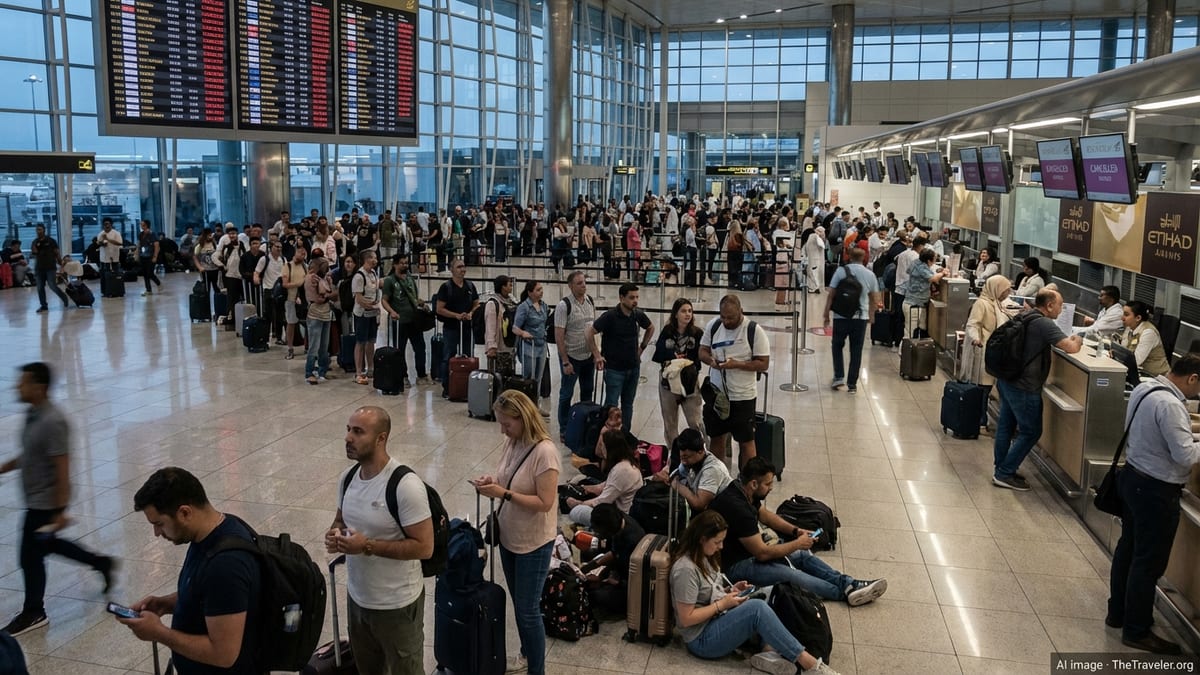
Emirates adjusts regional network but keeps global links open
Publicly available schedules indicate that Emirates continues to operate the majority of its global network from Dubai International on September 1, with widebody services to Europe, Asia and the Americas largely intact. However, regional flying remains more constrained, particularly to neighboring Gulf states that lie closer to areas of heightened military activity.
Coverage from UAE-based outlets shows that Emirates has only partially restored flights to Bahrain, running a limited daily service rather than its pre-crisis frequencies, while services to Kuwait are still suspended as carriers wait for a more stable security picture in the northern Gulf. Other regional and long-haul routes are operating with varying degrees of delay as aircraft follow longer routings to avoid the most sensitive airspace segments.
Operational data shared via airline information channels highlights continuing use of re-routed flight paths that skirt restricted portions of the Persian Gulf and adjacent conflict-affected regions. These detours can add flight time and fuel burn but allow Emirates to maintain connectivity to key markets while complying with evolving safety advisories.
Passengers departing Dubai are being encouraged by airline notices and airport advisories to monitor flight status closely on the day of travel, as short-notice schedule changes remain possible while airspace conditions and overflight permissions continue to shift.
Etihad and Air Arabia maintain services with selective cuts
Abu Dhabi-based Etihad Airways is also operating a broadly intact long-haul schedule through its Zayed International Airport hub, according to timetable data and flight-tracking services reviewed on September 1. Routes to Europe and Asia are running, although some flights show extended block times consistent with detours around constrained airspace in the wider Middle East region.
Regional services remain more uneven. Industry reporting notes that European and North American carriers have pulled back from several Gulf and Levant destinations, which in turn affects feed and connections for Etihad. Some jointly marketed flights, including codeshares on partner-operated services, are operating at reduced frequencies or remain on hold while demand and risk assessments are updated.
For Air Arabia, which focuses on short- and medium-haul low-cost operations from Sharjah and Abu Dhabi, schedules on key trunk routes to South Asia and selected Middle East cities are active, based on live flight listings. Individual flights are still subject to delay or re-timing as the carrier works within slot and routing constraints shaped by regional airspace limitations.
Travel industry summaries stress that passengers holding tickets with Etihad or Air Arabia should follow airline channels for the latest information, as departure times, routings and even point-to-point availability can change at relatively short notice under the current operating conditions.
Europe tightens focus of Gulf airspace warning
The latest development for airlines serving the Gulf is the extension of a European conflict-zone advisory into late September. A recent update from the European Union Aviation Safety Agency reaffirms that European and EASA-authorised non-EU operators are urged to avoid specific portions of airspace over the Persian Gulf and Gulf of Oman, citing continuing risks linked to the confrontation between the United States and Iran.
According to published coverage based on the revised conflict-zone bulletin, the current warning now concentrates on airspace over the waters of the Persian Gulf within the flight information regions of Bahrain, Kuwait, Qatar and the United Arab Emirates, as well as part of the Gulf of Oman. Earlier iterations had recommended avoiding the entire airspace of several Gulf states; the latest guidance narrows that scope while still treating the affected zones as high risk.
European media reports indicate that the advisory has been extended until at least September 30, with regulators pointing to the potential use of missiles, drones, combat aircraft and air-defense systems in and around the Gulf. Those risks are described as significant enough to threaten civil aviation at all altitudes, particularly over international waters where military activity may shift quickly.
The EASA notice applies directly to EU-based airlines and third-country operators authorised to fly to, from or within the bloc, but its influence often extends more broadly. Carriers from other regions routinely take such bulletins into account when planning routes and assessing whether to overfly, skirt or completely avoid affected areas.
What the warning means for flights to and from the UAE
Despite the renewed European warning, commercial flights to the UAE from multiple regions are still operating, albeit with adjustments. Travel industry analysis notes that while some European airlines have restored services to Dubai and Abu Dhabi, others continue to suspend or limit flights to various destinations across the Middle East, including the Gulf, due to a mix of operational and security considerations.
For flights into major UAE hubs, the refined advisory offers some flexibility. The guidance acknowledges that operations necessary for arrivals and departures at aerodromes within the affected flight information regions may be conducted if airlines apply adequate risk-mitigation measures. These can include altitude restrictions, specific corridors cleared by national authorities and dynamic re-routing when military activity spikes.
As a result, many flights to and from Dubai, Abu Dhabi and Sharjah are operating on adjusted trajectories that avoid the most sensitive stretches of sea-based airspace while still making use of corridors deemed acceptable under national and European assessments. This approach allows hub operations to continue, though sometimes with longer flight times, altered departure slots and tighter spacing on key routes during peak periods.
Passengers may notice these changes in the form of revised departure times close to travel, revised flight durations or updated routings displayed on in-flight maps. Industry observers underline that such adjustments are likely to remain a feature for the coming weeks while the extended advisory is in force and the regional security situation remains fluid.
Advice for travelers using Emirates, Etihad and Air Arabia today
For travelers flying on September 1 with Emirates, Etihad or Air Arabia, the main message from travel and aviation sources is to stay informed and build extra flexibility into their plans. With airspace conditions evolving and conflict-zone guidance now extended through the end of the month, even airlines with strong operational resilience can face last-minute changes when routings are altered or traffic flows are constrained.
Passengers are widely encouraged to monitor airline apps and websites for real-time updates on departure gates, boarding times and any potential delays or rebookings. Travel advisories from foreign ministries and aviation regulators add another layer of context, outlining broader risk assessments that may not be immediately visible in a booking confirmation but still shape how and where airlines operate.
Experts tracking the situation note that safety margins in international aviation remain stringent, and that the presence of an airspace advisory does not automatically translate into heightened on-board risk for commercial passengers. Instead, such notices typically drive behind-the-scenes changes to flight planning, routings and schedules that can inconvenience travelers but are intended to keep operations within agreed risk thresholds.
With the Gulf conflict-zone warning now extended and some regional routes still suspended or reduced, travelers heading to or connecting through the UAE in the coming days are likely to see a mix of normal operations and continuing disruption. Checking itineraries frequently and allowing additional time for connections can help mitigate the impact of any late schedule changes while the situation in Gulf airspace remains under close watch.
Europe extends Gulf airspace warning as US-Iran tensions continue – Condé Nast Traveller Middle East
EU aviation safety agency narrows Gulf airspace warning – AOL / Reuters
Middle East flights: Which airlines are flying and which remain suspended? – The National
Conflict Zone Information Bulletin for the Persian Gulf and Gulf of Oman – EASA