


More news on this day
The United Arab Emirates has activated emergency visa extensions and expanded airport support for passengers stranded by mounting regional flight disruptions, offering a formal safety net for tourists and transit travelers who find themselves unable to depart on schedule from Gulf hubs.
Get the latest news straight to your inbox!
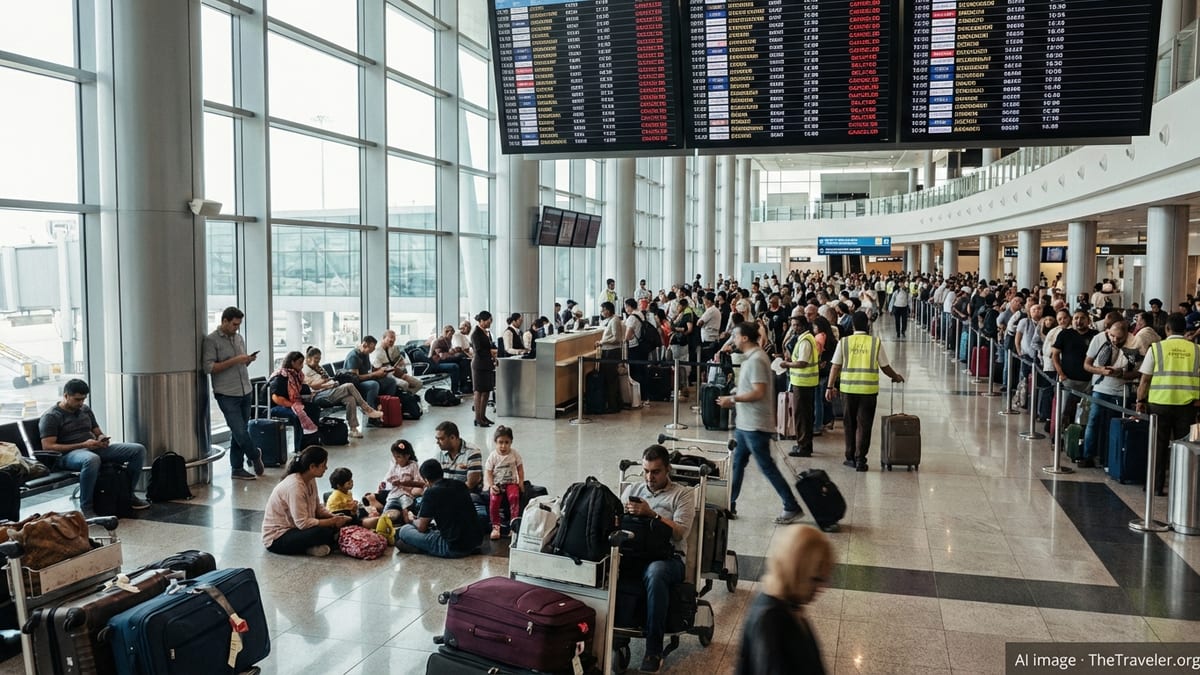
New Emergency Measures Target Regional Disruption Fallout
Publicly available aviation and immigration updates show the UAE moving to formalize relief for travelers caught in the latest wave of cancellations and schedule cuts across the Middle East. Flight tracking data and regional advisories for March and April 2026 point to reduced operations at major Gulf hubs, including Dubai and Abu Dhabi, as airlines adjust to security concerns and shifting airspace conditions.
According to recent travel briefings, thousands of passengers have faced rolling disruptions, with some long-haul services cancelled outright and others consolidated into reduced schedules. The UAE, home to two of the region’s busiest transit airports, has become a focal point for stranded travelers unable to complete onward journeys or return home as originally planned.
In response, immigration authorities in the country have moved beyond one-off waivers to put in place an emergency playbook designed to soften the impact on visitors whose visas are close to expiring. The approach is positioned as a way to prevent temporary travel chaos from turning into immigration violations for passengers who are unable to leave through no fault of their own.
Observers note that the current measures build on earlier, more ad hoc responses to severe weather and operational shocks, such as the record April 2024 rains that temporarily flooded Dubai International Airport and led to mass cancellations and diversions.
Visa Extensions and Overstay Relief for Stranded Visitors
Recent guidance from Dubai’s General Directorate of Residency and Foreigners Affairs, summarized by visa and mobility consultancies, describes an emergency visa-relief policy that can be activated when large numbers of visitors are stranded by events outside their control. Under this playbook, tourists and short-term visitors who can document cancelled or significantly delayed flights may apply for temporary extensions or have overstay penalties waived during the disruption period.
Reports indicate that the latest activation of this framework took effect in early March 2026, with visitors allowed to extend their legal stay or regularize short overstays if they could show airline-issued proof of cancellation. In practical terms, that means passengers whose visas were set to expire while they waited for rebooked flights were not automatically pushed into overstay status, provided they followed the documented procedures.
Publicly available traveler accounts suggest that the relief is focused on those genuinely trapped by reduced schedules, rather than travelers seeking to prolong stays for other reasons. Advisory notes emphasize the need for passengers to keep boarding passes, cancellation notices, and rebooking emails, as these documents are often requested during extension or fee-waiver processing.
This more structured approach echoes the temporary overstay fine waivers seen after the April 2024 storm-related shutdowns, when visitors whose flights were repeatedly cancelled were allowed to exit the country without penalties once operations stabilized. The difference in 2026 is that the mechanisms are now framed as part of a standing emergency toolkit rather than one-off, event-specific exceptions.
Enhanced Airport Support at Dubai and Abu Dhabi Hubs
On the ground, Dubai International and Abu Dhabi International airports have been adjusting operations to cope with irregular traffic patterns and stranded transit passengers. Airport advisories reviewed in late April 2026 describe rolling schedule adjustments, capped inbound arrivals during peak congestion, and a focus on clearing backlogs of passengers whose earlier flights were cancelled or significantly delayed.
Travel reports highlight extended staffing at service desks, additional wayfinding support, and efforts to streamline rebooking queues for those with imminent visa expiry. In some cases, airlines operating from UAE hubs have encouraged travelers to use digital channels for rebooking and status checks in order to reduce crowding at terminal counters, directing only those with urgent or complex cases to in-person assistance.
Airport guidance also reiterates that passengers should avoid arriving at terminals until they have verified that their flight is confirmed to operate. This approach mirrors the communication strategy used during the 2024 flooding disruptions, when passengers were urged to stay away from the airport unless specifically advised to travel, to prevent overwhelming facilities with travelers who had no immediate departure options.
The combination of targeted visa relief and on-the-ground support is intended to keep stranded visitors legally secure while easing pressure on airport infrastructure, which continues to operate under tighter margins than in typical pre-disruption periods.
Lessons from Previous Crises Shape Current Policies
The UAE’s current response is informed by several recent episodes that stress-tested its role as a global transit crossroads. The record-breaking rainfall of April 2024, which produced the heaviest downpour in the country in decades, temporarily turned parts of Dubai International’s airfield and surrounding roads into flooded zones and forced the cancellation or diversion of more than two thousand flights over several days.
In the aftermath, local coverage documented cases in which visitors on short-stay visas found themselves stranded in hotels or airport terminals as the grace period on their documents expired. Authorities and airlines applied pragmatic solutions, including waiving overstay fines for travelers who could show that cancelled flights had prevented timely departure.
That experience appears to have shaped the more formalized emergency visa-extension playbook now in use. Rather than relying solely on case-by-case discretion, the current framework sets out clearer criteria for when visitors qualify for relief, how documentation should be presented, and how long emergency extensions can last. Industry observers suggest this codification helps both front-line immigration staff and travelers navigate complex situations consistently during future disruptions.
The same pattern is evident in airport operations. Procedures refined during past weather events and global health crises, such as temporary check-in suspensions, dynamic gate reassignment, and priority handling for missed connections, are being redeployed in 2026 as airlines juggle schedule changes tied to regional tensions and airspace restrictions.
What Stranded Travelers in the UAE Should Expect
For passengers currently transiting or visiting the UAE, publicly available travel advisories outline several practical implications of the new measures. Travelers whose flights are cancelled or significantly disrupted can, in many situations, remain in the country legally while they wait for an alternative departure, as long as their case fits the emergency criteria and they follow the prescribed steps with immigration authorities or their airline.
Visitors close to visa expiry are encouraged in these advisories to monitor airline communications carefully and to retain all evidence of disruption. Carrying printed or digital copies of cancellation notices, rebooking confirmations, and any airline-issued disruption letters can simplify interactions at immigration counters or service centers, especially if a short overstay becomes unavoidable.
At the airport, passengers may encounter longer queues at transfer desks and security checkpoints, as operators prioritize re-accommodating stranded travelers and managing limited seat availability on outbound services. Reports from recent disruption periods suggest that basic services remain available inside terminals, but access to hotels and city facilities can be constrained if large numbers of travelers lack entry visas or prefer to remain airside while waiting for new flights.
While schedules remain fluid at some Gulf hubs, the UAE’s combination of emergency visa flexibility and reinforced airport support is designed to prevent stranded passengers from slipping into irregular status. For international travelers planning to route through Dubai or Abu Dhabi in the coming weeks, the evolving policies highlight the importance of checking both flight status and immigration guidance right up to the point of departure.