


More news on this day
Hundreds of passengers across the United Arab Emirates, Saudi Arabia, Qatar, Bahrain, Kuwait, Oman, Egypt and Jordan are facing extensive travel disruption as regional carriers including Emirates, FlyDubai, Saudia, Qatar Airways and EgyptAir delay 195 flights and cancel 31 more, according to aggregated aviation data and recent regional reports.
Get the latest news straight to your inbox!
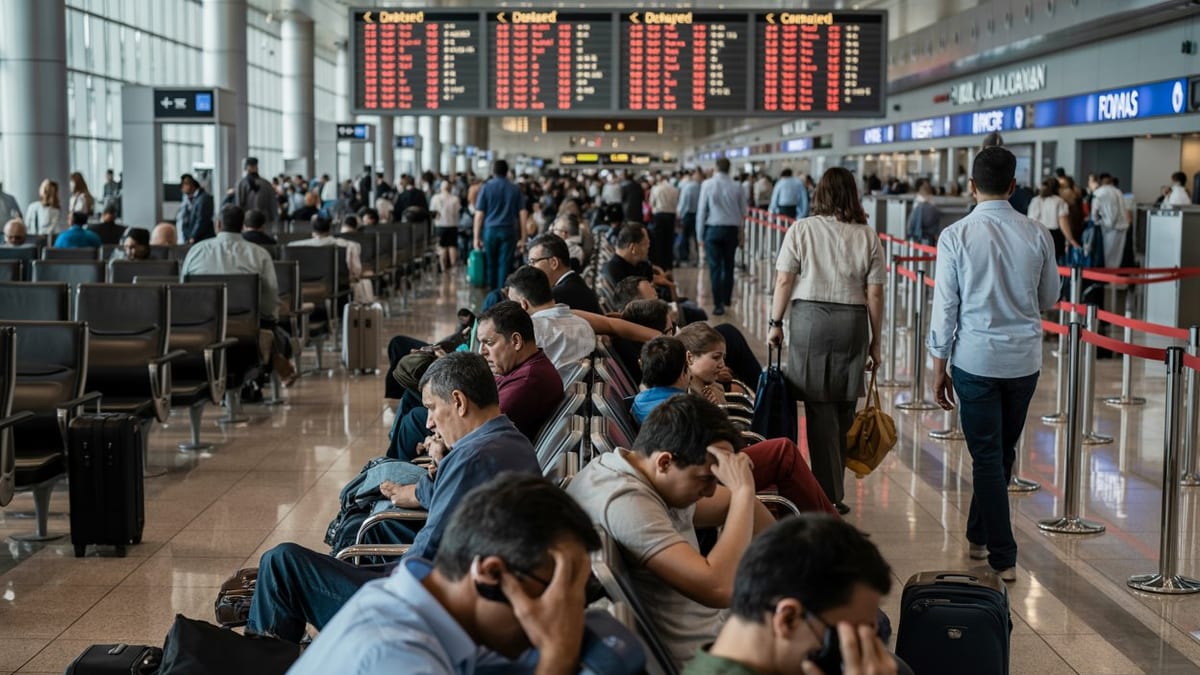
Ripple Effects Across Gulf and North African Airports
The latest spike in disruption is concentrated at major hubs such as Dubai International, Jeddah, Riyadh, Doha, Cairo and Muscat, where busy transfer traffic means a single delay can quickly cascade into wider network issues. Aggregated flight-tracking snapshots for the current travel window indicate that late departures and missed connections are driving much of the strain, with some services held on the ground for hours while crews and aircraft are repositioned.
Dubai, already operating with tighter capacity since the late February airspace crisis, continues to feel the lag from earlier suspensions and reduced schedules. Publicly available operational updates show that some airlines are still running trimmed timetables or selective cancellations on routes linking the emirate with Saudi Arabia, Kuwait, Bahrain, Qatar and Oman, in an effort to preserve overall network stability.
In Saudi Arabia, Jeddah and Riyadh are seeing parallel pressures as regional and long haul services are rescheduled around remaining airspace constraints and thinner aircraft rotation buffers. Reports from regional aviation outlets indicate that Saudia has been prioritising key trunk routes while pruning frequencies on some secondary Gulf and Levant connections, adding uncertainty for travelers bound for Jordan and Egypt.
Further west, Cairo and Amman are grappling with knock on impacts from Gulf disruptions. EgyptAir, Royal Jordanian and partner carriers are handling waves of stranded or misconnected passengers arriving from Dubai, Doha and Riyadh, even as their own departures face weather, slot and airspace related delays.
Airspace Closures and Capacity Limits Underpin Ongoing Strain
The immediate trigger for the broader period of instability was the closure and restriction of key Middle East airspace corridors following strikes and retaliatory attacks that began on 28 February 2026. As skies over Iran, Iraq, Kuwait and parts of the Gulf narrowed, airlines were forced to suspend or reroute flights at short notice, creating widespread aircraft and crew displacement that is still being untangled weeks later.
In the Gulf, temporary suspensions at Dubai Airports and curtailed operations in Bahrain, Qatar and Oman disrupted some of the region’s densest transfer flows. Industry advisories from travel management and consulting firms describe a patchwork of resumptions, with certain corridors reopening while others remained heavily restricted or closed, pushing additional traffic onto a handful of viable routes.
Capacity limits introduced during the crisis are also shaping today’s disruption pattern. Published scheduling guidance shows that some airports, including Dubai, have capped foreign carrier frequencies on select routes to protect runway and terminal capacity. As a result, airlines such as Saudia, EgyptAir and Qatar Airways have been forced to consolidate operations into fewer daily rotations, leaving less room to recover when delays occur.
In Oman and Kuwait, where national carriers operate smaller fleets, extended suspensions on several regional routes have been documented in official notices and media coverage. This has reduced the number of alternative routings available to passengers trying to bypass Dubai or Doha, concentrating demand on a limited set of remaining services and heightening the impact when those flights are delayed.
Major Carriers Balance Cancellations Against Rolling Delays
For passengers, the most visible impact has been the growing list of short notice delays and cancellations across major Middle Eastern brands. Emirates and FlyDubai have recorded some of the highest numbers of affected services through Dubai, according to independent aviation data aggregators, reflecting their role as primary transfer carriers for the region.
Saudia, Qatar Airways and EgyptAir have also seen disruptions spread across their regional networks as they adjust to closed or constrained airspace around the Gulf, Levant and parts of North Africa. Travel alerts and schedule updates indicate that carriers are frequently opting to cancel selected frequencies outright in order to avoid the risk of cascading delays that could destabilise several subsequent rotations.
Operational updates from FlyDubai and other regional airlines highlight continuing rerouting and extended block times on certain sectors, particularly those that would typically cross restricted airspace. Longer flight paths increase fuel burn and reduce schedule resilience, tightening the margin for on time departures later in the day and making same day recovery more challenging.
The result is a mixed pattern across the network: some flights are cancelled in advance and consolidated into remaining services, while others depart significantly behind schedule. For travelers, this has translated into unexpected overnight stays, missed onward connections, and rebookings that push itineraries back by 24 hours or more.
Stranded Passengers Face Logistical and Financial Pressures
Across airports in the UAE, Saudi Arabia, Qatar, Bahrain, Kuwait, Oman, Egypt and Jordan, stranded passengers are reporting long lines at transfer desks and difficulty securing near term alternatives. Accounts compiled by consumer rights platforms and travel forums describe travelers stuck in Doha or Dubai after multiple rebookings were cancelled in quick succession, while others remain in transit lounges in Jeddah or Cairo awaiting confirmed seats out of the region.
With hotel inventory tight around major hubs, especially during peak business and events periods, some passengers have faced extended stays in terminals or have had to pay out of pocket for accommodation and meals, hoping to recover costs later through airline policies or travel insurance. Public guidance from several airlines in recent weeks has encouraged customers to monitor flight status closely and to consider flexible booking options, but same day alternatives often remain limited.
Compensation and care entitlements vary significantly depending on the departure and arrival countries, the airline involved, and whether the disruption is classified as within the carrier’s control. Passenger advocacy services note a spike in interest in online tools that calculate potential compensation or refund eligibility, particularly among travelers departing from or transiting through jurisdictions with stronger consumer protection frameworks.
For many travelers, however, the immediate priority is simply getting home or reaching their destination. In some cases, that has meant piecing together complex reroutes via secondary airports in Oman, Jordan or Turkey, or combining shorter regional flights with overland segments, as seen in recent traveler accounts describing bus journeys between Saudi Arabia and Kuwait or cross border road trips from Muscat into the UAE.
What Travelers Should Watch in the Coming Days
While the volume of airspace closures has eased from its late February peak, industry advisories emphasise that conditions remain fluid. Airlines continue to adjust timetables as military activity, government restrictions and operational risk assessments evolve, and further short notice changes cannot be ruled out across the Gulf, Levant and wider Middle East.
Aviation data trends suggest that peak disruption windows often coincide with late afternoon and evening banks at major hubs, when dense waves of arrivals and departures leave little slack in the system. Travelers booked during these periods may face a higher probability of knock on delays if earlier flights in the rotation run behind schedule or if crews reach their duty time limits.
For those due to travel through Dubai, Jeddah, Doha, Cairo or Muscat in the coming days, publicly available guidance from airlines, airports and travel management companies consistently recommends checking flight status repeatedly before departure, allowing extra time at the airport, and keeping contact details updated in booking profiles so that schedule changes and rebooking options can be communicated quickly.
As long as airspace restrictions, capacity caps and tight aircraft utilisation continue to intersect, regional aviation networks are likely to experience recurring pockets of disruption. For passengers across the UAE, Saudi Arabia, Qatar, Bahrain, Kuwait, Oman, Egypt and Jordan, that means the prospect of further delays and cancellations remains a live concern, even as airlines work to stabilise schedules and restore confidence during one of the most challenging operational periods the region has faced in recent years.