


If you only have a day or two in Istanbul, deciding whether to focus on Hagia Sophia or the Blue Mosque can feel like a high‑stakes choice. Both mosques bookend Sultanahmet Square, both are world‑famous, and both are active places of worship with evolving visitor rules. Yet the experience, costs and even the logistics of visiting them in 2026 are surprisingly different. This guide compares them side by side so you can prioritize the one that best fits your interests, budget and schedule.
Get the latest updates straight to your inbox!
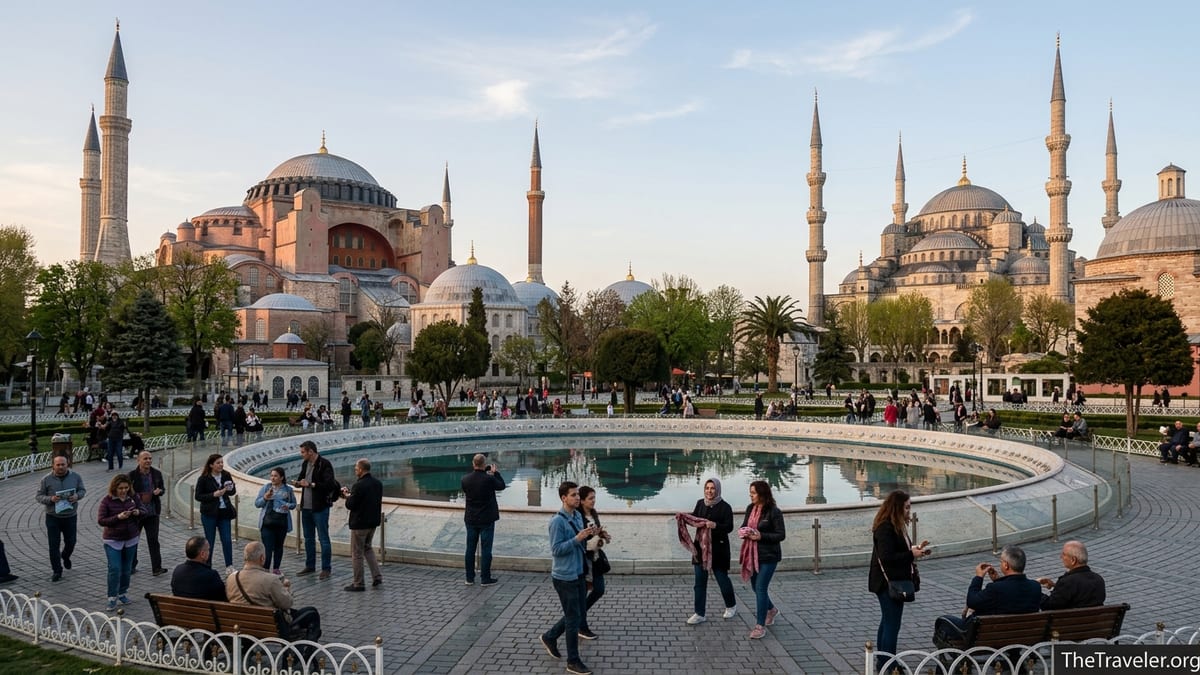
Hagia Sophia vs Blue Mosque: The Big Picture
Standing in Sultanahmet Square, Hagia Sophia on one side and the Blue Mosque on the other, many first‑time visitors are unsure where to go first. Hagia Sophia is the older and more layered monument, with a 1,500‑year history as a Byzantine cathedral, Ottoman imperial mosque, museum and, since 2020, an active mosque again. The Blue Mosque, completed in the early 1600s, is younger but was designed to outshine every earlier mosque in the city, including Hagia Sophia, and remains one of the most harmonious examples of classical Ottoman architecture.
From a traveler’s perspective in 2026, the main difference is how you experience each space. Hagia Sophia now operates with a strict separation between worship area and tourist gallery, a paid ticketing system for foreigners, and periodic closures during prayer times. The Blue Mosque, by contrast, remains free to enter, with a simpler, more traditional mosque‑visit experience and a strong emphasis on prayer over sightseeing. If you are trying to prioritize, it helps to know what you value most: layered history, architectural drama, spiritual atmosphere, budget friendliness or photography.
Most short‑stay visitors can realistically do both in a half day, but lines, security checks and prayer closures can derail the best‑laid plans. On a tight layover, when you have, for example, a 6‑hour window between flights, you may need to choose. In that case, understanding how the experiences differ in practice is crucial.
Access, Tickets and Real Costs
The most striking change in recent years is that Hagia Sophia is no longer functionally free for most foreign visitors. As of spring 2026, tourists enter via a dedicated entrance on the northeast side and pay about 25 euros per adult to access the upper gallery, where most of the historical interpretation and views of the dome and surviving mosaics are found. Children under 8 are usually exempt with ID, but everyone passes through airport‑style security screening and a ticket check before climbing up to the gallery.
For a typical couple from the United States, this means budgeting roughly 50 euros plus any online booking or tour fees. Many tour operators now bundle Hagia Sophia with the nearby Basilica Cistern or Topkapi Palace, so you might see gallery access quoted as part of a 70–90 euro half‑day package that includes a licensed guide and skip‑the‑line access. This is a substantial cost if you are traveling on a tight budget, and it is one reason some backpackers now opt to admire Hagia Sophia mainly from the outside and focus their interior visits on free mosques such as the Blue Mosque and Süleymaniye.
The Blue Mosque, on the other hand, does not charge an entrance fee. There is a security checkpoint and a clear separation between visitor areas and the main prayer hall, but no official ticket for tourists. Donation boxes are placed near the exit, and giving the equivalent of a few euros in cash is appreciated, especially if you have taken photos and lingered. Some commercial "free tours" of Sultanahmet subtly pressure guests into tipping guides heavily, so if you want to keep costs predictable, you might prefer a pre‑priced guided tour or to visit independently.
When you factor in incidentals, the true cost difference becomes even clearer. A family of four might easily spend 75–100 euros on Hagia Sophia alone once you include tickets, audio guides for teenagers, and a cold drink afterwards in a nearby café, where iced coffees can run 80–120 Turkish lira each. The same family could visit the Blue Mosque, borrow free headscarves and wrap‑around skirts at the entrance, and then spend their money on a sit‑down lunch in Sultanahmet instead. If budget is a primary concern, the Blue Mosque has a clear advantage.
Architecture, Atmosphere and What You Actually See
Architecturally, Hagia Sophia offers drama and contradiction. From the upper gallery, you look across to huge Byzantine mosaics partially screened by green prayer panels, with massive Ottoman calligraphic roundels hanging beneath the exposed brick dome. The building shows its age: columns lean slightly, wall surfaces are patched, scaffolding often interrupts views of the central space, and some mosaics are shrouded to comply with current religious regulations. Many visitors describe the experience as awe mixed with melancholy, a sense of incredible history filtered through modern political and religious choices.
Blue Mosque’s appeal is different. Inside, you are enveloped in a unified Ottoman design: cascading domes, slender columns, and walls covered in tens of thousands of İznik tiles in shades of blue, green and white that give the mosque its popular name. After a long restoration that saw much of the interior under scaffolding for years, large parts of the prayer hall have reopened, so in 2026 you are more likely to see the main space unobstructed. Because tourists enter along a prescribed route and are kept behind a low barrier during prayer times, your view is slightly set back, but the overall effect is serene and cohesive.
In real terms, this means your photo albums from each site will look different. At Hagia Sophia, most visitor shots are taken from the gallery level, looking down on worshippers or up into the dome, often with construction netting or protective green carpets in the frame. At the Blue Mosque, you are more likely to have symmetrical shots of archways, tile panels and chandeliers, plus exterior photos taken from the courtyard with minarets rising on either side. Night photography is excellent at both, but the Blue Mosque’s courtyard often feels less crowded after dark, making it easier to set up a tripod or stabilize a phone on a ledge for a long exposure.
If your primary interest is seeing Christian‑era mosaics and reading detailed historical panels, Hagia Sophia is the stronger choice, even with some sections partially covered. If you want the quintessential Ottoman mosque interior that matches photos in guidebooks and travel magazines, the Blue Mosque currently offers the purer visual experience.
Crowds, Queues and Timing Your Visit
Both landmarks share a challenge: crowds. In peak season from late April through October, cruise ship arrivals and tour buses can swell Sultanahmet Square from mid‑morning onward. At Hagia Sophia, the queue for the tourist gallery can snake past the fountain by 10:00 in the morning. Visitors report waiting 45–90 minutes on busy summer days if they arrive after 11:00 without a timed ticket or guided tour.
Prayer times layer additional complexity on top of the crowds. Because Hagia Sophia is an active mosque, both the main prayer hall and the upper gallery close to tourists during the five daily prayers, with Friday noon prayers bringing the longest closure window. Travelers who arrived at 11:30 on a Friday in high season frequently describe being allowed inside only briefly before being ushered toward the exits to prepare for the midday congregational prayer, effectively compressing a 25‑euro visit into 20–30 minutes.
The Blue Mosque also closes around each of the five daily prayers, but the rhythm feels more like that of a neighborhood mosque. About 30 minutes before prayer, security staff begin turning tourists away, and the doors reopen roughly 20–30 minutes after the prayer ends, depending on the crowd. There is no paid ticket at stake, so if you are turned away for the noon prayer, you can simply sit in the courtyard, enjoy the view, and wait. In practice, many independent travelers visit the Blue Mosque early in the morning around 08:30–09:30, then cross the square to Hagia Sophia for a booked time slot later in the morning.
For prioritization, this matters: if you have only one clear visiting window, schedule it for the site that is harder to access. For example, if your only free time in Istanbul is Friday from 11:00 to 15:00, prioritizing the Blue Mosque may be more rewarding because Hagia Sophia’s tourist section is likely to be closed for much of that period and intensely crowded immediately before and after. Conversely, if you can visit on a midweek morning in shoulder season and you have pre‑booked a gallery ticket for 09:00, Hagia Sophia becomes a very efficient use of your limited time.
Visitor Experience, Interpretation and Photography
Another key difference is how much structured interpretation you get. Hagia Sophia’s gallery area is set up with museum‑style signage in Turkish and English, describing the building’s phases under Emperor Justinian, later Byzantine emperors and Ottoman sultans. Optional audio guides and app‑based tours walk you through individual mosaics, inscriptions and architectural innovations. If you book a licensed guide, they will usually meet you by the Sultan Ahmed III fountain or the security entrance and lead you through around 60–90 minutes of commentary, often tailored to your interests, from engineering details of the dome to the story of how Christian and Islamic elements coexist in the space.
The Blue Mosque, by contrast, offers more limited on‑site interpretation. There are basic panels explaining the mosque’s construction under Sultan Ahmed I and its role in Ottoman religious life, but many visitors simply enter, admire the interior, take a few discreet photos and leave within 20–30 minutes. Some guides do include the Blue Mosque as part of broader walking tours of the Old City, weaving in stories about the Hippodrome and the Arasta Bazaar. However, you can comfortably visit the Blue Mosque without a guide and still feel you have "seen" it, which is less true of Hagia Sophia given the complexity of its history.
Photography rules also play into the experience. In both mosques, flash is discouraged and tripods are sometimes restricted, especially during busy periods. Hagia Sophia’s upper gallery is often packed shoulder‑to‑shoulder at popular viewpoints, so you may find it hard to frame clean shots without other tourists in the foreground. At the Blue Mosque, visitor numbers per square meter often feel lower, especially outside the peak midday hours, allowing more time to experiment with angles and compositions. If quality photos are a major goal, many photographers now time their Hagia Sophia visit for later afternoon light but schedule Blue Mosque interiors for early morning, when soft light filters through stained glass windows and the carpets are less crowded.
Religious Sensitivity, Dress Codes and Etiquette
Both Hagia Sophia and the Blue Mosque are active mosques, and visiting them is as much a cultural and religious experience as a sightseeing one. Dress codes are similar: shoulders and knees should be covered for everyone, and women are asked to cover their hair with a scarf. At both sites, staff provide free or low‑cost headscarves and wrap‑around skirts for those who arrive unprepared; these are often simple cotton coverings, not elaborate garments, and must be returned when you exit.
In practical terms, this means planning your outfit for the day. A common strategy among summer visitors is to wear lightweight linen trousers or a mid‑calf skirt, a breathable short‑sleeve top, and carry a large scarf in a daypack. That way you can explore Istanbul’s waterfront in relative comfort, then add the scarf and perhaps a thin cardigan when stepping into mosques. At the entrances, you remove your shoes and place them in plastic bags or cubbyholes, so wearing socks or easily removable sandals makes the process quicker and more comfortable.
Inside, etiquette expectations are similar at both landmarks. Speaking quietly, avoiding phone calls, and refraining from photos during active prayer are signs of respect. At Hagia Sophia, staff are particularly vigilant about keeping the main prayer floor reserved for worshippers and directing tourists back toward the gallery. At the Blue Mosque, a roped‑off area separates visitors from worshippers during prayers, and you may occasionally hear gentle reminders from volunteers if someone poses in a way considered disrespectful, such as turning their back to the prayer niche for a staged photo.
If you are especially interested in observing Muslim worship up close, the Blue Mosque may provide a more organic experience. Because the tourist area is closer to the main prayer hall and less elevated, sitting quietly at the back for a few minutes during a non‑peak prayer time can give you a sense of the building’s spiritual life without intruding. At Hagia Sophia, the strict separation between gallery visitors and those on the main floor creates more distance, both physical and emotional.
Which Should You Prioritize for Different Types of Travelers?
For history lovers, Hagia Sophia is hard to skip. Despite ongoing restorations and restricted access to the ground floor, standing in a building that has witnessed imperial coronations, theological councils, Ottoman conquests and modern political debates has few equals. If you have dreamed of seeing the Deesis mosaic or tracing the outlines of ancient Christian symbols beneath Islamic motifs, the 25‑euro ticket can feel justified, especially if you pair the visit with a knowledgeable guide or audio tour.
For travelers on tight budgets or short attention spans, the Blue Mosque may be more rewarding. It delivers an unmistakable "I’m really in Istanbul" moment at no ticket cost and with a visit that comfortably fits into a 30–40 minute window. You can combine it with a stroll through the nearby Arasta Bazaar and a tea break in a small café overlooking the courtyard, giving you a rounded neighborhood experience without the pressure of recouping a pricey admission fee.
Families with young children often report that Hagia Sophia’s queues, security checks and crowded galleries can be stressful, especially if strollers are awkward on the stone staircases leading to the upper level. In contrast, the Blue Mosque’s flat floors, shorter visit length and open courtyard provide more space for kids to move around, though they will still need to be calm and quiet inside. If you are traveling with a toddler and only one mosque visit is realistic, the Blue Mosque is usually the lower‑stress choice.
Solo travelers and photographers might choose based on their own rhythm. If you prefer structured experiences with clear narratives, advanced booking and guided commentary, prioritize Hagia Sophia and plan the rest of your day around that commitment. If you like to wander, sit, sketch or take photos at your own pace, the Blue Mosque, with its free entry and flexible timing, might better suit your style. Many repeat visitors to Istanbul ultimately say that Hagia Sophia is the place you must see once in your life, while the Blue Mosque is the place you return to again and again.
Practical Itineraries and Real‑World Scenarios
To make these differences tangible, it helps to imagine actual days on the ground. Suppose you are in Istanbul for a single full day before boarding a cruise, staying near Taksim Square. You take the tram down to Sultanahmet, arriving around 09:30 in late May. You have pre‑booked a 10:00 Hagia Sophia gallery ticket with a guide. You clear security, spend about 70 minutes in the gallery, take photos and listen to stories about the Byzantine and Ottoman eras. By the time you exit and grab a simit (sesame bread ring) and Turkish tea from a nearby street cart, it is close to noon and the Blue Mosque is closing for midday prayer. You decide to watch the ebb and flow of worshippers in the courtyard, then visit the mosque interior around 13:00, when it reopens. By 14:00, you have seen both landmarks without ever feeling rushed.
Now consider a different scenario: a long layover at Istanbul Airport, where you can realistically spend only three or four hours in the city center. You arrive in Sultanahmet at 12:00 on a Friday in August. The square is hot and crowded, and both mosques are beginning to close for the main prayer of the week. With no time to wait out the full closure, paying 25 euros for the Hagia Sophia gallery may not make sense, as much of your ticket window would be eaten up by prayer time. In this case, you might prioritize the Blue Mosque courtyard and exterior photography of both buildings, then duck into a shaded café for lunch before heading back to the airport.
On a longer trip, say a four‑night stay in Istanbul in October, you do not have to choose so strictly. You might visit the Blue Mosque spontaneously after breakfast one day, then reserve Hagia Sophia for a quieter weekday morning with milder temperatures. You could also pair Hagia Sophia with the nearby Basilica Cistern, both of which have timed tickets, and keep the free mosque visits for moments when your budget or energy is lower. Thinking in terms of these concrete scenarios can help you decide which landmark to anchor your limited time around.
The Takeaway
If your time or energy in Istanbul is limited and you must prioritize, ask yourself one simple question: would you rather invest money and planning in a once‑in‑a‑lifetime historical monument, or have a flexible, low‑cost encounter with a living Ottoman mosque? If your answer leans toward deep history, rare mosaics and the feeling of stepping into a building that predates most European cathedrals, Hagia Sophia deserves your priority, even with its ticket price, crowds and partial restrictions.
If, instead, you value a calmer visit, free entry and the quintessential visual of blue tiles beneath soaring domes, the Blue Mosque is likely to feel more rewarding, especially for families, budget travelers and anyone with only a narrow visiting window. In practice, many travelers still see both; the real decision is which one you design your day around. With realistic expectations about costs, closures and crowds, you can choose the order that makes sense for you and avoid turning a dream visit into a rushed checkbox exercise.
Whichever you prioritize, give yourself at least a few quiet minutes to simply stand, look up and listen to the sounds around you: murmured prayers, distant tram bells, the call to prayer echoing across the square. That, more than any single photograph, is what will stay with you long after you leave Istanbul.
FAQ
Q1. Is Hagia Sophia or the Blue Mosque better for first‑time visitors to Istanbul?
For a first visit, Hagia Sophia offers a deeper historical narrative but requires paid tickets and more planning. The Blue Mosque is free, simpler to visit and delivers the classic Ottoman mosque experience in a shorter, more flexible time window.
Q2. How much does it currently cost to visit Hagia Sophia, and is the Blue Mosque really free?
Foreign tourists should budget around 25 euros per adult for Hagia Sophia’s upper gallery, with children under 8 typically free. The Blue Mosque does not charge an entrance fee, but donations at the exit are appreciated and help support maintenance.
Q3. Can I visit both Hagia Sophia and the Blue Mosque in one morning?
Yes, many travelers visit both in a single morning, especially outside peak season. A common approach is to visit the Blue Mosque around 08:30–09:30, then cross the square for a pre‑booked Hagia Sophia gallery ticket starting around 10:00, finishing both by early afternoon.
Q4. Which site is better for photography, Hagia Sophia or the Blue Mosque?
Hagia Sophia offers dramatic overhead views from the gallery and a powerful sense of age, though scaffolding and crowds can limit compositions. The Blue Mosque provides cleaner, more symmetrical interior shots and often less crowded courtyards, making it easier to capture classic dome and minaret views.
Q5. How do prayer times affect visiting Hagia Sophia and the Blue Mosque?
Both close to tourists around the five daily prayers. At Hagia Sophia, the closures, especially on Friday midday, can significantly shorten a paid visit, so careful timing is essential. At the Blue Mosque, closures are shorter and more relaxed, and you can usually wait in the courtyard until visiting resumes.
Q6. What should I wear when visiting Hagia Sophia and the Blue Mosque?
Dress modestly at both: shoulders and knees covered, with women covering their hair. Lightweight trousers or a mid‑calf skirt, a breathable top and a scarf in your bag work well. Both sites offer simple coverings if you arrive unprepared, but bringing your own is more comfortable.
Q7. Is Hagia Sophia suitable for children and strollers?
Children are welcome, but the experience can be challenging with strollers due to security lines and staircases to the upper gallery. Many families find it easier to use a baby carrier and to plan the visit for early morning when crowds are lighter, then choose the Blue Mosque for a shorter, flatter, stroller‑friendlier stop.
Q8. Do I need a guided tour for Hagia Sophia or the Blue Mosque?
You can visit both independently, but Hagia Sophia’s complex history rewards a guide or audio tour, especially if you care about understanding mosaics and architectural details. The Blue Mosque is more straightforward; a short explanation from panels or a brief walking tour is usually enough for most visitors.
Q9. Which mosque should budget travelers prioritize?
Budget travelers often prioritize the Blue Mosque because entry is free and the visit is shorter and more flexible. Some then admire Hagia Sophia from the outside or decide on the day whether the gallery ticket price fits their remaining budget.
Q10. If I only have a few hours in Istanbul, which should I choose?
With just a few hours, especially during midday or on a Friday, the Blue Mosque usually offers a more predictable, low‑stress visit. If your schedule allows an early morning or late afternoon slot and you can pre‑book a ticket, prioritizing Hagia Sophia can still be worthwhile for its unique historical significance.