


More news on this day
Summer holiday travel for UK passengers is facing fresh turbulence, as operational strains at Britain’s busiest airports converge with mounting disruption from the European Union’s new Entry/Exit System, raising the prospect of severe delays and gridlock at key border crossings in the coming weeks.
Get the latest news straight to your inbox!
Airports under strain as peak holiday season begins
Major UK gateways are entering the busiest travel weeks of the year with limited headroom to absorb additional disruption. Industry data for recent peaks has already shown long queues at check in, security and baggage reclaim, particularly at London Heathrow, Gatwick and Manchester, where staffing and resourcing have struggled to keep pace with post‑pandemic demand. Aviation analysts note that any extra friction at European borders can quickly cascade back through the system, forcing airlines to delay departures to wait for late‑arriving passengers and crews.
Reports indicate that airports are attempting to spread demand with earlier first-wave departures and extended opening hours at check in and security. However, many terminals are operating close to capacity at peak times, limiting options to re-route passengers or reopen closed lanes if disruption hits. Airline scheduling is similarly tight, with carriers using aircraft intensively on popular leisure routes to Spain, Italy, Greece and Portugal, leaving little slack for lengthy, unplanned ground holds.
Travel companies say forward bookings from the UK to European sun destinations remain strong compared with last year, despite concerns about queues. This combination of high demand and constrained infrastructure is viewed as a key factor in the risk of wider travel chaos if border processing times lengthen further at continental hubs.
EU Entry/Exit System rolls out amid long waits
The EU’s new Entry/Exit System, a continent‑wide digital border regime for non‑EU nationals, became fully operational at all external Schengen crossings in April 2026 after a phased introduction that began in October 2025. Publicly available information shows that the system records biometric data and detailed entry and exit information for each traveler, replacing routine passport stamping for short‑stay visitors. The ambition is to improve security and automate checks in the long term.
In the short term, however, early experience suggests a sharp increase in processing times at many airports and land frontiers. Trade bodies representing European airports and airlines have warned that initial registrations can take several minutes per passenger, particularly for those unfamiliar with the technology or traveling in family groups. Media coverage across Europe describes queues stretching for hours at some border points, with travelers missing onward connections as staff work through backlogs.
Recent industry briefings indicate that airports and carriers are pushing for temporary flexibility, including the option to suspend full biometric capture during extreme peak periods or to prioritize vulnerable passengers. While some member states have expanded staffing and added more kiosks, reports from travelers in multiple countries suggest that implementation remains uneven, with technical glitches and inconsistent procedures contributing to bottlenecks.
Why UK passengers are especially exposed
British travelers are now treated as non‑EU nationals at Schengen borders, meaning almost all UK leisure passengers heading to continental Europe must pass through the new system. According to recent survey data referenced in UK media, a majority of prospective holidaymakers expect delays linked to the Entry/Exit System this year, reflecting widespread awareness that their status at the border has fundamentally changed since Brexit.
Travel industry analysis suggests that UK passengers are particularly vulnerable at busy seaports and regional airports where infrastructure was originally designed around faster processing for EU citizens. At locations such as the Channel ports and key hubs in Spain, France and Italy, coaches and car traffic carrying British holidaymakers now feed into more complex border checks that combine biometric capture with standard passport control.
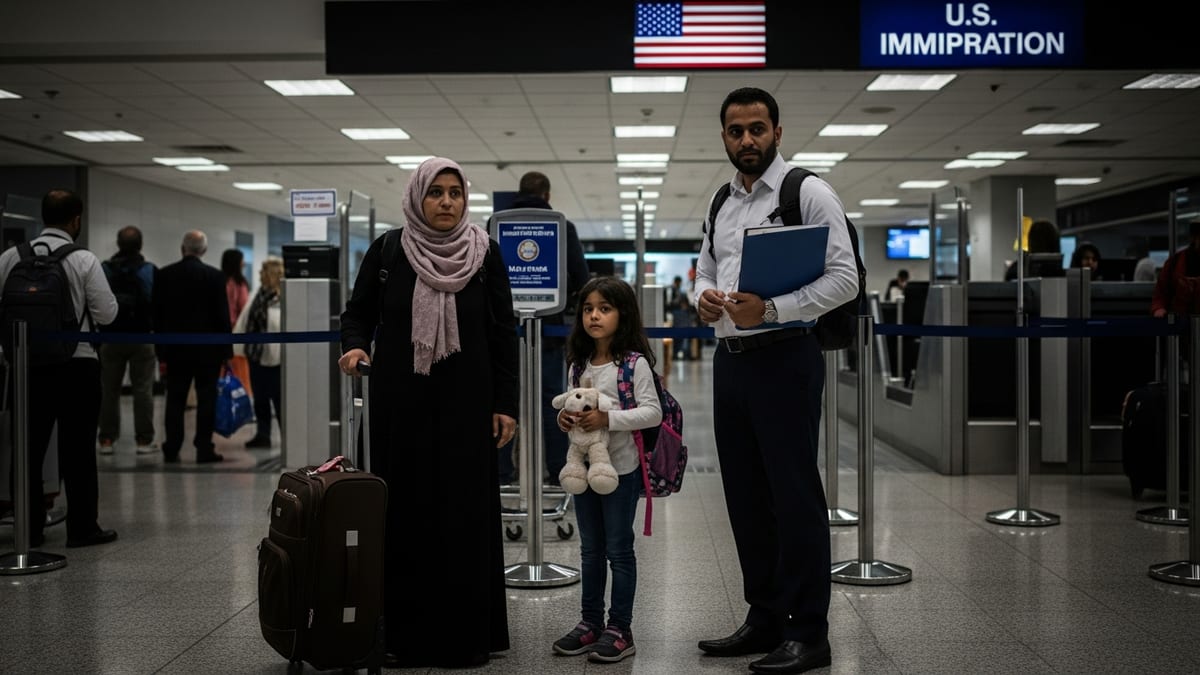
Operational reviews cited by European airport associations indicate that processing times for third‑country nationals have increased significantly where the system is fully live, with some terminals reporting multiple‑hour queues during weekend peaks. For families traveling with children, or elderly passengers unfamiliar with self‑service kiosks, agents often need to intervene, further slowing throughput. As UK travelers make up a large share of this non‑EU flow at many leisure destinations, disruptions there can translate into knock‑on delays for flights departing back to the UK.
Warnings of prolonged disruption and systemic gridlock
Concerns are mounting that the current disruption may not be a short‑lived teething problem. Commentaries from European policy institutes and airport trade groups in recent weeks highlight the risk that delays could persist for several summer seasons while infrastructure, staffing and software are upgraded. A recent televised interview with a senior figure from the EU border agency, widely reported by UK broadcasters, suggested that some member states may take up to two years to fully adapt to the new regime.
Industry observers warn that if repeated biometric checks are required because of data issues, or if integration with national systems remains patchy, processing times could lengthen further as travel volumes rise. Publicly available analyses from think tanks in Brussels and Strasbourg have already flagged data‑quality problems during the initial roll‑out phase, as well as challenges in training personnel and communicating the changes to passengers in advance.
Airports Council representatives, in open letters and press statements, have called for a more coordinated approach before the height of the summer rush, including clear contingency plans, extra staffing and transparent thresholds for triggering simplified procedures. Without such measures, they argue that long queues at entry points could spread rapidly across the aviation network, leading to missed flights, lost baggage and widespread timetable disruption.
How travelers are being advised to prepare
In response to the unfolding situation, airlines, airports and travel agencies are updating their guidance to passengers. Many carriers departing the UK are now advising travelers to arrive at the airport earlier than they might have done in previous years, particularly for flights to Schengen destinations where first‑time Entry/Exit registration is likely. Some are adjusting check‑in closing times or recommending that customers allow extra time to connect between flights that involve crossing an external EU border.
Consumer travel outlets are also emphasizing practical steps within passengers’ control. These include ensuring passports are valid well beyond the minimum required period, keeping accommodation details and return travel documents easily accessible for border questioning, and staying alert to real‑time updates from airports and airlines. Several major European gateways have begun publishing general guidance on the new system and reminding non‑EU visitors to expect longer waits at peak holiday times.
Analysts point out that while individual preparation cannot remove structural bottlenecks, better‑informed travelers can help reduce last‑minute confusion at kiosks and counters, easing some pressure on frontline staff. With the UK’s peak summer getaway now imminent, the interplay between stretched airport operations and the EU’s troubled Entry/Exit System is set to be a major test of resilience for Europe’s aviation and border‑control infrastructure.