


More news on this day
The UK government has introduced a new Foreign, Commonwealth and Development Office travel warning affecting 13 countries, tightening advice for specific regions and prompting fresh checks for holidaymakers on flights, insurance and existing bookings.
Get the latest news straight to your inbox!
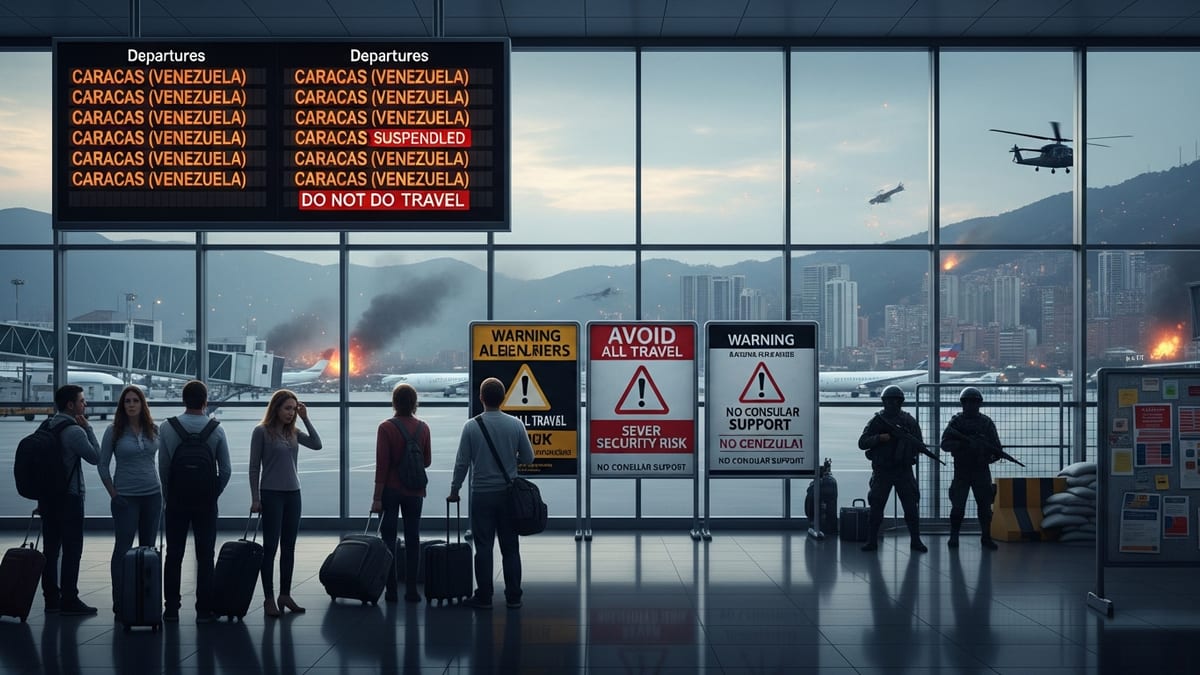
Latest FCDO update targets 13 destinations
Publicly available information from the UK Foreign, Commonwealth and Development Office shows that travel advice across 13 countries has been revised in late October 2026, with several destinations moved into higher risk categories for parts of their territory. The changes follow a wider review of security conditions and ongoing regional tensions, particularly in parts of the Middle East, North and East Africa and Eastern Europe.
Coverage of the update indicates that the 13 nations are subject to differing levels of warning. In some cases, the FCDO now advises against all but essential travel to defined provinces or border areas, while in others it recommends that UK nationals avoid all travel to specific regions because of armed conflict, terrorism or civil unrest. Entire countries already subject to a blanket “do not travel” advisory remain on that list, but the latest changes expand the number of locations where extra caution is urged.
Information drawn from recent summaries of the FCDO database suggests that the affected nations include a mix of major aviation hubs and more specialist long-haul destinations. That means the impact is not restricted to travellers whose holidays are based in the 13 countries themselves. Routes that simply transit through an affected hub airport may also be exposed to schedule changes or airline decisions made in response to the latest government guidance.
The Foreign Office’s online travel advice service now highlights the revised status for each of the 13 destinations and gives country by country detail on which districts, provinces or cities fall under “advise against all travel” or “advise against all but essential travel”. Travellers can sign up for email alerts so that any further escalation or relaxation is delivered automatically as the situation develops.
Regional flashpoints and evolving risks
Reports reviewing the new warnings state that several of the 13 nations are linked to heightened tensions around ongoing conflicts and cross-border instability. In parts of the Middle East, updated wording reflects concerns about missile and drone activity, potential spillover from nearby fighting and the risk of sudden airspace restrictions that could disrupt both direct services and onward connections.
In North and East Africa, the latest advisories underline the effect of localised clashes, long-running insurgencies and the presence of armed groups in some border areas. The FCDO notes that in countries where central authorities have limited control in certain regions, UK consular assistance may be severely constrained if travellers ignore the warning and run into difficulty.
Eastern Europe and the surrounding region also feature among the revised destinations, where existing alerts concerning military activity, infrastructure strikes and mine contamination have been refreshed. Publicly accessible maps accompanying recent commentary on UK travel advice show that front line zones and adjacent districts remain under strict “do not travel” recommendations, while other areas are classified as higher caution zones.
Travel risk analysts commenting on the new warnings emphasise that the pattern of change is uneven. Some tourist centres within the 13 nations remain open to normal travel, but overland journeys between cities or excursions into rural or border regions may now carry a much higher level of official concern than earlier in the year.
Implications for flights, packages and insurance
The revised FCDO guidance has immediate consequences for how airlines, cruise lines and tour operators treat routes touching the 13 affected countries. Industry bulletins note that when the UK government advises against all travel or against all but essential travel to a destination, carriers and package providers often review their schedules and may cancel services on safety or commercial grounds. Where this happens, passengers with inclusive tour packages are generally entitled to refunds or alternative arrangements under UK consumer regulations.
Insurance is another critical factor. Many standard UK travel insurance policies contain clauses stating that cover is invalid if a traveller visits a destination against FCDO advice. Consumer information sites highlight that this can affect everything from medical expenses and repatriation to baggage and cancellation claims. If a country, region or transit point is now listed among the 13 with upgraded warnings, policyholders are advised in published guidance to check whether their insurer will still provide protection.
Package holiday customers often benefit from additional safeguards compared with those who book flights and hotels separately. Trade association advice circulated in response to the 13 nation update notes that if the FCDO advises against travel to a destination included in a package, travellers should first contact their tour operator to discuss options. These can range from switching to another destination to receiving a refund, depending on the company’s terms and whether departure is imminent.
Independent travellers arranging their own flights and accommodation face a more complex picture. According to recent commentary from travel law specialists, airlines are not automatically obliged to refund tickets if a route technically remains operational, even when government advice hardens. In such cases, flexible fares, airline waiver policies and the precise wording of the new FCDO warning all influence whether any change is permitted without extra cost.
Transit and multi stop itineraries affected
The new FCDO travel warning also has implications for multi stop trips that simply pass through one or more of the 13 nations. Analysis of the latest guidance points out that, where “advise against all travel” applies to a country as a whole, transiting through its airports may be considered by insurers as entering a restricted destination. This can create difficulties for travellers heading to third countries in Asia, Africa or Australasia via affected hubs.
Some airlines are already adjusting routings or reducing frequencies on corridors that cross or approach airspace highlighted in the latest risk assessments. While many long haul services continue to operate normally, publicly available data on recent schedule changes indicates that detours to avoid higher risk zones can lengthen flight times and lead to tighter crew duty constraints, increasing the chance of delays.
Travellers planning overland sectors between neighbouring countries also need to pay close attention to revised border area guidance. In several of the 13 nations, the FCDO differentiates between coastal cities, capital regions and interior provinces, with land crossings or internal flights subject to stronger warnings than international arrivals into a main gateway airport.
Experts contributing to recent travel risk round ups recommend that anyone holding non refundable tickets involving the affected countries checks both the latest FCDO wording and the small print on transit, stopovers and surface sectors. This is particularly important if a journey includes self arranged connections, separate tickets or low cost carriers that may not offer rebooking when government advice changes.
Practical steps for UK travellers
Consumer organisations responding to the new 13 nation update are advising UK travellers to carry out a structured review of their plans. The first step is to identify whether the destination, any internal leg or any transit point appears in the list of countries with revised FCDO warnings, and if so whether the relevant area is subject to “do not travel” or “all but essential travel” guidance.
Next, travellers are encouraged in published checklists to compare the government advice with their insurance policy wording. If cover is no longer valid for the affected region, it may be possible to discuss a refund or rebooking with the insurer or to explore specialist policies that are designed to operate in higher risk locations, though such products typically involve stricter conditions and higher premiums.
Those travelling as part of a package are urged in industry commentary to make contact with their tour operator or travel agent as soon as possible if their trip touches any of the 13 countries. Providing booking references, dates and full route details helps companies assess options, which can include deferring the holiday, switching destination or, where the operator cancels, issuing a refund in line with UK package travel regulations.
Independent travellers are meanwhile advised by consumer advocates to monitor airline notifications closely in the days before departure, as flight timings, routings and connection windows may change at short notice. Given that the FCDO stresses the possibility of further rapid updates, monitoring the official travel advice pages up to and including the day of travel is increasingly important for anyone whose plans intersect with the 13 newly highlighted nations.