


Utuado is where Puerto Rico trades palm-fringed resort strips for misty ridgelines, coffee farms, and deep river canyons. Lodging here is different from the island’s beach resorts: instead of towers and room blocks, you find stand-alone casitas, lake houses, mountain retreats, and a growing crop of wellness and glamping projects. Choosing the right base is less about star ratings and more about how you want to experience the central mountains. This guide breaks Utuado down by stay type, with concrete examples and practical details to help you decide where to sleep between cave tours, river tubing, and coffee tastings.
Get the latest updates straight to your inbox!
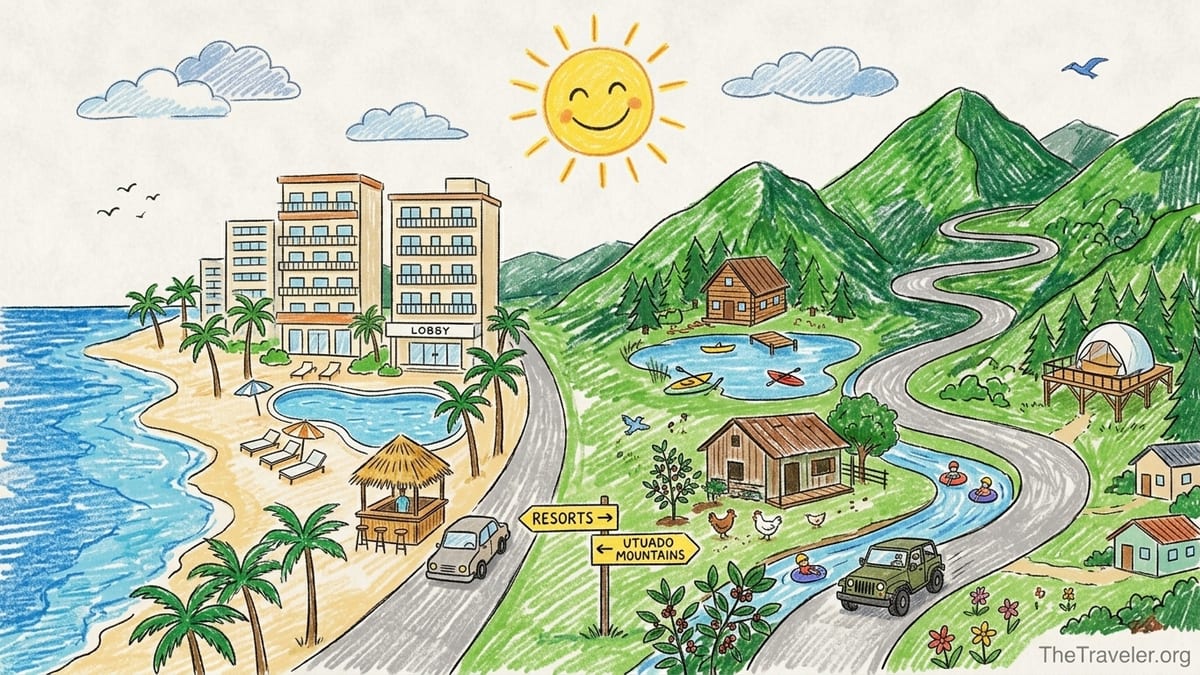
How Utuado Lodging Differs From Puerto Rico’s Resort Zones
Tourism officials highlight that Utuado leans heavily toward vacation rentals, cabins, and small guesthouses rather than traditional hotels. Discover Puerto Rico notes that in the central mountains there are more short-term rentals and distinctive local lodgings than full-service resorts, a pattern that is especially visible in and around Utuado. You are far more likely to book a stand-alone house by a lake, a room on a working farm, or an adult-only mountain retreat than a chain hotel with a lobby bar and concierge desk.
This has real implications for planning. Most stays in Utuado assume you will arrive with a rental car, are comfortable with curvy mountain roads, and do not require 24-hour front desks. Amenities such as on-site restaurants, daily housekeeping, and resort pools are the exception rather than the rule. In exchange, you get privacy, immersion in nature, and direct contact with local hosts who often live on or near the property.
The trade-off is important if you are used to resort areas like Isla Verde, Condado, or Río Grande. In those zones you can step from your tower hotel to a beach bar in minutes and rely on ride-hailing services. In Utuado you will usually drive 15 to 40 minutes along rural roads to reach caves, trailheads, or river put-ins, and many rural properties sit at the end of steep concrete driveways. Night driving is common if you go out to dinner, so comfort behind the wheel matters as much as your bed type.
Because weather can shift quickly in the mountains, outdoor tours around Utuado can be postponed by heavy rain, especially river tubing or canyoning. When you choose where to stay, think about what you will do if the day’s adventure is canceled. Stays with views, porches, hot tubs, books, or access to short on-site trails are worth prioritizing so that a rainy day still feels like a retreat rather than a lost day.
Staying In or Near Utuado Town: Convenience Over Scenery
Base-camping around the town of Utuado itself suits travelers who want straightforward driving, access to restaurants, and basic services like pharmacies and supermarkets. The town sits on Route 10, the main north-south highway that links Utuado to Arecibo on the north coast in roughly 40 to 50 minutes by car depending on traffic. From town it is often 20 to 35 minutes to the most popular river and cave outfitters in the Tanamá canyon and 30 to 45 minutes to sites like Lago Caonillas or the Caguana Indigenous Ceremonial Park.
In and around the town center you will find a mix of small guesthouses, local inns, and in-town vacation apartments listed on major rental platforms. These are practical bases if you plan to eat out at local bakeries, lechoneras, or simple roadside cafeterias rather than cook. You can usually drive just a few minutes to reach breakfast or dinner spots, and it is easier to grab forgotten items like insect repellent or snacks from a supermarket than it is from a remote cabin.
Connectivity is better near town than in the surrounding hills. Cellular data from major Puerto Rican carriers is commonly available in and around the urban core, and many in-town rentals advertise Wi-Fi that is sufficient for messaging and light work, though speeds can vary. Parking tends to be street-side or in small private lots; confirm in advance if you are arriving in a larger vehicle. Some in-town stays have air conditioning in bedrooms but not necessarily in living areas, relying on fans and cross-breezes the rest of the time.
If bad weather shuts down adventures, being near town gives you backup options: a visit to Caguana’s archaeological site if conditions allow, a drive down to Arecibo for seaside lunch, or simply lingering over coffee in panaderías. Families who want shorter drives, more consistent cell service, and easy meal options usually do best basing in or close to town rather than at the end of a long mountain lane.
Caguana & Tanamá Side: Adventure Access Near Canyons and Rivers
On the western and northern sides of Utuado, areas around Caguana and the Tanamá River position you closest to outfitters that focus on tubing, cave exploration, rappelling, and river hiking. From many of these rural bases, it is often a 10 to 20 minute drive to meeting points for Tanamá adventures, compared with 30 minutes or more from central Utuado or the lakes. You are also well placed to explore the Caguana Indigenous Ceremonial Park, Río Abajo State Forest, and lookouts over the karst landscape.
Lodging here is mostly rural houses, farm stays, and small eco-oriented guesthouses. Guests trade the convenience of walking to restaurants for the ability to roll out of bed, drink coffee overlooking jungle-clad canyons, and be on the river shortly after breakfast. Roads are narrower and more winding than those into town, with frequent blind curves and occasional fog in the mornings or evenings, so night driving requires caution. If you plan dinners out, expect 20 to 30 minute drives each way, and consider limiting alcohol if you are navigating after dark.
Services in the Caguana and Tanamá sectors are more limited. Provisions are mostly small colmado-style grocery stores and roadside food kiosks, so many rentals provide full kitchens or at least kitchenettes. Travelers commonly stock up in Utuado or on the coast before driving into the hills with groceries and drinking water. Air conditioning is less universal; at some properties you will find AC only in bedrooms or in none at all, relying on mountain breezes and ceiling fans.
Because so many guests come specifically for river adventures, rain is a bigger factor here than in town. Tanamá tubing and canyon excursions can be delayed or canceled if river levels rise, sometimes on short notice. When you book a rural base on this side, look for comfort features that make a rain day enjoyable: covered balconies with hammocks or rocking chairs, mountain or river views, board games, or indoor common areas. Wi-Fi can be patchy or limited to certain rooms, and power flickers are possible in storms, so do not plan data-heavy remote work from these locations.
Coffee Farms & Rural Stays: Immersion Among Plantations and Forest
Staying on or near a coffee farm is one of Utuado’s signature experiences. Hacienda Horizonte, part of the broader Monte Sagrado Reserve, is an adults-only wellness-oriented retreat on a working coffee plantation linked with Puerto Rican musician Draco Rosa. The main house, La Casona, hosts small groups in a farmhouse setting, with access to hiking trails, river frontage, and plantation views rather than resort entertainment. Stays emphasize time in nature, on-site meals made with local produce, and slow mornings on the veranda instead of late-night bars or casinos.
Other rural projects combine agriculture, wellness, and low-footprint lodging. Properties such as Finca Viernes in the Utuado area are known for panoramic mountain vistas, independent casitas or cabins, and direct access to gardens or farm plots. Some include breakfast baskets or the option to book meals, while others function as self-catering rentals where you use a full kitchen. A growing number of fincas in the region integrate yoga decks, massage spaces, or cacao and coffee experiences, so it is worth checking what is currently offered when you book, since programming can evolve.
From many coffee farms around Utuado, drive times to main attractions fall in the 25 to 45 minute range. It might take around half an hour to reach Tanamá river operators, 30 to 40 minutes to get into town for restaurants or supplies, and 45 minutes to an hour to reach Arecibo on the coast. The roads to the farms themselves usually include steep, narrow concrete access lanes. Arriving before dark is strongly recommended so that you can navigate slowly and get familiar with the turns before your first night drive.
In exchange for the extra effort, you get cooler temperatures, more breeze, and a sense of seclusion. Mosquitoes are present, especially after rain and near vegetation, but many fincas install screens and encourage guests to use repellent during dawn and dusk. Wi-Fi availability ranges from robust in central farmhouses to limited or non-existent in more remote cabins; cellular coverage can drop in ravines or behind ridges. Rain days feel less disruptive at coffee farms because simply being on the property is part of the experience, whether that means walking internal trails, booking a massage at a wellness-focused finca, or reading on a covered terrace while listening to the rain on the foliage.
Lakeside Cabins at Lago Caonillas & Similar Settings
For travelers who dream more of kayaks and misty water views than of beaches, Utuado’s lake zone is a strong choice. Man-made lakes such as Lago Caonillas and nearby Dos Bocas anchor a cluster of vacation rentals with docks, kayaks, and elevated decks. Discover Puerto Rico highlights Casa Lago Lake House Retreat on the shores of Lake Caonillas, a stand-alone cabin-style house along a dead-end lane, as one example of the area’s lakeside stays. Rental listings for the lake zone often show hot tubs on terraces, gas grills, and floor-to-ceiling windows facing the water.
From the Caonillas area, drives to central Utuado generally take 25 to 35 minutes, depending on the exact shore and road conditions. Reaching Tanamá-based activities from the lake can involve 35 to 50 minutes of curvy mountain driving, so this is not the most efficient base if your priority is maximizing river adventure days. However, it works well for itineraries that mix one or two canyon or cave excursions with long, leisurely days paddling on calm water or simply enjoying the view from the deck.
Night driving from the lakes to town restaurants is longer and darker than from village or farm locations. Many guests plan to cook on-site instead. Lakeside houses almost always include full kitchens and outdoor cooking setups. Guests commonly bring several days of groceries, coffee, and drinks up from coastal supermarkets or from town, since there are no large grocery stores right on the lake. Parking is private and usually directly outside the house, but access driveways can be steep or narrow; smaller rental cars are easier to maneuver than large vans.
Air conditioning at lake properties is typical in bedrooms and sometimes throughout the house, since the lower elevations can feel more humid on still nights. Mosquito levels can spike around the water, particularly at sunset, so screened porches and repellent are important. Wi-Fi varies significantly: some hosts market strong enough connections for streaming, while others warn that service can be intermittent, particularly after storms. If heavy rain cancels an off-site adventure, lakeside stays are among the most forgiving places to be stuck: you can watch cloud banks roll over the water, soak in a hot tub if available, read from the sofa with floor-to-ceiling lake views, or wait for a break in the weather before a short paddle.
Río Abajo, Tanamá Canyons & Camping-Oriented Bases
Serious hikers and birdwatchers are often drawn to the Utuado side of Río Abajo State Forest, a karst forest shared with neighboring Arecibo. Official information from Puerto Rico’s natural resources authorities notes that the forest offers signed trails and a designated camping area where permits are required in advance. Capacity and fees have historically been modest, with per-person nightly charges for adults and discounted rates for minors, though travelers should confirm directly with the Department of Natural and Environmental Resources for current rules and reservations.
Camping and ultra-basic stays here are all about immersion in the subtropical forest environment rather than comfort. You sleep to the sounds of coquis and birds, wake close to trailheads, and have short drives to river access points along the Tanamá and toward lakes like Dos Bocas. Drive times from camping sectors of Río Abajo to central Utuado or the Caonillas lake zone usually fall around 30 to 45 minutes. Access roads can be narrow with potholes, and rainfall can temporarily affect conditions, so a higher-clearance rental car can be more comfortable than a low sedan if you are staying multiple nights.
Services are minimal near the forest. Campers must bring all food, water purification, lighting, and insect protection. There are no sit-down restaurants inside Río Abajo, and nearby communities have only small stores and roadside kiosks. Connectivity is extremely limited; cellular signals can drop out entirely under the canopy, and there is no public Wi-Fi. These conditions make the forest and camping bases better for travelers who are comfortable offline and do not need to check work email between hikes.
Because you are so exposed to the elements, rain has the largest impact on forest-based camping. Trails can become muddy or slippery, and river levels can change quickly. Many visitors plan flexible itineraries that allow them to shift hiking days around based on weather windows, or use rainy periods for short walks near camp, birdwatching from covered shelters if available, or visits back toward town for indoor meals. Lightweight long sleeves, proper rain jackets, and closed shoes for mud are essential, and mosquitoes and biting insects can be intense at times, especially after rainfall.
Glamping Domes & Eco-Retreats: Comfort Without a Resort Atmosphere
Mountain glamping, already popular in Puerto Rico’s southwest, has been slowly extending into the central highlands, including around Utuado. Projects in the broader region offer domes or small eco-casitas with real beds, private baths, and big views, but with closer contact to nature than a typical hotel room. In the Utuado area you can find glamping-style units integrated into cacao or coffee projects, as seen at properties like Finca Remedio, which advertises an earthen casita and a bohío-style glamping hut within a forested setting in the Altos de Arenas sector.
Glamping bases usually sit 20 to 40 minutes from central Utuado by car, depending on the exact valley or ridge. This places them in a middle band between rural farms and remote lake houses: far enough from town to feel secluded, but not as isolated as the deepest corners of Río Abajo. Most glamping projects are intended for adults or couples, sometimes with small children allowed in specific units, so families should double-check age policies before booking. Driveways are often unpaved or partially concrete and can be steep; arriving before sunset is wise.
Unlike classic camping, these eco-retreats commonly provide hot water, well-made beds, basic kitchenettes or shared outdoor cooking areas, and sometimes perks like outdoor baths, plunge pools, or yoga decks. However, there is usually no on-site restaurant, and staff presence can be limited outside check-in windows. Guests should plan to self-cater breakfast and some dinners. Air conditioning may or may not be present; many domes and earthen huts rely on cross-ventilation and fans, which is comfortable on most mountain nights but can feel warm in an unusual heat wave.
Wi-Fi at glamping sites is often limited to common areas or absent entirely, though some newer projects advertise dedicated routers in each dome. Cell service depends heavily on line-of-sight to towers; valleys and dense forest can block signals. Glamping stays are well suited to rain days because sitting under shelter watching clouds roll through the valley is part of the appeal. Bring books, downloaded movies, or offline playlists in case the internet does not cooperate. Mosquito exposure varies by design: enclosed domes with screens are more comfortable in bug season than open-sided structures.
Adult Wellness & Mountain Retreats: Unplugging in Style
For adults seeking structured rest and wellness rather than a do-it-yourself mountain base, Utuado’s emerging retreat scene is compelling. Hacienda Horizonte, framed as part of Monte Sagrado Reserve, operates explicitly as an adults-only nature and wellness getaway rather than a traditional hotel. Marketing materials emphasize that it is a private farmhouse environment, not a resort, with features such as on-property trails, river access, a lake, and space for small groups or retreats. Meals are often prepared on-site using local ingredients, and some stays can include yoga or wellness programming, depending on the group or event.
Properties in this category are typically located 20 to 40 minutes from central Utuado and 45 minutes to an hour from Arecibo on the coast. The focus is on staying put rather than commuting daily to outside attractions, although guests can still arrange off-site activities like cave tours with local outfitters. Night driving is usually limited to arrival and departure, since most meals and activities are contained within the property. Parking is private, and staff or hosts are on site or nearby, which can be reassuring for travelers new to rural Puerto Rico.
Wellness retreats tend to provide stronger amenities than bare-bones rural rentals. Air conditioning is common in bedrooms, and some houses are fully climate-controlled. Wi-Fi is often available in main common areas so that guests can check messages, though retreat organizers sometimes encourage digital detox and ask participants to limit screen time. Spa-style touches such as massage areas, outdoor soaking tubs, fire pits, and dedicated meditation or yoga spaces help fill slower hours or rainy afternoons with restorative activities.
These stays are largely adult-oriented and may not accept children, so they are best suited for couples, solo travelers, and friend groups looking for quiet time rather than playgrounds. If strong storms force the cancellation of planned hikes or river excursions, the retreat infrastructure itself becomes the backup plan: guests might rebook a massage, extend a yoga session, or spend extra time in communal lounges and on covered porches while clouds pass over the valleys.
The Takeaway
Choosing where to stay in Utuado is less about choosing a star rating and more about choosing a lifestyle for your days in the central mountains. Town-based guesthouses favor easy meals, shorter drives on better-lit roads, and steadier connectivity. Rural bases near Caguana and the Tanamá emphasize quick access to river and canyon adventures but demand comfort with winding roads, limited services, and more variable Wi-Fi. Coffee farms and mountain fincas trade convenience for immersion, while lakeside houses at Lago Caonillas give you an almost cabin-in-the-woods experience built around sunrises and sunsets on the water.
Camping sectors near Río Abajo and glamping-style eco-retreats appeal to those who want to sleep as close as possible to forest and sky, while adult wellness retreats like Hacienda Horizonte offer a curated, deeply quiet environment for reset and reflection. Across all categories, a rental car, flexible expectations around technology, and a willingness to self-cater at least some meals are key. When rain alters your plan, the best base is the one where you would still be happy simply staying put for the day.
Before you book, think through your priorities: driving comfort at night, how much you want to cook, whether you need reliable Wi-Fi, and how your group will handle mosquitoes and mountain weather. Read recent reviews for specifics on road access, cell coverage, and host responsiveness, and where possible confirm details like air conditioning and kitchen equipment directly with the owner or manager. With the right base, Utuado becomes less a day trip from the coast and more a destination in its own right, rewarding you with starry skies, cool nights, and the sound of rivers echoing through the hills.
FAQ
Q1. Is Utuado a good base without staying at a beach resort?
Yes. Utuado works very well as an inland base if your priorities are rivers, caves, coffee farms, and mountain scenery instead of beaches and nightlife. You can still reach the north-coast towns around Arecibo in roughly 40 to 60 minutes by car for a day at the ocean, then return to cooler temperatures and quieter nights in the hills.
Q2. Do I need a rental car to stay in Utuado?
In practice, yes. Public transportation in the central mountains is limited, and most accommodations are scattered along rural roads that are not served by taxis or ride-hailing apps. A compact rental car makes it easier to navigate steep driveways and narrow lanes, though some travelers prefer a small SUV for extra clearance on rougher segments near forests and lakes.
Q3. How difficult is night driving around Utuado?
Night driving can be challenging if you are unused to mountain roads. Expect sharp curves, limited street lighting, and occasional fog or rain. Many visitors aim to arrive at their lodging in daylight on the first night, then limit after-dark driving to necessary restaurant runs. Choosing a base closer to town cuts down on long night drives after dinner.
Q4. Will my lodging in Utuado have Wi-Fi and good cell service?
In-town guesthouses and some lakeside or retreat properties usually provide Wi-Fi adequate for email and light streaming, and major carriers often have coverage near the urban center. More remote coffee farms, glamping sites, and forest-adjacent rentals may have slower or intermittent service, or no Wi-Fi at all. If connectivity is important, verify details directly with the host and consider bringing offline maps and entertainment.
Q5. Are mosquitoes and insects a big problem in Utuado accommodations?
Mosquitoes and other insects are common, particularly near water, forest edges, and gardens, and after rainfall. Most lodgings use window screens, fans, and in some cases air conditioning to make rooms comfortable, but you should still bring repellent and consider light long sleeves for evenings. Indoor-focused properties and well-screened lake or coffee-farm houses usually feel more comfortable during peak mosquito times than open-sided structures.
Q6. What should I do if rain cancels my river or canyon tour?
If a Tanamá river or canyoning tour is canceled due to high water, treat the day as part of the mountain experience. At lakeside rentals you can watch the weather over the water or enjoy hot tubs and covered decks. At coffee farms and wellness retreats, shift to slower activities such as walks on on-site trails, massages, or reading on porches. Being based somewhere that feels enjoyable in its own right makes weather delays far less frustrating.
Q7. Are Utuado’s accommodations suitable for families with children?
Many town apartments, lakeside houses, and some rural rentals welcome families and offer multiple bedrooms, kitchens, and outdoor space for children. However, adult-only wellness retreats and some glamping projects do not accept minors, and steep stairs, unfenced decks, or water access can be safety considerations for young kids. Families should look for properties that clearly describe child-friendly features and discuss any concerns with hosts before booking.
Q8. How do prices in Utuado compare with coastal resorts in Puerto Rico?
Per-night rates for Utuado vacation rentals and small guesthouses often undercut major coastal resort prices, especially outside peak holiday periods. You may find entire houses or cabins around the lakes or in the hills at nightly rates similar to or below what a standard room costs in resort zones. That said, you will need to budget for a rental car, groceries for self-catering, and guided tours for activities like tubing or cave visits.
Q9. Can I work remotely from Utuado?
Remote work is possible from select accommodations that advertise reliable Wi-Fi and are located closer to town or main roads. Digital nomads often choose in-town apartments, lake houses with documented strong connections, or wellness retreats that specifically mention work-friendly spaces. It is riskier to plan video-heavy work from deep forest cabins, glamping domes, or very rural coffee farms where both internet and power can be more vulnerable to storms.
Q10. How far is Utuado from San Juan, and is it realistic as a side trip?
Driving from the San Juan metro area to Utuado typically takes about one hour and forty minutes to two hours by car, depending on traffic and the exact neighborhood you start from. That makes Utuado realistic as an overnight or two-night side trip from a coastal base, but the area rewards a longer stay if you want to experience caves, rivers, lakes, and coffee farms without rushing.