

More news on this day
The United Kingdom has eased its stance on travel to the United Arab Emirates and several Gulf states, lifting a sweeping “do not travel” warning and signalling a shift toward more calibrated, country-by-country assessments of risk across a region that remains volatile but increasingly open to international visitors.
Get the latest news straight to your inbox!
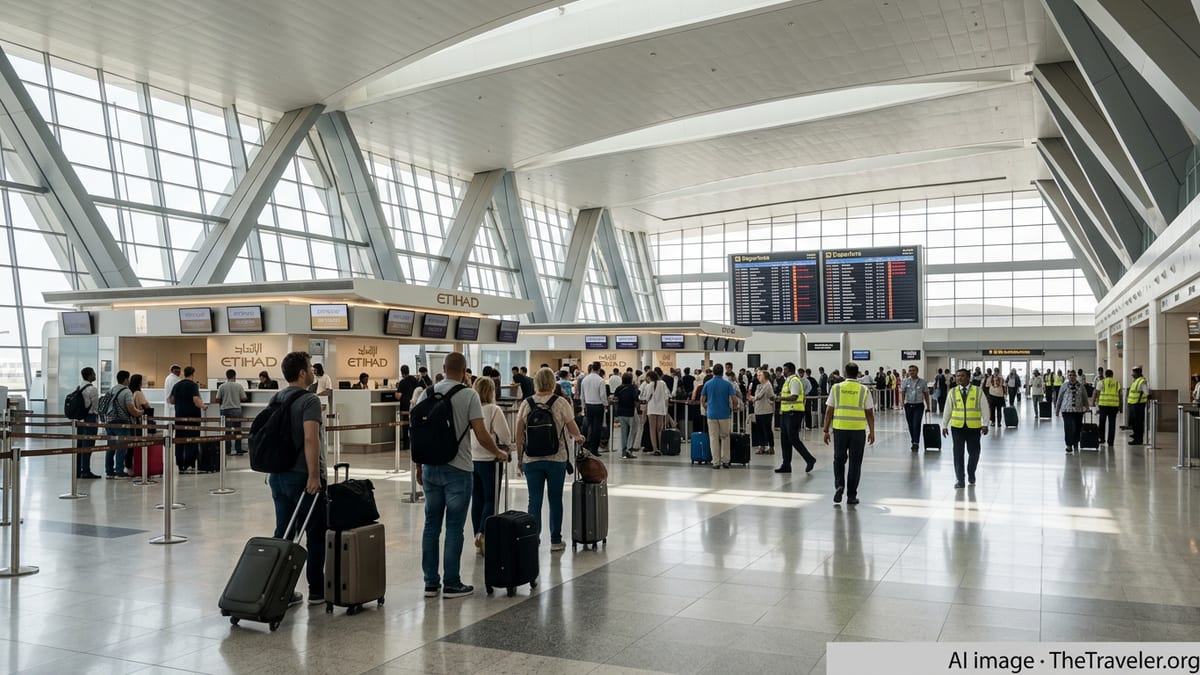
Shift in UK Travel Stance After Months of Heightened Alerts
The adjustment in the United Kingdom’s guidance follows months of elevated concern over regional security, airspace disruptions and the potential for sudden escalation in tensions affecting major Gulf transport hubs. Publicly available tracking of government advisories shows that earlier blanket warnings discouraged non-essential travel to parts of the Gulf, including the UAE, as conflict risks intensified in early 2026.
Updated foreign-travel advice now distinguishes more clearly between countries and types of risk, rather than applying a single regionwide approach. For destinations such as the UAE, Qatar and other major transit hubs, the language has moved away from an across-the-board “do not travel” signal toward guidance that emphasises close monitoring of developments, awareness of security conditions and flexibility in travel plans.
The change aligns the UK more closely with other partners that have recently recalibrated their own advisories for the Gulf. In particular, recent Australian government notices shifted their position on the UAE and several neighbouring states from “do not travel” to a lower tier that urges travellers to reconsider their need to visit rather than avoiding all trips outright, reflecting a view that conditions, while still fragile, have moderated from their most acute phase.
Travel industry observers note that this type of step-down in warnings often marks the point at which governments judge the immediate risk of large-scale disruption or direct spillover from conflict to have eased, even if underlying political and security uncertainties remain.
What the New Guidance Means for UK Travellers
For UK residents planning trips to Dubai, Abu Dhabi, Doha or other Gulf gateways, the updated stance effectively reopens the door to both leisure and business travel, while keeping a strong focus on personal responsibility and risk awareness. Rather than advising against all but essential travel, the language now points to specific concerns, such as the potential for sudden flight changes, localised security incidents and restrictions that may vary between emirates or neighbouring countries.
Travellers are encouraged by publicly available information to keep a close eye on schedules and operational notices from airlines, particularly on routes that cross or skirt airspace previously affected by closures or rerouting. Gulf-based carriers have been progressively restoring services following earlier disruption, and network maps show a more stable pattern of long-haul connections through Dubai and other hubs compared with the most turbulent weeks of early spring.
The shift in advice does not remove the need for preparation. Guidance continues to highlight the importance of travel insurance that covers itinerary changes, medical care and potential evacuation, along with careful registration of contact details so that travellers can be reached quickly if conditions deteriorate. Passengers are also urged to allow extra time for transit and be prepared for last-minute gate or routing adjustments, particularly on itineraries that link Europe with Asia, Africa or Australasia via the Gulf.
Despite the more permissive tone, officials’ published material reiterates that individuals should assess their own appetite for risk, taking into account any personal circumstances, health issues or work requirements that could complicate a rapid change of plans if the regional picture worsens again.
Regional Security Context Remains Complex
The easing of the UK’s warning comes against a backdrop of continuing regional complexity, where security conditions can vary markedly over short distances. While the UAE and several other Gulf states have seen a reduction in immediate threat levels compared with the peak of recent tensions, travel notices for nearby conflict zones and certain airspace corridors remain far more restrictive.
Open-source reporting highlights that some neighbouring countries continue to face active security incidents, and that past episodes of missile and drone activity have had a spillover effect on perceptions of risk across the broader region. Even when such incidents occur outside the UAE’s borders, precautionary measures by airlines and air-navigation authorities can have a direct impact on flight timings, routings and passenger experience.
In addition, recent reports of incidents targeting energy or infrastructure assets in the wider Gulf have reinforced the message that the regional situation can change with little warning. Aviation and security analysts cited in public coverage emphasise that while risk has become more manageable for now, the geopolitical backdrop remains fluid, and that governments are likely to keep travel advice under close, ongoing review.
For travellers, this means that the lifting of a formal “do not travel” warning should not be interpreted as a guarantee of smooth conditions, but rather as an indication that governments currently judge the probability of widespread disruption or direct targeting of travellers in key hubs to be lower than earlier in the year.
Boost for Gulf Tourism and Aviation Recovery
The UK policy shift is expected to provide a timely boost to tourism operators and airlines that rely heavily on Gulf routes. Industry commentary notes that when strong advisories are in place, many holidaymakers opt to reroute via alternative hubs or postpone long-haul trips altogether, dampening demand not only for the Gulf centres themselves but also for onward destinations in Asia and Africa.
With the UK now joining other governments in softening its stance toward key Gulf states, booking patterns are likely to respond, particularly in the run-up to peak summer travel from Britain. Travel agencies and tour operators that had paused or reduced packages involving Gulf stopovers are beginning to feature these routes more prominently again, emphasising flexible booking terms and clear communication about potential changes.
Hotels and attractions in Dubai, Abu Dhabi and other cities have already reported a gradual return of visitors from markets where advisories were relaxed earlier. Analysts suggest that the UK’s updated guidance could accelerate this trend, given the country’s role as one of the largest source markets for Gulf tourism and as a major origin for long-haul itineraries that transit via the region.
Aviation strategists also point out that hub airports in the Gulf play a pivotal role in global connectivity, linking secondary cities in Europe to destinations across Asia and the Pacific. Any improvement in traveller confidence from the UK, they note, can have knock-on benefits far beyond the immediate region, helping to stabilise schedules and rebuild long-haul networks shaken by months of uncertainty.
Practical Steps for Those Planning Gulf Trips
With the formal barrier of a “do not travel” warning removed, prospective visitors from the UK are being urged by publicly available advice to take a practical, information-led approach to planning. Checking the most recent updates on foreign-travel pages, confirming airline operations close to departure and understanding local regulations in both the UAE and any connecting states are all presented as sensible measures.
Travellers are also encouraged to pay attention to non-security factors that can affect trips, such as evolving visa rules, electronic travel authorisation requirements, and entry conditions that may reflect separate health or immigration considerations. Even as security-related warnings are relaxed, border procedures and documentation checks can remain strict, especially for those mixing business and leisure or combining multiple stops in a single itinerary.
Consumer advocates suggest that those booking complex journeys through the Gulf consider options that allow date or routing changes at minimal cost, and retain digital copies of all key documents, including passports, insurance policies and booking confirmations. They also recommend monitoring reputable news outlets for broader coverage of regional developments that may not yet be reflected in formal government advisories.
For now, the UK’s move to lift its most severe warning on travel to the UAE and other Gulf states marks a significant, if cautious, step back toward normalisation of one of the world’s busiest air corridors, with the clear caveat that circumstances could still evolve quickly in a region where geopolitics and global mobility remain closely intertwined.