

More news on this day
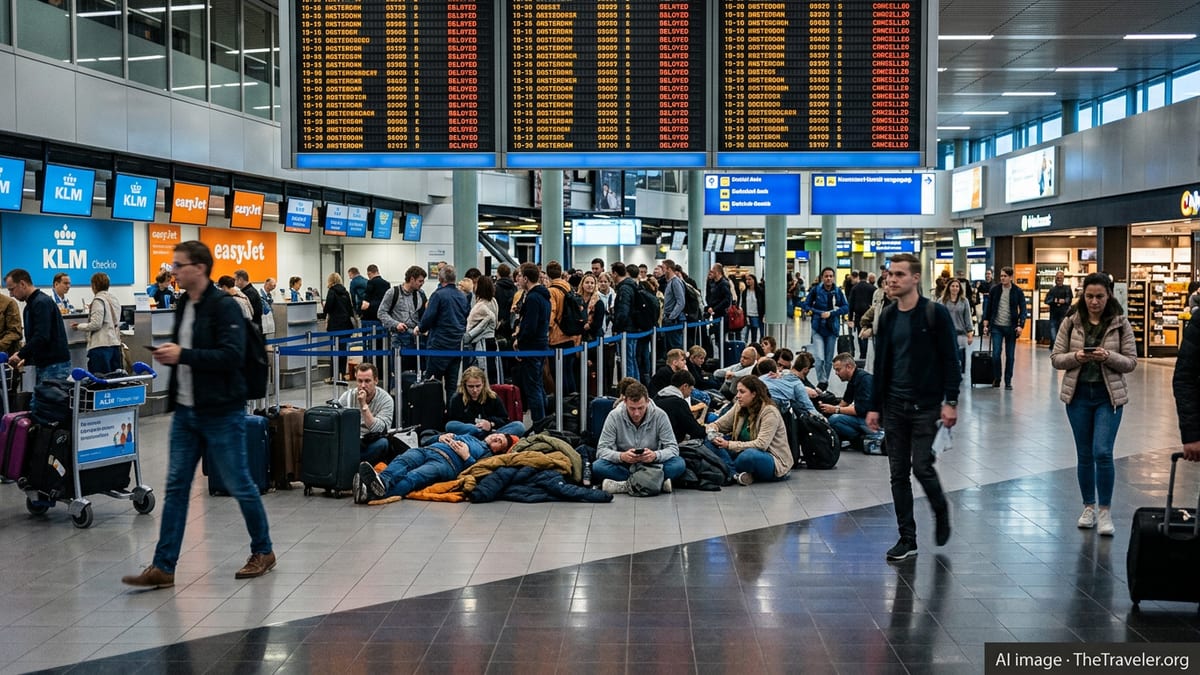
Major European hubs in Paris, Amsterdam and Oslo have been hit by widespread disruption, with 1,147 flight delays and 48 cancellations reported across the three airports, creating cascading chaos for travelers across the continent and beyond.
Get the latest news straight to your inbox!
Ripple Effects Across Europe’s Busiest Air Hubs
The disruption is centered on Paris Charles de Gaulle and Amsterdam Schiphol, two of Europe’s busiest international gateways, alongside Oslo Gardermoen, the main hub for Norway and a critical connector for long haul routes. Publicly available traffic and delay data show that all three airports were already operating under strain before the latest incident, with congested schedules and tight turnaround times amplifying the impact of any operational shock.
Reports from flight tracking dashboards indicate that more than a thousand services experienced significant delays, with knock on effects visible on feeder flights, onward connections and evening departures. The 48 outright cancellations quickly translated into missed long haul links, particularly for passengers connecting through Amsterdam and Paris to destinations in North America, the Middle East and Asia.
The clustering of delays at three major hubs on the same day has intensified the sense of crisis among travelers. With aircraft and crews out of position, some airlines began implementing rolling schedule adjustments, trimming frequencies and consolidating services to restore stability. Those measures, while operationally necessary, left many passengers facing sudden changes to carefully planned itineraries.
Analysts observing live traffic patterns note that once delays reach a critical mass at large hubs, recovery typically takes several operational waves, often extending disruptions into the following morning. The current episode at Paris, Amsterdam and Oslo appears to follow that pattern, with late running aircraft feeding directly into the next day’s schedule.
Operational Pressures and Weather Complications
Early assessments of the disruption point to a combination of factors, including adverse weather conditions, airspace congestion and ongoing staffing constraints in parts of the European network. Summer schedules across the continent have been built around tight utilization of aircraft and crews, leaving relatively little slack when thunderstorms, low visibility or strong winds affect departure and arrival flows.
In recent months, reports from aviation performance bodies have highlighted a steady buildup of delays at major European hubs, with Amsterdam and Paris consistently ranking among the busiest and most delay prone airports in the region. Industry statistics for earlier this year already showed average arrival delays creeping upward, making today’s large scale disruption less of a surprise to analysts tracking network resilience.
Norway’s air travel system has also faced mounting strain. Recent coverage of cancellations on key domestic corridors to and from Oslo has emphasized how quickly local disruptions can cascade into international chaos when a country’s primary hub is affected. With Oslo Gardermoen acting as the main springboard for intercontinental flights, irregular operations there can rapidly snarl wider European traffic flows.
While the precise balance between weather related restrictions, staffing issues and airspace constraints is still being parsed, operational experts caution that European networks are entering the most demanding weeks of the summer travel season. On days when storms hit multiple regions at once, even relatively modest schedule disruptions can escalate rapidly.
Airlines Battle Backlogs as Passengers Scramble
As delays mounted, airlines at Paris, Amsterdam and Oslo moved to rework rotations, swap aircraft types where possible and prioritize certain long haul departures to limit knock on disruption in other regions. In some cases, carriers opted to preemptively cancel lower demand flights to free up crews and aircraft for busier routes, contributing to the tally of 48 cancellations but helping to stabilize overall operations.
Passengers at the affected hubs reported long queues at check in counters and service desks as travelers sought rebooking options and hotel accommodation. With many flights departing several hours behind schedule, gate areas became crowded with stranded travelers waiting for new departure times or confirmation of alternative routes.
Publicly available information from airline and airport status pages shows that some carriers have relaxed rebooking rules for impacted passengers, allowing date and routing changes at no additional charge on affected tickets. However, limited remaining seat capacity during the busy summer period means that securing immediate alternatives can be challenging, especially for families or groups traveling together.
Travel observers note that disruptions of this magnitude tend to hit connecting passengers hardest. Those arriving late into the hubs from regional European airports frequently miss tightly timed onward flights, triggering unplanned overnight stays and baggage separation issues as checked luggage continues on original routings without their owners.
Passenger Rights and Compensation Under EU Rules
The turmoil has once again placed a spotlight on European passenger rights frameworks, particularly the well known EU rules that define when compensation is owed for lengthy delays and cancellations. Recent legislative discussions in the European Union have confirmed that the threshold for compensation on many routes will remain at three hours of arrival delay, preserving a significant level of protection for travelers.
Under the prevailing rules, passengers on eligible flights that are cancelled at short notice or heavily delayed may be entitled to financial compensation, meal vouchers, hotel accommodation and rebooking on the next available service, depending on the specific circumstances. However, eligibility often hinges on whether the disruption is deemed to stem from extraordinary circumstances such as severe weather or airspace closures, or from issues within the airline’s control.
Consumer advocates tracking today’s disruption suggest that affected travelers should keep detailed records of boarding passes, booking confirmations and any written notifications from carriers about the cause of delays or cancellations. Those documents typically form the basis of compensation claims submitted in the days and weeks after major disruption events.
Specialist claim services and national enforcement bodies are expected to see an uptick in cases as a result of the current wave of delays and cancellations, particularly for passengers who experienced missed connections and overnight stranding due to late arriving flights at Paris, Amsterdam and Oslo.
How Travelers Can Navigate the Continuing Disruption
With recovery operations still underway and residual delays expected to linger, travel experts recommend that passengers due to fly through the affected hubs build extra time into their journeys and check real time flight status repeatedly on the day of departure. Same day schedule changes and gate swaps are common when airports are working through large backlogs.
Those holding separate tickets for connecting journeys face particular risk, as airlines typically assume responsibility only for missed connections on a single through booking. In the current environment, booking end to end itineraries on one ticket, where possible, reduces the likelihood of being stranded mid journey without support.
Travel planners also point to the value of early morning departures, which generally benefit from having aircraft and crews already in place from the night before. Later in the day, cumulative delays across the network tend to grow, making afternoon and evening departures more vulnerable when airports have suffered earlier disruption.
While the immediate focus is on clearing backlogs and returning operations to normal, the latest episode of chaos at three of Europe’s key hubs is likely to fuel renewed debate over airport capacity, staffing levels and the resilience of summer schedules. For now, travelers across Paris, Amsterdam and Oslo continue to feel the impact of a single day in which Europe’s aviation system once again reached its breaking point.