


More news on this day
Rail investigators and police in the United Kingdom are examining how two passenger trains collided near Bedford, north of London, killing a driver and leaving nine people in critical condition among dozens injured, according to widely circulated news reports.
Get the latest news straight to your inbox!
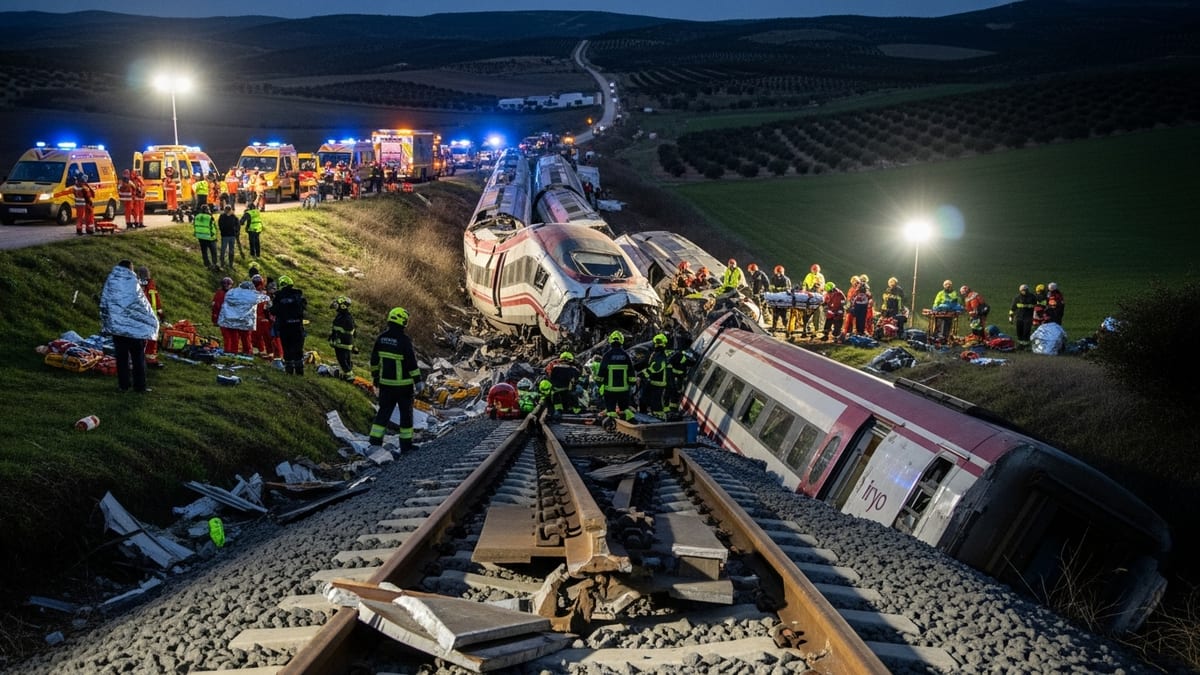
Collision on busy commuter route north of London
Publicly available information indicates the crash occurred on Friday evening near Bedford, a key junction on the Midland Main Line linking the English Midlands with London St Pancras. Two East Midlands Railway services heading toward the capital were involved, with one train reportedly running into the rear of another on the same track during the peak travel period.
Reports describe a violent impact that left carriages crumpled and passengers thrown from their seats. Images shared by broadcasters and on social media show emergency vehicles lining a road parallel to the tracks, while passengers, some bandaged and bloodied, were guided away from the site.
Initial estimates suggest that around 100 people were hurt in the collision in varying degrees. Roughly 28 people remained in hospital by Saturday, with nine in critical condition and others treated for serious but not life threatening injuries, according to figures cited in multiple outlets.
The driver of the train at the rear was confirmed to have died at the scene. Coverage from British and international media notes that the impact crushed the cab area, underscoring the severity of the collision even though the trains did not derail extensively.
Major emergency response and rail disruption
The incident triggered a major emergency response involving paramedics, fire and rescue services and specialist rail incident teams. Local hospitals in Bedfordshire and surrounding counties received a surge of casualties ranging from broken bones and head injuries to trauma requiring intensive care.
Passengers have described chaotic scenes in the immediate aftermath, with some carriages plunged into darkness and debris strewn across aisles. Accounts carried by British broadcasters and newspapers refer to travelers helping one another out of damaged carriages while waiting for emergency crews to arrive.
The crash forced the closure of a key section of the Midland Main Line, causing substantial disruption for intercity and commuter services between the East Midlands and London. Replacement buses and diversions have been used to keep some traffic moving, but many journeys have been subject to long delays and cancellations while the line remains partially blocked.
Rail operators have urged passengers to check the latest service information before travelling, and to allow significantly more time for journeys through the Bedford area while recovery and investigative work continues at the site.
Investigators focus on signalling, train operations and maintenance
British Transport Police and the Rail Accident Investigation Branch are reported to be leading separate but coordinated inquiries into the cause of the collision. Early attention is likely to focus on the signalling system, train movements in the minutes before impact and any potential technical or human factors that allowed two trains to occupy the same stretch of track.
Specialist teams are understood to be downloading and examining data from on board recorders, which log speed, braking and signalling information. Investigators are also expected to assess the condition of the infrastructure, including track circuits and signals, as well as the maintenance history of the trains involved.
According to rail safety experts cited across multiple news reports, rear end collisions on Britain’s modern rail network are rare because of layered protections, including automatic train protection and strict signalling rules. The fact that a following service struck the back of another passenger train on a main line has therefore raised pressing questions about whether a technical failure, operational error or a combination of factors played a role.
Investigators usually publish an initial bulletin outlining the basic facts of major rail crashes within days, followed by a detailed final report that can take many months. That report typically includes safety recommendations intended to prevent a similar incident from happening again.
Human toll and national reaction
The collision has had a significant human impact on passengers, rail staff and the wider community. Many of those on board were commuters and leisure travelers heading into London at the start of the weekend, and reports describe a mix of shock, distress and gratitude among survivors who were able to walk away from the wreckage.
Local authorities and community organizations in the Bedford area have been reported as offering support to those affected, including counseling for witnesses and assistance for families visiting injured relatives in hospital. Rail staff and first responders are also being offered welfare support after dealing with what several outlets describe as a traumatic and complex incident.
Publicly shared statements from national leaders and public figures have conveyed condolences to the family of the driver who died and good wishes for the injured. The crash has prompted renewed public attention to rail safety, even as commentators note that serious multi train accidents remain uncommon on Britain’s network.
Travel industry observers say the incident may temporarily affect passenger confidence on the Midland Main Line, particularly among regular commuters. However, Britain’s longer term rail safety record and the rapid initiation of a formal investigation are expected to be key factors in restoring trust.
Rail safety record under renewed scrutiny
Britain’s railways are generally regarded as having one of the strongest safety records in Europe, with very few fatal collisions between passenger trains in the past quarter century. Prior to this incident, publicly available accident statistics showed that most recent rail fatalities involved isolated events such as level crossing collisions, track workers or passengers on individual trains, rather than multi train crashes.
Nevertheless, the Bedford collision is likely to shape debate about the pace of investment in signalling upgrades, the rollout of modern train protection systems and the resilience of existing infrastructure. Commentators have pointed to the heavy reliance on busy radial routes into London, where any disruption can affect tens of thousands of daily journeys.
Transport analysts note that serious rail accidents often lead to far reaching safety reforms, from changes to driver training and fatigue management to new technology that can override human error. The findings from the current investigation are expected to feed into ongoing national work on rail modernisation, including digital signalling and enhanced monitoring of train locations.
For now, travel planners and rail users are watching closely for updates on the condition of the injured and on when full services can safely resume through the Bedford corridor. The crash has underscored how a single incident on a congested main line can have wide ranging effects on both individual passengers and the broader transport network.