


More news on this day
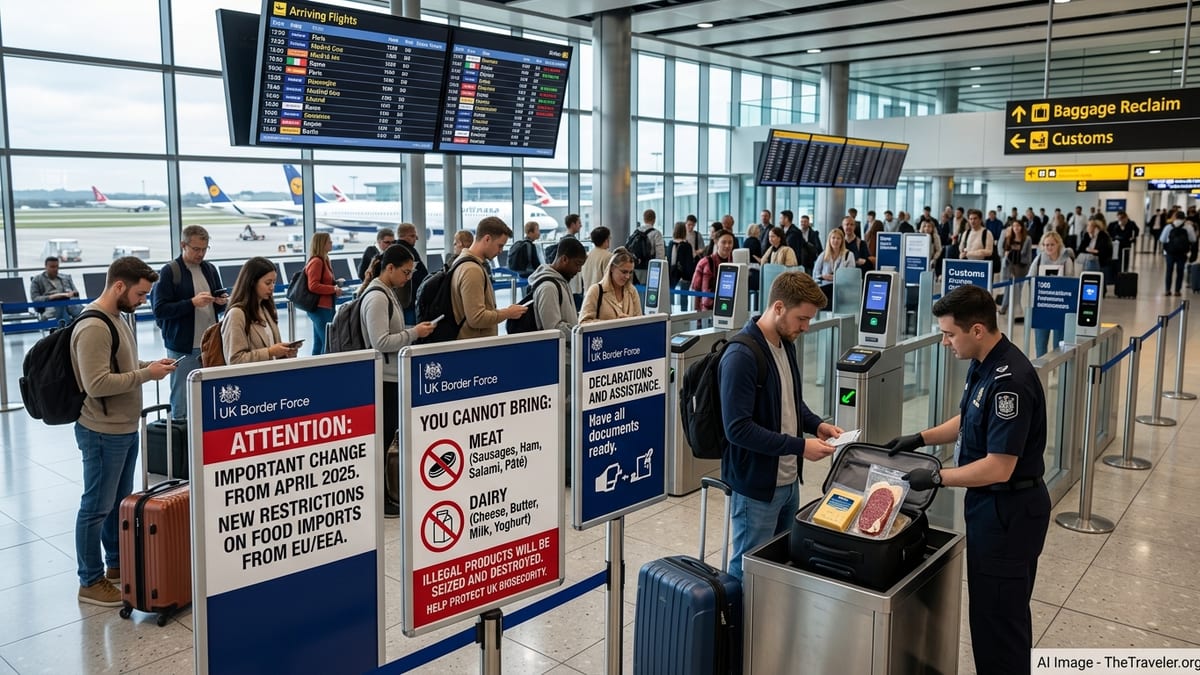
Travellers flying into Great Britain from France, Italy, Spain and the wider EU/EEA are being warned that most meat and dairy products in hand luggage or checked bags are now banned, after UK biosecurity rules were tightened in April 2025 and enforcement stepped up following large “illegal meat” seizures at airports.
Get the latest news straight to your inbox!
What changed in April 2025
From 12 April 2025, the UK government extended existing restrictions so that air, rail and ferry passengers entering Great Britain from EU and EEA countries can no longer bring in ruminant or pig meat or any dairy products for personal use. The Department for Environment, Food & Rural Affairs (Defra) confirmed that the ban covers cattle, sheep, goat and pig meat and products made from them, alongside milk, cheese, yoghurt, butter and other dairy items, regardless of whether they are fresh, cured, cooked or vacuum packed.
The measure replaced what had previously been relatively permissive allowances for EU-origin meat and dairy souvenirs. Government risk assessments linked the change to concerns about animal disease outbreaks in mainland Europe, including foot and mouth disease, and the possibility that contaminated products carried in passenger baggage could reach farm animals if used as food waste.
The rules apply at all points of entry into Great Britain, including major airports such as Heathrow, Gatwick and Manchester, Channel ports and the Channel Tunnel. They cover everything in personal baggage, whether carried in the cabin or checked into the hold, and whether the food was bought in shops, at markets or in airport duty free before departure.
Current rules on what you can and cannot bring
Under the post‑April 2025 regime, passengers arriving in Great Britain from France, Italy, Spain and other EU/EEA states cannot bring any meat from cattle, sheep, goats, pigs or similar animals, nor products made from these meats such as sausages, ham, pâté, bacon, salami, biltong or cured hams. All dairy products are also prohibited, including hard and soft cheeses, milk, cream, yoghurt, butter and products whose main ingredient is dairy, even when commercially packaged.
There are narrow exemptions for some specialised products. Travellers may usually carry limited quantities of certain infant formulas, baby foods and special medical foods, provided they are shelf-stable, in sealed retail packaging and within specified weight limits set out in official guidance. These allowances are designed for essential personal use and are not intended to cover general food gifts.
Other foods remain permitted subject to the usual customs and plant health rules. Bread, plain cakes and biscuits without meat or dairy-based fillings or toppings, chocolate and confectionery, many plant-based products, and some cooked or processed fish can typically be brought in, again within the detailed limits that depend on the product and country of origin. Travellers should be aware that items such as meat-filled sandwiches, cheese-filled pastries and some composite foods can fall under the meat and dairy controls even if the animal ingredient is not obvious.
Illegal meat seizures and airport enforcement
The tightened rules were introduced against a backdrop of rising seizures of illegal animal products at the UK border. In its report “Biosecurity at the border: Britain’s illegal meat crisis,” Parliament’s Environment, Food and Rural Affairs Committee recorded that 235,000 kilograms of products of animal origin were seized in 2024, mostly in air passenger channels, and warned that this represented a significant biosecurity risk.
Following that report, the government accepted that better communication and enforcement were needed. In its formal response, it outlined plans to work more closely with Border Force, airport operators, airlines and travel industry bodies to raise awareness of the new restrictions, including through pre-travel information, booking confirmations and in‑airport signage. Some operators on routes from EU cities to Britain now highlight the bans in their customs guidance for passengers.
While the large seizure figures underline that enforcement activity has increased, there is no blanket confiscation of all food. Border officials focus on products of animal origin, particularly meat and dairy, and have powers to seize goods that do not comply with the personal import rules. Where prohibited items are found, they are normally taken and destroyed, and in serious or commercial-scale cases further action may follow.
Key implications for travellers from France, Italy, Spain and beyond
The practical effect for tourists and returning residents is that common food souvenirs such as Spanish cured ham, French cheeses or Italian salami can no longer legally be carried back into Great Britain in personal luggage from EU and EEA countries. The rules apply equally whether a traveller flies from Paris, Rome or Barcelona, takes a ferry from Bilbao or Caen, or arrives by Eurostar from continental Europe.
These are UK rules governing entry into England, Scotland and Wales, and they do not change what travellers may carry within the EU or into the EU from the UK, where separate European Union regulations apply. Passengers making multi‑leg journeys that include both EU and UK segments need to understand that a product bought and legally carried within the EU can still be prohibited when crossing into Great Britain.
Because the regime is based on biosecurity rather than customs value, the bans apply regardless of quantity, purchase price or whether goods are declared as gifts. Travellers who inadvertently carry banned items risk having them seized on arrival, even if the food was bought in sealed packaging at an EU airport or is intended solely for personal consumption.
What to check before you travel
Rules on personal imports of food and animal products are kept under review and can change in response to disease outbreaks or new agreements between the UK and the EU. The April 2025 changes remain in effect, and current government documents still describe a general prohibition on personal imports of meat and dairy from the EU and EEA into Great Britain, with limited specific exemptions.
Before travelling, passengers should consult the official “Bringing food into Great Britain” guidance to confirm exactly which products, origins and weight limits apply at the time of their trip. This is particularly important for anyone relying on the exemptions for baby foods and special medical foods, or carrying plant products that may be subject to separate controls.
Airlines, rail operators and ferry companies increasingly link to this guidance in pre‑departure information, but responsibility ultimately rests with the traveller. Anyone planning to return from France, Italy, Spain or other affected countries with food in their luggage should recheck the latest UK government advice close to departure and be prepared to leave prohibited items behind rather than risk having them confiscated at the border.