


More news on this day
The United Kingdom has strengthened its travel warning for Saudi Arabia, with the Foreign, Commonwealth & Development Office now advising British nationals to avoid all but essential trips as missile and drone attacks linked to the Yemen conflict and wider regional tensions raise new risks for visitors and airlines.
Get the latest news straight to your inbox!
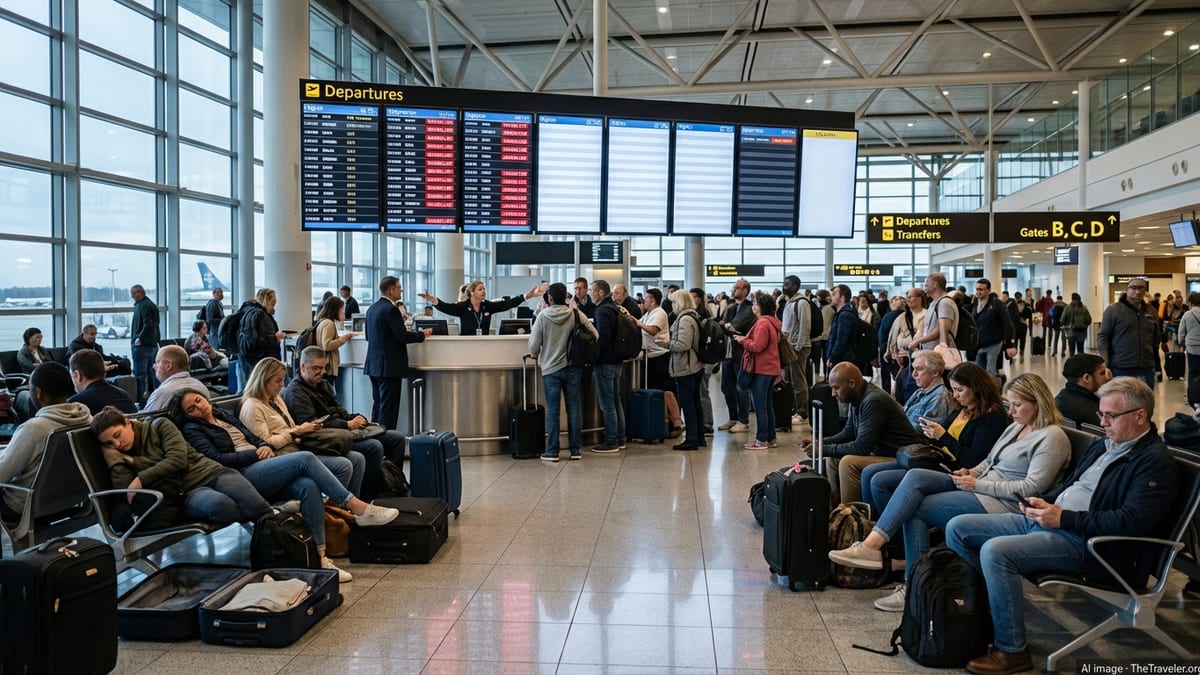
New UK guidance significantly raises the risk bar
Updated Foreign, Commonwealth & Development Office (FCDO) advice, current as of mid-October 2026, places a far more restrictive warning on travel to Saudi Arabia than at any point in recent years. The official travel pages now highlight prominent alerts stating that the FCDO advises against all travel to parts of the country and against all but essential travel more broadly, tying the change directly to the deteriorating regional security climate and resumed conflict involving the Houthi movement in Yemen.
Specialist trackers of government advisories note that a late evening update on 16 October extended the “all but essential travel” warning so that it now effectively covers the entirety of Saudi Arabia, including major hubs such as Riyadh, Jeddah and Dammam as well as most regional airports. Earlier in the year, the most stringent warnings had been limited to a defined strip along the Yemen border and select provinces, but the escalation of cross-border attacks has driven a wider review of risk.
The shift aligns with a broader pattern of heightened alerts for the Middle East following renewed hostilities between Iran and Western powers and increasing long-range strike capabilities in the region. While the FCDO does not ban travel, its advisory status is a key benchmark for British travellers, insurers and tour operators in judging whether a trip can proceed normally.
Parallel guidance from the United States and other allies also points to elevated concerns around missile and drone threats and the vulnerability of airports, oil infrastructure and maritime corridors in and around the Red Sea. For British nationals, however, the UK government’s formal classification has particular legal and practical consequences, especially for insurance cover and employer duty of care.
Security concerns focus on missile, drone and airport strikes
The core of the UK’s revised assessment lies in the increased frequency and range of attacks attributed to the Houthi movement and other actors hostile to Saudi Arabia. FCDO travel pages describe how direct military conflict between the Houthis and the governments of Yemen and Saudi Arabia has resumed in 2026, with rockets, cruise missiles and drones targeting both border regions and deeper urban and industrial areas.
Since July 2026, publicly available reporting has documented multiple incidents in which missiles or drones were intercepted over Saudi territory, alongside confirmed strikes on infrastructure in Yemen and around the Red Sea. Recent coverage by UK broadcasters has highlighted an attack that damaged facilities at a Yemeni airport and prompted fresh concern that airfields and aviation assets across the region are being scrutinised as potential targets.
The FCDO’s regional risk section underlines that British nationals in Saudi Arabia should be prepared for sudden airspace closures, delayed and cancelled flights and sporadic disruption around critical sites such as oil terminals, ports and military bases. Travellers are advised to monitor local and international media, avoid areas near sensitive infrastructure and be ready to adjust their departure plans at short notice if commercial flights are reduced or rerouted.
Although daily life in cities such as Riyadh and Jeddah has largely continued, the advisory reflects the possibility that even locations far from the Yemen border could be affected indirectly by long-range strikes, falling debris from intercepts or precautionary shutdowns. Risk is no longer seen as confined to the south-western frontier but rather as part of a wider arc of instability sweeping across the Gulf and Red Sea region.
Border zones and key cities now under tighter restriction
The FCDO had already maintained its strictest warning against all travel within 10 kilometres of the Yemen border for several years, citing the presence of armed groups, unexploded ordnance and previous cross-border shelling. In 2026 that zone was paired with an advisory against all but essential travel between 10 and 80 kilometres of the frontier, including parts of Najran, Jizan and Aseer provinces.
Over the course of this year, UK government change logs show that the list of areas subject to “all but essential” advice expanded step by step to encompass larger swathes of Aseer and Riyadh provinces and the cities of Abha, Khamis Mushait, Jeddah and Dammam. The latest revision removes much of the remaining distinction between regions, signalling that the FCDO now views the risk level as elevated nationwide rather than concentrated in specific corridors.
For travellers, the most visible impact is the inclusion of major gateways and pilgrim routes in the higher-risk classification. Jeddah, long the primary entry point for journeys to Mecca, is now clearly listed within the advisory area. Reports from travel forums and airline passengers also indicate recent short-notice cancellations of flights to Riyadh and schedule changes affecting connections through Saudi hubs, reinforcing the sense of operational uncertainty.
The updated guidance further stresses that conditions may change quickly and that new incidents or retaliatory strikes could lead to additional restrictions without advance warning. Travellers are encouraged to consider alternative routings through less affected countries if journeys are unavoidable, particularly when connecting to destinations elsewhere in the Middle East, Africa or Asia.
Insurance, tour operators and employer travel policies affected
One of the most immediate consequences of the UK government’s decision is its impact on travel insurance. Industry advisories for British consumers explain that standard leisure and business travel policies commonly exclude cover for trips taken against explicit FCDO advice. When a destination moves into an “all but essential travel” category, claims for medical costs, cancellations and disruptions can therefore be rejected if the trip is considered discretionary.
Specialist brokers and underwriters are now advising that only a limited number of bespoke or high-risk policies may still provide comprehensive cover for Saudi Arabia, usually at significantly increased premiums and subject to strict conditions. Travellers are being urged to check policy wording carefully, confirm with insurers in writing and obtain documentary evidence before departure if they believe their reasons meet the threshold of essential travel.
Package tour operators and religious travel agencies arranging Umrah and Hajj-related trips from the UK are also reassessing their schedules. Some are allowing clients to postpone or rebook without charge where flights or key services have been disrupted; others are keeping departures technically available but warning that participation is at the traveller’s own risk from an insurance perspective. Consumer advocates stress the importance of reading booking terms and conditions and keeping records of any changes initiated by airlines or agents.
For employees, the advisory places additional responsibility on UK-based companies that require staff to visit Saudi Arabia for work. Employment specialists point out that organisations need to revisit their risk assessments, corporate travel policies and contractual obligations, and to consider whether alternative arrangements such as virtual meetings or relocation of activities are feasible while the heightened warning remains in place.
Guidance for Britons already in or transiting through Saudi Arabia
For British nationals currently in Saudi Arabia, the FCDO continues to recommend registering contact details, closely following local announcements and keeping travel documents ready in case commercial options out of the country narrow. Travellers are encouraged to identify more than one potential route home, bearing in mind that nearby states can update their own advisories and entry rules quickly in response to events.
Those transiting Saudi airports without entering the country face a more complex picture. While the UK advisory is framed primarily around being in-country, insurers and airlines may treat transit through a high-risk destination in the same way as a full visit. Some policies specifically reference transit stops, and recent online discussions among British travellers highlight cases where itineraries routed via Saudi Arabia have raised questions over cover or triggered additional checks.
Health and safety information on the UK government’s travel portal continues to apply, including guidance on local laws, acceptable behaviour and medical facilities. However, the new security-focused warning sits above these practical considerations and is intended to shape the overall decision on whether a trip should proceed at all.
With the situation in the Middle East still fluid, the FCDO emphasises that its assessment is subject to ongoing review. For now, though, the message to British travellers is clear: unless there is a compelling and unavoidable reason to be in Saudi Arabia, plans should be deferred or rerouted while the elevated advisory remains in place.