


More news on this day
UK flight cancellations are coming under sharper scrutiny as regulators, lawmakers and consumer bodies focus on short-notice disruption, refund delays and airlines’ treatment of passengers during a busy but fragile 2026 travel season.
Get the latest news straight to your inbox!
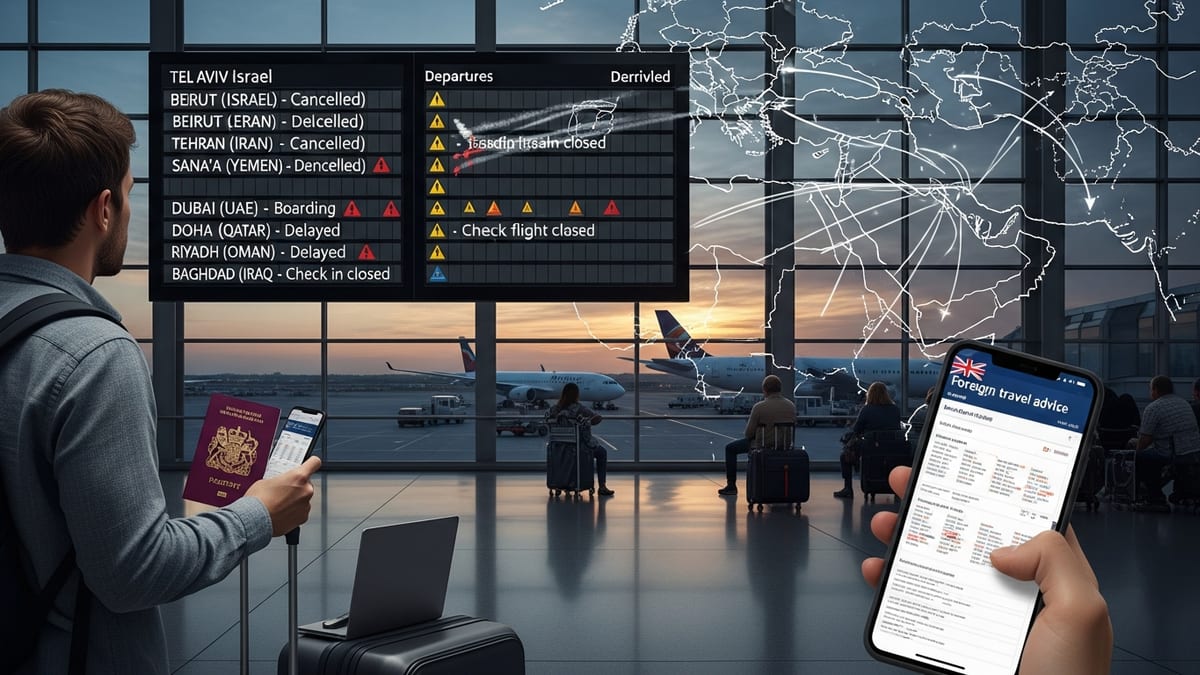
Data Shows Persistent Disruption Across UK Airports
Government statistics indicate that, while overall reliability has improved since the pandemic, short-notice cancellations remain a recurring feature of the UK aviation landscape. A Department for Transport summary published in August 2026 reported hundreds of passenger flights cancelled at short notice between May and July, highlighting concentrated disruption during peak travel periods at major hubs such as London Heathrow, Gatwick and Manchester.
The analysis of cancellations departing from UK airports between early May and mid-June 2026 pointed to more than 1,000 flights being scrapped in that period alone, often within days or hours of departure. According to published coverage of the figures, these cancellations typically resulted from operational pressures, staffing constraints and wider geopolitical uncertainty affecting jet fuel supplies, rather than a single systemic failure.
The impact on holidaymakers became particularly visible when technical issues in the UK air traffic control system in early September triggered a fresh wave of disruption. Reports from that incident described more than 2,000 flights cancelled or heavily delayed as airlines worked to reposition aircraft and rebook stranded passengers, adding to a sense among travellers that the system remains vulnerable to cascading failures.
Together, these episodes have reinforced political and regulatory concerns around how cancellations are managed, how quickly passengers are re-routed or refunded, and whether existing enforcement tools are sufficient when airlines fall short of their obligations.
Existing Passenger Rights Under UK261 in the Spotlight
Under retained EU legislation known as UK261, passengers whose flights are cancelled from a UK airport are entitled to a choice between a refund, re-routing at the earliest opportunity or re-routing at a later date that suits them, subject to availability. Guidance from the Civil Aviation Authority (CAA) stresses that this choice rests with the customer, and that airlines must provide clear information about these options when a cancellation occurs.
Publicly available information from the CAA explains that, where cancellations are within an airline’s control and not caused by extraordinary circumstances, passengers may also be eligible for fixed-sum compensation based on flight distance. However, that entitlement can depend on the precise cause of disruption, and many cases hinge on whether an airline can demonstrate that it took all reasonable measures to avoid the cancellation.
Consumer groups argue that the complexity of these rules, combined with differing interpretations of what counts as extraordinary circumstances, often leaves travellers unsure about what they can claim. The CAA’s own guidance for airlines and airports acknowledges ongoing confusion, which is why it references EU interpretative guidelines to help standardise how UK261 is applied across the industry.
The rise in complaints has placed additional pressure on alternative dispute resolution bodies approved by the CAA, which handle passenger grievances when direct contact with an airline does not resolve a case. Data for 2026 shows that these schemes continue to process a substantial volume of claims related to cancellations, refunds and denied boarding.
Regulators Seek Stronger Enforcement Tools
Alongside scrutiny of individual incidents, attention has focused on whether UK regulators have sufficient powers to deter poor practice. Currently, the CAA can investigate compliance with consumer law and publish findings, but its ability to impose direct financial penalties on airlines and airports is limited compared with some other UK regulators.
A package of reforms set out in the Civil Aviation Bill, which was introduced following the King’s Speech in May 2026, aims to change that balance. According to government briefings, the legislation would give the CAA new enforcement powers, including the ability to fine aviation businesses that repeatedly fail to meet their obligations to passengers on issues such as cancellations, delays and refunds.
Parliamentary analysis describes the bill as a largely technical measure intended to modernise the UK’s post-Brexit aviation framework. Even so, debates in both Houses have highlighted concerns over the scale of the proposed powers, the level of parliamentary scrutiny of future regulations and the need to ensure that enforcement action is targeted at persistent non-compliance rather than isolated operational failures.
For travellers, the most immediate implication is that airlines could face more tangible consequences if they mishandle cancellations or refund requests once the bill is enacted. Industry groups have generally welcomed clarity on enforcement but are seeking assurances that new rules will recognise the operational complexity of running large route networks in an unpredictable global environment.
Government Reviews Short‑Notice Cancellations and Slots
The UK government has also moved to examine the structural drivers of cancellations, especially those announced at short notice in peak holiday periods. In May 2026, the Department for Transport outlined plans designed to protect summer travel from disruption linked to geopolitical tensions and fuel supply issues, including interim changes to the rules governing take-off and landing slots.
According to official statements, ministers are consulting on slot regulations for the 2026 summer and winter seasons to reduce the incentive for carriers to cancel flights late in the planning cycle. One option under discussion involves allowing airlines some limited flexibility to return or temporarily suspend slots in exceptional circumstances without permanently losing them, provided they engage with coordinators in advance rather than waiting until days before departure.
At the same time, departmental guidance reiterates that passengers retain a clear legal right to a refund or re-routing when an airline cancels a flight, regardless of any changes to the behind-the-scenes slot regime. By decoupling consumer rights from industry scheduling mechanisms, policymakers aim to encourage more honest capacity planning while preserving the protections that travellers already enjoy under UK261.
New reporting on monthly short-notice cancellations at UK airports, published over the summer, is expected to feed into this wider review. Analysts suggest that more granular data will allow both government and regulators to identify patterns at particular airports and carriers, and to assess whether operational resilience measures introduced since the pandemic are delivering consistent benefits.
What Travellers Can Expect Next
While there is no single formal inquiry into every cancellation across the UK network, a combination of targeted investigations, new data releases and forthcoming legislative changes amounts to an intensified review of how disruption is handled. Civil aviation lawmakers have signalled that passenger experience is central to current reforms, with future regulations likely to cover areas such as clearer communication of rights, timelier refunds and improved assistance for disabled or vulnerable travellers during disruption.
The CAA continues to encourage passengers to familiarise themselves with existing guidance on delays and cancellations, and to retain documentation such as booking confirmations and airline communications in case they need to pursue a complaint. Approved dispute resolution bodies remain an important avenue for redress where travellers believe that UK261 has not been correctly applied to their case.
For airlines, the direction of travel suggests closer monitoring of cancellation patterns and refund performance, as well as potential financial penalties where behaviour falls short of evolving consumer standards. Carriers that proactively align their policies with regulatory expectations, provide transparent information at the time of disruption and resolve complaints swiftly may be better positioned as scrutiny increases.
Travellers planning journeys to or from the UK in late 2026 are therefore likely to see more attention on reliability statistics, passenger rights and the consistency of airlines’ responses when plans go wrong. Although much of the legislative work is still in progress, the message from publicly available information is that cancellations, and how they are handled, will remain a central focus for regulators and policymakers in the months ahead.
UK government short-notice cancellations data
Department for Transport summer disruption plans