


More news on this day
Late-summer travel across Europe has been severely disrupted after a surge of air traffic flow problems and storms contributed to 3,868 delays and 282 flight cancellations in a single week, hitting passengers at Barcelona, Munich and 15 other major airports across the continent.
Get the latest news straight to your inbox!
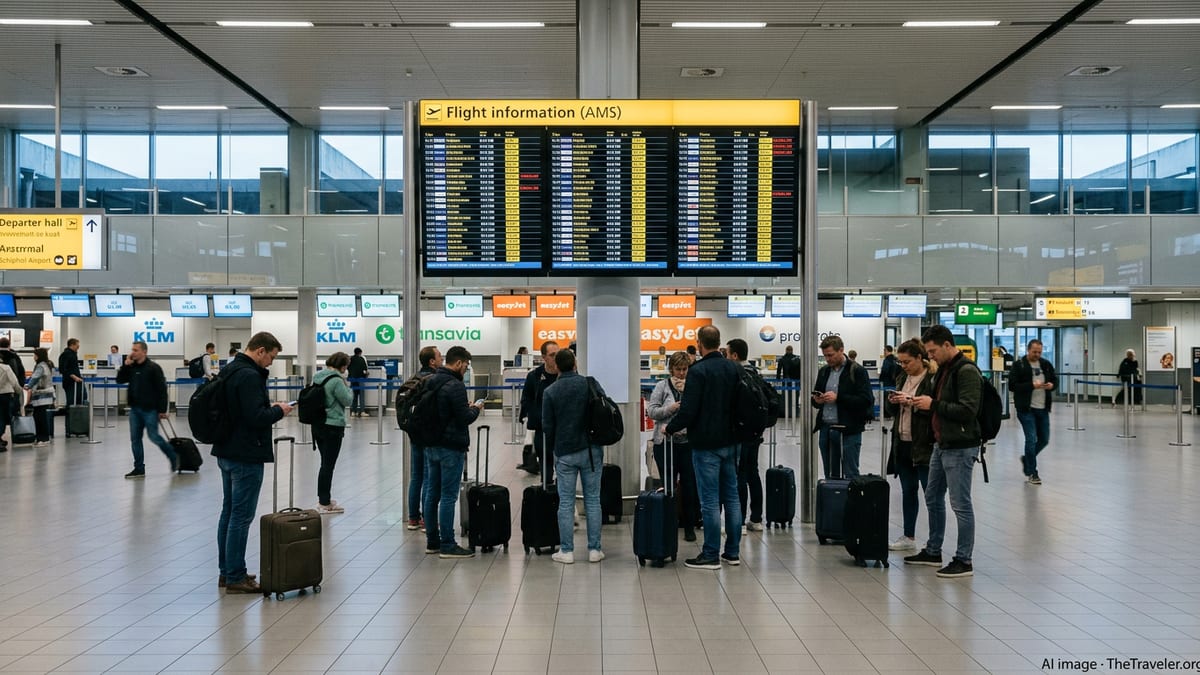
Severe Weather And Congested Skies Drive A Difficult Week
Publicly available operational data for late August 2026 show that European skies entered one of the most challenging weeks of the summer, with traffic levels close to or above pre-pandemic records and a sharp rise in knock-on delays. Eurocontrol’s week 35 overview, covering 24 to 30 August, reports an average air traffic flow management delay of more than four minutes per flight, a marked increase on both the previous week and the same period a year earlier.
Flash briefings for the same period highlight that storms sweeping across central and western Europe were a leading factor, with more than 200,000 minutes of en route weather-related delay recorded on Friday 28 August alone. When combined with already stretched air traffic control capacity and busy holiday schedules, the result was a dense chain of missed slots, diversions and congested holding patterns affecting major hubs from Spain and Germany to France and the Benelux region.
Within this context, the tally of 3,868 delayed flights and 282 cancellations reflects the interplay of several stress points rather than a single failure. Weather-sensitive airports, constrained control sectors and high-demand tourist flows coincided in a short window, creating conditions in which local issues rapidly spilled over into network-wide disruption.
Barcelona Hit By Control Tower Failure And Peak Holiday Demand
Barcelona El Prat, one of Europe’s busiest leisure gateways, entered the final weeks of August already operating at record volumes. Local coverage notes that the airport handled around 5.8 million passengers in July, above its 2025 figures, leaving little spare capacity heading into the mid-August holiday peak.
The situation was complicated further on 12 August when an electrical failure affected the airport’s control tower systems, prompting a temporary interruption of normal operations. Reports indicate that arrivals were spaced more widely than usual while systems were restored, and Eurocontrol’s network tools recorded significant associated delays. Although traffic gradually resumed, the episode triggered same-day cancellations and a backlog of displaced aircraft and crew that lingered into subsequent rotations.
Independent monitoring of flight performance suggests that Barcelona went on to log around 160 cancelled flights across the month of August, split between departures and arrivals. On top of these outright cancellations, thousands of passengers experienced late departures of more than 15 minutes, reflecting both lingering operational constraints and the broader network issues that intensified later in the month.
Munich And 15 Other Major Hubs Struggle To Stay On Schedule
Munich, a key connecting hub for southern Germany and Central Europe, was among the airports that felt the impact of both local weather and network congestion. Travel analytics for August indicate more than 40 cancellations at Munich over the month, with a notable concentration on routes linking to Mediterranean leisure destinations such as Barcelona.
Historical punctuality data compiled by industry associations show that even in more stable years Munich’s average departure delay in late summer tends to sit in the low- to mid-teens in minutes per flight. Under this year’s heightened traffic and weather pressures, those margins narrowed further, leaving the airport more exposed when storms forced temporary runway closures or reduced arrival rates.
Across the wider European network, at least 15 major airports including Barcelona and Munich featured prominently in delay statistics for late August. Eurocontrol’s regular European Aviation Overview points to control centres in sectors such as Marseille, Barcelona and parts of French airspace as some of the largest contributors to en route delay minutes, directly affecting hub operations at airports from Frankfurt and Paris to coastal holiday gateways.
Persistent Structural Strains Behind The Summer Disruption
While volatile weather acted as a clear catalyst, the disruption also reflects structural challenges that have been building over several summer seasons. Eurocontrol’s delay analyses for recent years describe a pattern of rising all-causes delay per flight as traffic returns to or exceeds 2019 levels, driven by a mix of capacity bottlenecks, staffing shortages and infrastructure constraints.
Sector reports on punctuality across large European airports underline how thin operating margins have become. In a typical August, major hubs such as Barcelona and Munich already record average departure delays around 15 to 20 minutes, with only around two thirds of flights leaving within 15 minutes of schedule. In this environment, even short-lived outages in a control tower, a ground handling dispute or a line of thunderstorms can rapidly cascade into hundreds of delayed or cancelled flights.
Analysts also point to the concentration of peak demand into a handful of summer weeks, driven by school holidays and package travel patterns across Europe. When demand, weather and structural constraints line up unfavourably, the network has limited flexibility to absorb shocks, and passengers feel the result in rolling queues, missed connections and last‑minute flight changes.
What Disrupted Passengers Can Do Next
For travellers caught up in the latest wave of disruption, published guidance from consumer organisations and regulators stresses the importance of understanding the distinction between delays and cancellations, and between causes within and outside an airline’s control. Under European passenger rights rules, travellers whose flights are cancelled at short notice are generally entitled to a choice between a refund and re-routing, as well as care such as meals and accommodation while they wait.
Compensation, however, depends heavily on the underlying cause. When cancellations stem from extraordinary circumstances such as severe storms or mandatory air traffic control restrictions, cash compensation is often not payable, even if disruption is significant. By contrast, cancellations attributed to issues within an airline’s sphere, such as aircraft rotations or crew planning, may open the door to compensation claims in addition to rerouting and care.
Experts recommend that passengers keep boarding passes and booking confirmations, document any additional expenses and check airline communications closely to understand how a specific disruption has been classified. Independent flight-status websites and airport statistics can also help travellers demonstrate the scale and duration of events when seeking redress. With summer 2026 showing how quickly Europe’s crowded skies can seize up, such preparation is becoming an essential part of flying during the peak season.
Eurocontrol European Aviation Overview
Eurocontrol Summer 2026 Flash Briefings