


More news on this day
An Air India service from Bengaluru to London Heathrow was diverted to Vienna after a technical problem in the United Kingdom’s air traffic control system triggered widespread disruption at Heathrow, forcing multiple India–UK flights to divert, delay or cancel on 9 September 2026.
Get the latest news straight to your inbox!
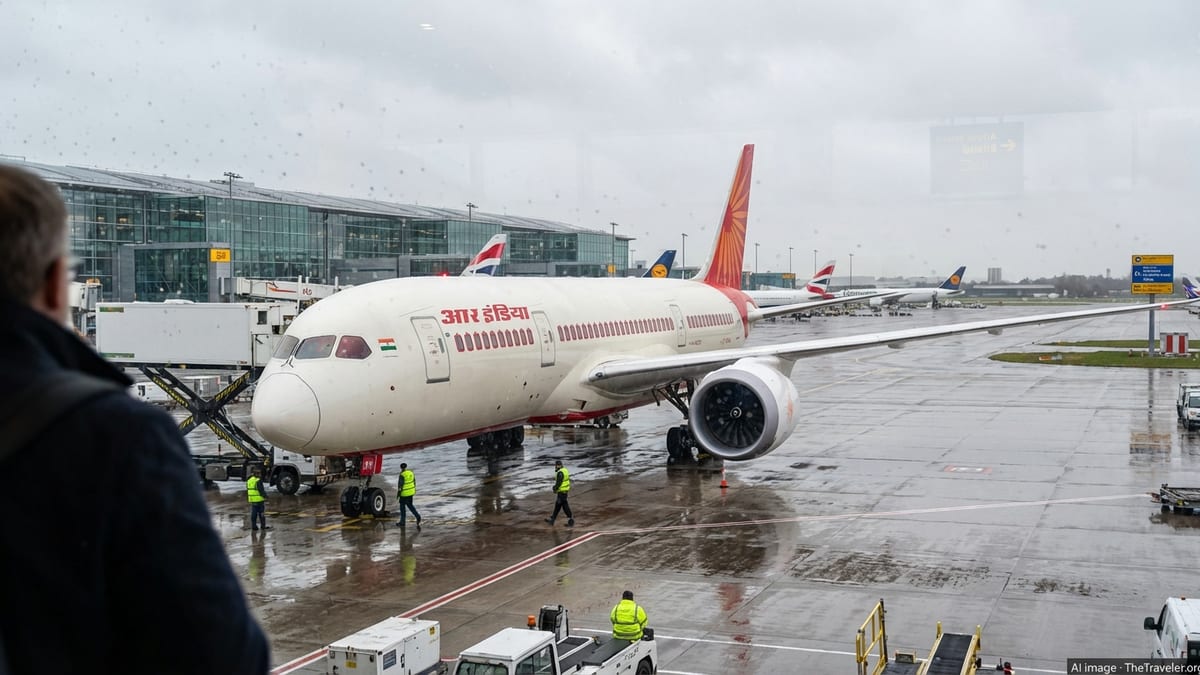
Heathrow disruption forces unscheduled stop in Vienna
According to Indian media coverage, a Bengaluru–London service was among several Air India flights that could not complete their journeys to Heathrow when a technical glitch affected the UK’s National Air Traffic Services (NATS) systems. Reports indicate that the aircraft diverted to Vienna, joining other India–UK flights that were rerouted to alternative European hubs as arrivals into London were curtailed.
Coverage from New Indian Express and other outlets describes a pattern of disruption across Air India’s UK operations, with Delhi–London and Mumbai–London flights diverted to Paris and Zurich, and return legs on some routes subsequently cancelled. The Bengaluru–London diversion to Vienna formed part of this broader network impact as aircraft and crew were displaced from their planned rotations.
Tracking data and regional reports show that the disruption coincided with a temporary suspension or heavy restriction of arrivals at Heathrow, prompting airlines to seek nearby airports with available capacity and suitable ground handling. Vienna, already familiar as an occasional diversion and tech stop point for long haul services, provided parking stands and fuel while operators awaited clarity from UK air traffic control.
Passengers on the affected Bengaluru–London sector faced an unplanned intermediate stop, with onward travel arrangements dependent on Heathrow’s ability to resume normal operations and on how quickly airlines could reorganise schedules and crew duty hours.
Knock on effects across India–UK flight network
Publicly available information on 9 September shows that the Bengaluru–London diversion was one element of a wider disruption to India–UK connectivity. New Indian Express and other Indian outlets report that multiple Air India and IndiGo flights between India and London were either diverted or cancelled, and that at least one Mumbai–London service operating as AI 131 diverted to Zurich and was later cancelled after passengers disembarked there.
Separate coverage from agencies syndicated by Indian news portals notes that more than 1,000 flights across UK airports were cancelled or heavily delayed as a result of the NATS issue, affecting carriers operating into Heathrow, Gatwick, Manchester and other major hubs. Air India’s network was particularly exposed on the India–UK corridor, with a mix of long haul departures from Delhi, Mumbai and Bengaluru encountering airspace or arrival restrictions.
Reports indicate that this led to a cascade of knock on effects, as aircraft stranded away from their intended destinations could not be turned around for subsequent legs. Airlines highlighted that aircraft and crews were left out of position, a common challenge after large scale air traffic control failures, and warned that even after systems were restored, recovery to the normal timetable would take time.
For travellers, this translated into extended onboard waits, diversions to unexpected airports, overnight stays in transit cities and cancellations of return journeys. India based coverage notes that some diverted flights later departed from their temporary diversion airports once limited slots became available at Heathrow, while others were cancelled outright, requiring rebooking.
What is known about the UK air traffic control glitch
NATS, the UK’s air traffic control provider, acknowledged a technical problem in its flight data or processing systems that impaired its ability to safely manage normal traffic levels, according to UK and European aviation reporting. Outlets such as The Independent and various Indian news sites describe the disruption as an IT or software related glitch, with automated systems failing to handle certain flight plan data and forcing operators to reduce capacity while the fault was diagnosed.
During the incident, departures from several major UK airports were temporarily halted or heavily restricted, while arrivals were spaced further apart or temporarily suspended. Heathrow, as the busiest of these hubs and a critical gateway for India–UK services, saw immediate congestion, prompting diversions such as the Bengaluru–London flight’s unscheduled landing in Vienna.
Analytical pieces in the UK press have previously flagged concerns about the resilience of air traffic control IT infrastructure and the complexity of integrating European wide systems. Commentators note that even a relatively short outage can produce severe operational fallout when it coincides with peak traffic periods, given the limited spare capacity at airports such as Heathrow.
While NATS has since restored services, reports indicate that the organisation and UK aviation authorities are facing renewed scrutiny over contingency arrangements and the robustness of their technology stack, particularly after earlier warnings about system vulnerabilities and the potential for single points of failure.
Impact on Bengaluru–London Heathrow route development
The diversion of the Bengaluru–London flight to Vienna comes at a time when Air India has been actively expanding and upgrading its services on this corridor. A previously published Air India press note outlined plans to operate daily nonstop flights between Bengaluru and London Heathrow, replacing earlier services to London Gatwick and increasing weekly capacity on the route.
That communication highlighted the use of Boeing 787 8 Dreamliner aircraft, configured with business and economy cabins, to link Bengaluru directly with Heathrow and connect southern India more seamlessly to the UK capital. The diversion incident underscores how even well established long haul routes remain vulnerable to external infrastructure failures far from their point of origin.
For the Bengaluru market, the episode also illustrates the importance of Europe’s broader airport network as a safety net when Heathrow experiences capacity shocks. Vienna, Zurich and Paris emerged during this disruption as key diversion points for India bound or India originating flights, offering additional resilience for airlines operating tight schedules across time zones.
Industry observers note that repeated large scale air traffic control disruptions may influence how airlines plan buffer times, crew rosters and contingency fuel on India–Europe sectors, particularly on routes such as Bengaluru–Heathrow where demand remains strong and schedules dense.
Passenger experience and next steps for travelers
Passenger accounts shared with Indian media and on social platforms describe extended waiting times on board and in terminal areas following diversions linked to the NATS glitch. Travellers on services including the Bengaluru–London flight that landed in Vienna reported uncertainty over their eventual arrival time into the UK, as airlines weighed whether to continue to London or arrange alternative routings.
Reports from Zurich and Paris suggest that some passengers were initially held on aircraft in the expectation that Heathrow restrictions would ease quickly, before airlines opted to cancel sectors or deboard travellers for extended ground waits. In several cases, overnight accommodation and rebookings were arranged once it became clear that the disruption would last beyond the available operating window.
Airlines have advised passengers booked on upcoming India–UK flights to monitor live flight status pages and airport departure boards, noting that residual delays and equipment changes are likely as aircraft and crew rotations are reset. For travellers originating in Bengaluru, this may include changes to departure times, aircraft type or even, in some cases, routing via alternative European hubs before reaching Heathrow.
Consumer advocates quoted in broader UK coverage recommend that passengers retain boarding passes, booking confirmations and receipts for any additional expenses such as meals or accommodation incurred during diversions. They note that eligibility for compensation or reimbursement depends on the regulatory framework that applies to each carrier and on whether the disruption is classified as extraordinary circumstances under UK or EU air passenger rights regimes.
New Indian Express coverage on India–UK flight diversions
New Indian Express report on wider India–UK disruptions