


More news on this day
As a fresh wave of air traffic disruption leaves thousands of passengers struggling to reach their destinations, rail networks in Europe and the United Kingdom are again emerging as a critical fallback, moving stranded airline customers when planes cannot.
Get the latest news straight to your inbox!
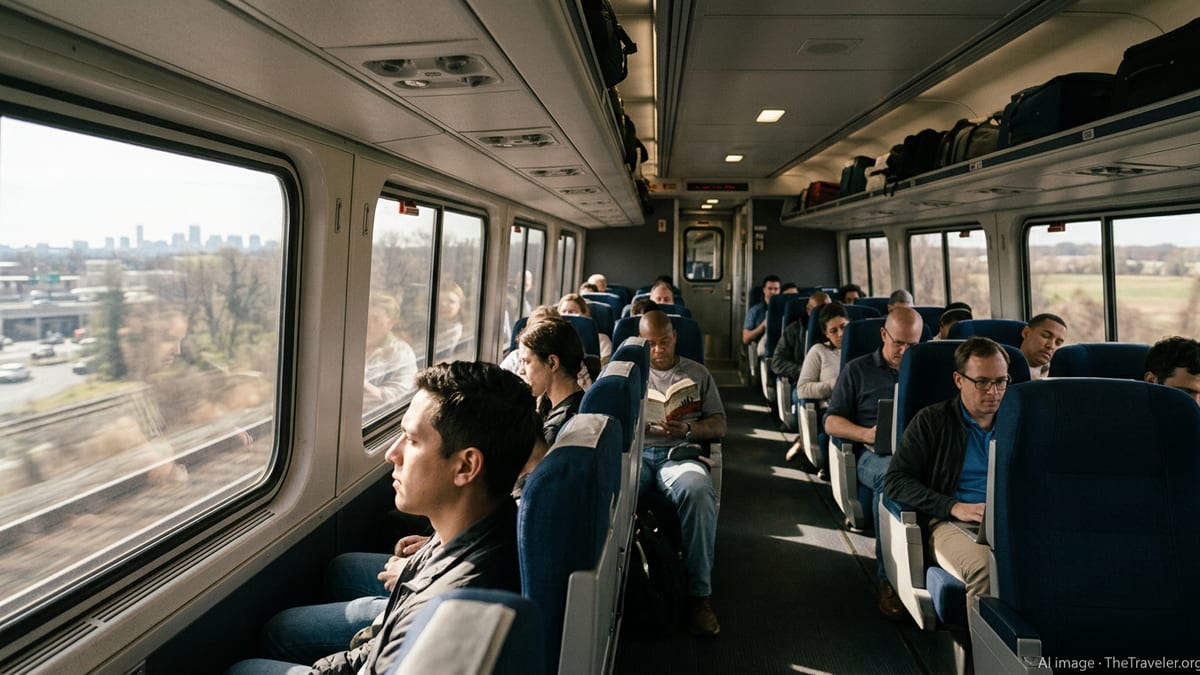
Rail Flexibility After the Latest Air Traffic Outage
Following the most recent air traffic control outage in the United Kingdom on 9 September 2026, National Rail updated its disruption pages to outline temporary measures designed to support airline passengers whose trips had collapsed. Publicly available information shows that rail operators agreed to relax normal ticket rules so that travelers forced to reroute to different airports, or abandon flights altogether, could change or refund rail journeys without the usual penalties. In some cases, passengers who purchased new tickets to reach alternative airports were told they could reclaim the cost of their original unused rail ticket if plans had to be rewritten at short notice.
These arrangements echo a broader pattern that has developed over the past several summers of intense travel demand, weather issues, and air traffic staffing constraints. Rail companies have increasingly framed themselves as part of a wider mobility system, ready to absorb extra travelers when the aviation side falters. On busy airport corridors in Britain and mainland Europe, this often means accepting tickets with extra flexibility or honoring proof of a cancelled flight, such as an airline cancellation email, as sufficient evidence of disruption.
In northern England, TransPennine Express recently publicized similar measures after widespread flight disruption linked to earlier air traffic control issues. According to the operator’s own news updates, customers whose flights were cancelled or heavily delayed were permitted to use their rail tickets at alternative times and even on trains run by other participating operators, such as Northern, without extra fees. For returning passengers, an airline cancellation email was explicitly accepted as proof that plans had been derailed.
For travelers caught between airports and home, these ad hoc flexibilities can make the difference between sleeping on a terminal floor and reaching a hotel or relative’s house by late evening. They also demonstrate how domestic rail franchises can quickly adjust rules in response to large, sudden airspace problems.
Airline-to-Rail Rebooking Becomes Standard Toolkit
Beyond emergency flex policies, airlines are increasingly baking rail contingency into their regular disruption playbooks. Lufthansa, for example, outlines on its public disruption pages a “Good for Train” option that allows passengers on certain cancelled flights to convert their ticket into a Deutsche Bahn rail journey at no additional cost when no suitable replacement flight is available. The scheme covers a network of routes within Germany and to nearby cities such as Amsterdam, Brussels, Paris, Vienna, Zurich, Prague and Warsaw, broadening the range of ground alternatives when air schedules unravel.
Separately, the airline’s Rail&Fly and Express Rail products allow customers to bundle intercity trains with international flights on a single booking to or from German hubs. Documentation explains that these rail segments can typically be used on the flight date as well as the preceding or following day, giving passengers a built-in buffer if a flight lands late or needs to be rebooked. In disruption scenarios, that flexibility effectively turns high speed trains into backup “feeder legs” that can be rescheduled more easily than constrained short-haul flights.
These practices are part of a wider category often labeled air rail alliances, in which airlines and railways share either specific routes or entire networks. Public reference material describes several models, from dedicated airport express trains sold only to airline customers to broader network access and re-protection arrangements where train seats are used to carry displaced air passengers during irregular operations. The approach gained visibility during volcanic ash disruptions in 2010, when European railways ran extra services to move passengers stranded by widespread airspace closures.
More recently, technology providers have been working behind the scenes to make these intermodal options easier to book in advance. A partnership announced by Dohop and ticketing platform Tranzer, for instance, underpins Air France’s ability to sell combined flight and Swiss Federal Railways tickets between Paris and Swiss hubs such as Geneva and Zurich in a single transaction. Although marketed primarily as a convenience feature, such integrations give airlines more levers to reroute passengers by train when regional flights are heavily delayed or cancelled.
Europe’s Push Toward Seamless Intermodal Passenger Rights
Policy makers in Europe have taken note of the growing reliance on trains when planes fail and are moving to formalize passenger protections across modes. In 2024 and 2025, European institutions advanced proposals and negotiating positions to strengthen intermodal passenger rights, responding to long running complaints that travelers holding separate tickets for trains and flights often fall through regulatory gaps when a delay on one leg causes a missed connection on the other.
Draft rules and Council positions published in Brussels highlight several goals: clarifying the right to full reimbursement for cancelled flights booked through intermediaries, reinforcing air passenger rights, and improving the framework for journeys that involve multiple carriers or different types of transport. Separate European Commission material on multimodal travel emphasizes that rail passengers using separate tickets on different operators also need clearer guarantees if a disruption on one train prevents them from boarding the next.
At the same time, updated rail passenger rights regulations give travelers more power to arrange their own rerouting during serious disruption. Eurostar, which links London with continental Europe, highlights in its public rights information that passengers may, after a set time threshold in disrupted situations and in the absence of an offered rerouting solution, organize onward travel themselves using public carriers such as trains, coaches or buses and seek reimbursement. While this provision applies to rail-to-rail issues, it effectively acknowledges that travelers will often turn to whichever public mode is running, including rail, when aircraft are grounded.
The trend is reinforced by recent announcements that Eurostar is moving toward closer alignment with airline alliances. Public information notes that the operator signed a memorandum of understanding in 2024 to join SkyTeam as its first non airline partner, a step that is expected to enable more integrated air rail itineraries between the United Kingdom, France and the Netherlands. For passengers, that could eventually mean smoother through tickets and clearer protections when one part of a combined journey breaks down.
Lessons From Extreme Disruptions and Future Capacity
The current wave of cooperation between rails and airlines draws in part on lessons from past shock events. The volcanic ash cloud over Europe in 2010 showed how quickly rail capacity could be mobilized as a substitute when almost all flights were suspended. Historical accounts describe extra trains operating on key corridors to move tens of thousands of stranded passengers, often using special ticketing arrangements between airlines and national rail operators that blurred the line between traditional aviation and rail services.
More recent winters and infrastructure failures have also demonstrated the limits of relying on any single mode. Severe snow and ice across parts of Europe have at times grounded aircraft while simultaneously reducing train frequencies, underscoring that rail is not a perfect backup in every scenario. However, rail networks are less vulnerable to certain types of airspace restrictions, such as radar failures or upper air traffic control outages, and can restore service on a rolling basis while aircraft and crews are still out of position.
Academic work on airline disruption and recovery highlights that carriers increasingly view ground transport, including high speed rail, as one tool in a larger optimization problem that balances aircraft rotations, crew duty limits, and passenger itineraries. Integrating rail options into recovery planning can allow airlines to clear backlogs faster in regions where robust rail systems exist, while also reducing the need to position empty aircraft or operate inefficient short haul flights for a relatively small number of remaining passengers.
Looking ahead, industry observers expect more airports and airlines to expand their formal intermodal offers, including through-ticketed rail segments that automatically appear as alternatives when disruptions strike. For travelers, the shift suggests that holding a train reservation might soon be as integral to long trips as holding a boarding pass, especially in regions where high speed lines can match or beat short haul flight times once airport transfer and security processes are taken into account.
What Stranded Passengers Should Watch For
For passengers navigating the next air traffic outage or mass cancellation event, publicly available guidance suggests a few practical themes. First, travelers booked on airlines that already sell rail connections or advertise rail conversion options, such as Lufthansa’s Good for Train or Rail&Fly products, may find it easier to obtain a train solution quickly because commercial frameworks with rail partners are already in place. These products typically allow some flexibility around the date of the rail leg, which can be crucial when inbound flights arrive late or are rescheduled.
Second, national rail operators sometimes publish short lived policies during major aviation disruptions, as seen in Britain’s National Rail flexibility notices and TransPennine Express’s temporary acceptance of alternative tickets and airline cancellation emails. Checking those pages can reveal rights that go beyond standard terms and conditions, including fee free changes, acceptance on different operators, or refunds for unused tickets when a planned rail link to or from an airport becomes impossible.
Third, Europe’s evolving passenger rights framework increasingly acknowledges multimodal journeys, even when they involve separate tickets. Passengers who piece together their own combinations of flight and rail should keep records of delays, cancellations and any additional public transport used, since future regulations and existing rail rights documents contemplate reimbursement in cases where travelers have to arrange re-routing themselves using trains, buses or coaches after operators fail to provide timely alternatives.
For the moment, the reality remains uneven: in some countries, rail plays a central, formalized role in helping airlines recover from disruptions, while in others, assistance still depends heavily on ad hoc decisions. But each new air traffic outage that sees thousands of passengers finish their journey by train strengthens the case, in both policy and practice, for railways as an essential safety net for stranded air travelers.