


More news on this day
A cascading air traffic control failure in the United Kingdom has sparked what travelers describe as “nightmare” airport chaos, stranding tens of thousands of passengers across Western Europe and on transatlantic routes, with disruption now stretching into a second day.
Get the latest news straight to your inbox!
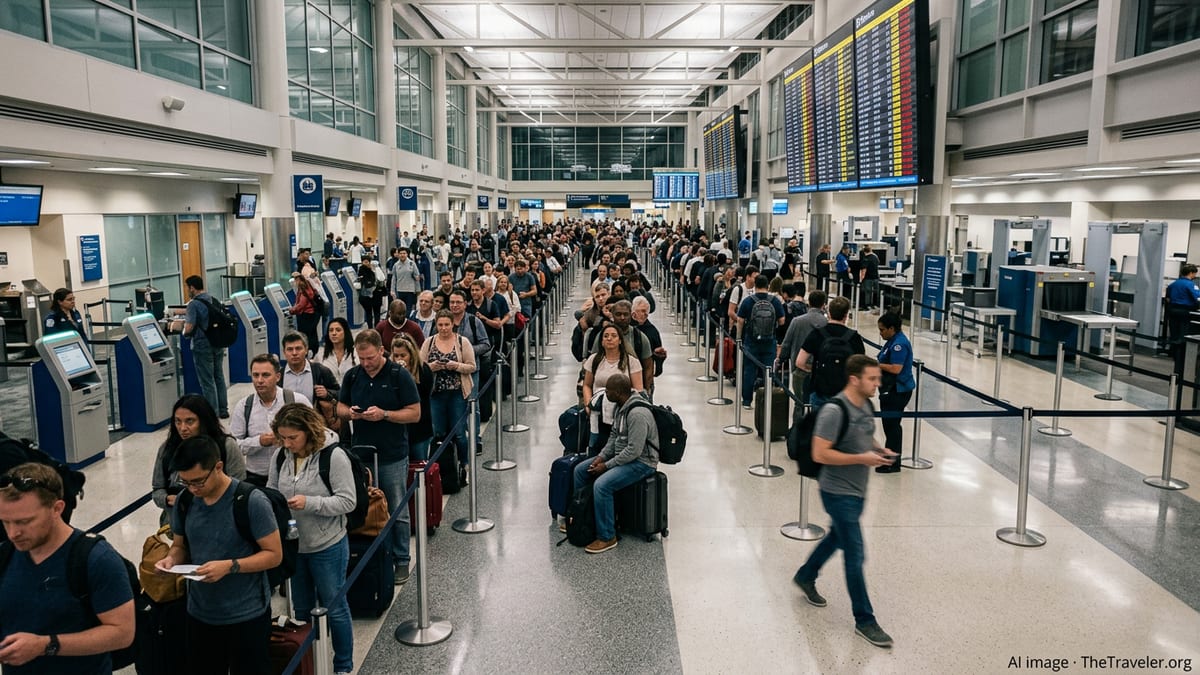
System glitch in UK skies triggers widespread shutdown
Publicly available information from the UK’s National Air Traffic Services (NATS) and airline operational updates indicates that a technical fault in the country’s flight data or flight processing systems forced controllers to dramatically cut traffic through UK airspace on 8 September, effectively throttling arrivals and departures at multiple airports at peak time.
Reports from flight tracking platforms show that more than 1,000 flights were cancelled on Tuesday alone, with hundreds more delayed or diverted as aircraft already en route were held in stacks, turned back or sent to alternate airports across Europe. Combined figures from industry trackers and airline statements suggest that the total number of cancellations has since climbed well above 1,300, affecting both domestic and international services.
Major hubs in and around London, including Heathrow, Gatwick and London City, were among the worst hit, but the impact quickly rippled outward to regional airports such as Bristol, Birmingham, Manchester, Edinburgh and Glasgow. With UK airspace acting as a key corridor for transatlantic and European services, the failure left aircraft and crews out of position and schedules in disarray far beyond Britain’s borders.
NATS has attributed the disruption to a “technical issue” inside its flight data systems and says the underlying fault has been identified and corrected. Recovery, however, has been slow and uneven, with knock-on cancellations and delays expected to continue as airlines try to reposition aircraft and crew and work through a significant backlog of displaced passengers.
West Country departures collapse as boards turn red
Among the most striking local impacts were scenes at Bristol Airport and other West Country gateways, where departures boards reportedly turned red as cancellation notices stacked up. Regional media and live passenger updates describe terminals filling rapidly as holidaymakers bound for Mediterranean destinations and city breaks across Europe were told their flights could no longer depart.
Bristol Airport, which serves much of South West England and Wales, confirmed that services were being heavily disrupted, advising travelers to check directly with their airline before heading to the terminal. Local coverage indicates that departures to destinations such as Greece and Spain were particularly affected, with entire planeloads of passengers forced back into the terminal after spending hours onboard waiting for clearance.
The situation has been compounded by limited spare capacity at nearby airports. With Exeter and Cardiff also affected by the reduction in UK airspace throughput, passengers in the region found it difficult to rebook onto alternative services, leaving many families facing the loss of hard-earned holidays or the prospect of significantly shortened trips.
Airport staff and ground handlers have been left to manage long queues at service desks as carriers rework schedules in real time. Travel forums and social media posts from the region describe scenes of confusion as successive estimated departure times were pushed back, only for flights to be cancelled outright once curfews and crew duty limits approached.
Transatlantic and long-haul travelers hit by rolling delays
The chaos has not been confined to short-haul European routes. Long-haul services linking the UK with North America, Australia and Asia have also been caught up in the disruption, with aircraft diverted, delayed or held at origin airports for extended periods while the UK system worked through its backlog.
Coverage from international broadcasters and airline statements highlight transatlantic travelers from US cities such as New York and Los Angeles, as well as Canadian and Asian hubs, who arrived at departure gates to find their flights postponed repeatedly or scrubbed entirely. In some cases, aircraft bound for London were forced to divert to continental European airports to refuel and wait for new slots into crowded UK airspace.
Passengers traveling westbound toward North America have encountered a different set of problems. With aircraft and crews stranded on the wrong side of the Atlantic and night-flight restrictions limiting when services can depart from UK airports, some routes have faced multi-day disruption. Online accounts detail missed cruise departures, broken package itineraries and complex onward rebooking as travelers scramble to salvage trips.
Travel industry analysts note that the incident underscores the sensitivity of long-haul networks to failures at major control centers. With tight aircraft utilization and minimal buffers built into schedules, a single prolonged outage can quickly cascade into worldwide disruption, particularly along heavily trafficked Western corridors connecting Europe with the Americas and Asia-Pacific.
Passengers stranded overnight as support systems strain
Across affected airports, images and first-hand accounts shared publicly show passengers sleeping on terminal floors and benches as hotel rooms near major hubs quickly sold out. With so many flights cancelled late in the day, many travelers reported difficulty securing accommodation or even reaching city centers once rail and coach services wound down.
At Heathrow and Gatwick, among Europe’s busiest international gateways, terminal concourses remained crowded into the early hours as passengers queued at airline desks for rebooking and compensation information. Travel forums describe long waits for assistance and confusion over entitlements, with some travelers resorting to booking their own alternative transport by rail or low-cost carriers rather than wait for official rerouting.
In the West Country, similar scenes played out on a smaller scale. Reports from Bristol and other regional airports suggest that limited staffing and the sudden volume of disrupted passengers stretched customer service capacity. Some travelers described spending more than 12 hours in terminals without clear guidance on whether their flights would eventually depart.
Consumer advocates and travel commentators argue that the episode highlights ongoing gaps in how disruption is communicated and managed. Complex chains of responsibility between air traffic providers, airlines, airports and third-party handlers often leave travelers unclear about where to seek help, particularly when the root cause lies outside any individual carrier’s control.
Questions grow over infrastructure resilience and traveler rights
As operations slowly normalize, attention is turning to how such a widespread failure occurred and what protections are available to those affected. Commentators have pointed out that this incident follows previous high-profile technical issues within UK air traffic control systems in recent years, raising fresh concerns about investment levels and resilience.
Aviation experts cited in national media note that complex, aging systems handling ever-increasing traffic volumes can be vulnerable to rare but high-impact faults. While there is no public indication of a security breach, the scale of the disruption has renewed calls for transparent investigation, clearer contingency planning and accelerated modernisation of critical infrastructure.
For passengers, the focus is more immediate. Under UK and European consumer rules, air traffic control failures are generally classified as extraordinary circumstances, which can limit cash compensation. However, airlines are typically still required to provide care and assistance, including meals, refreshments and, where necessary, hotel accommodation. Travel commentators are urging affected travelers to retain receipts and documentation, and to pursue claims where airlines appear to have fallen short of these obligations.
Industry observers suggest that the event may also reshape how travelers in Western markets think about risk when connecting through busy hubs, particularly during peak seasons. For now, publicly available data and passenger reports indicate that schedules remain fragile, and airlines are warning that residual delays and isolated cancellations are likely to continue while fleets and crews are brought back into normal rotation.
Euronews: Technical glitch leads to more than 1,000 UK flight cancellations
The Independent: Tens of thousands of passengers plunged into travel chaos
Yahoo News: ‘Nightmare’ airports chaos leaves West passengers stranded
ABC News: Australians forced to sleep at Heathrow after ATC failure